

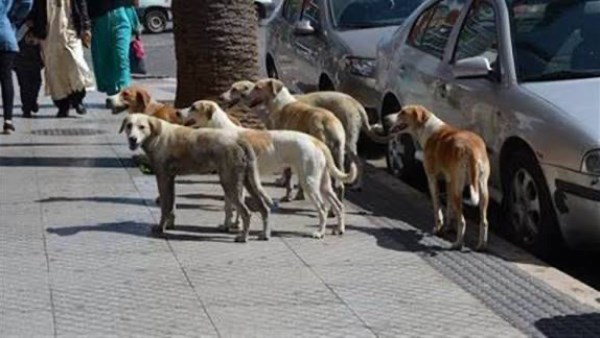
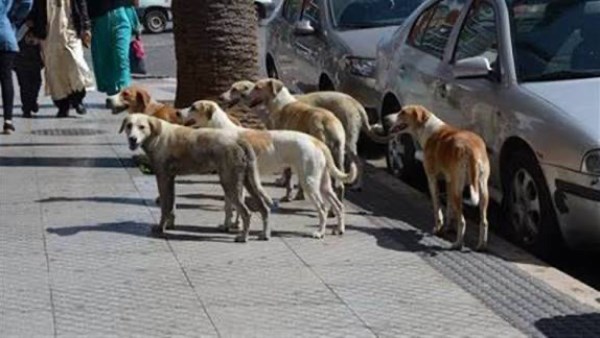
In a scene that has become familiar and terrifying at the same time, citizen complaints of attacks are increasing day after day Stray dogs In various governorates, the phenomenon turns into something like an “open file” with no solutions.
While dogs are viewed in countries around the world as partners in guarding, rescue, and scientific research systems, the phenomenon in Egypt has taken a completely different turn, having gone beyond the limits of nuisance to a direct threat to the lives of citizens, causing serious injuries and sometimes deaths, amid its expanding spread in the streets and squares.
Official data indicate an unprecedented scale of the crisis, as Egypt records about 430,000 cases of straying annually, at a time when the number of stray dogs spread in the streets is estimated at more than 23 million dogs distributed over 27 governorates, making it one of the highest rates in the world compared to the number of population and area of distribution.
According to public health experts, this scene reflects a complex imbalance that combines the absence of effective programs to control stray dogs, weak sterilization and vaccination systems, and the expansion of urban areas without environmental facilities capable of accommodating or reducing the proliferation of unowned animals.
The most dangerous thing is that the crisis is no longer limited to popular neighborhoods or unplanned areas, but has spread to new cities and the vicinity of schools, clubs, and residential complexes that are supposed to enjoy high levels of security.
With the recurrence of incidents, the scene is no longer just individual cases, but rather a growing phenomenon that opens a wide door to questions about the responsibilities of the concerned authorities, spending priorities, and mechanisms for implementing the animal welfare law within a framework that protects humans without harming the environmental balance system.
Hamdi Arafa: Some governorates only move after complaints about stray dogs… and citizens pay the price in diseases and deaths
Dr. Hamdi Arafa, professor of government and municipal administration and international municipal consultant expert, expressed his dissatisfaction with regard to the file of stray dogs spread across cities, neighborhoods, villages, estates, kafars, and hamlets, which number 4,726 villages, followed by 26,757 kafras, hamlets, and hamlets, which represent 58% of Egypt’s area and population.
Arafa added in exclusive press statements to Sada El Balad website that the Veterinary Services Authority cannot deal alone with the spread of dogs in 27 governorates, and that the veterinary medicine directorates in 27 governorates bear responsibility in cooperation with the governors in accordance with Local Administration Law No. 43 of 1979. He suggested that a private company undertake the handling and care of stray dogs, and that each governor create a dog control committee within his governorate given the lack of a national plan followed by a timetable by the governors in this regard, as the committee must consist of each representative of Each directorate within each governorate, including health, veterinary medicine, hygiene departments in the offices of all governorates, agriculture, and heads of neighborhoods, centers, cities, and local rural units, in coordination with animal welfare associations spread in each governorate.
Arafa continued, knowing that the government agencies mentioned above do not deal with a file with all dogs, only stray dogs, and the vast majority of governors do not take action except based on complaints by the people, knowing that the Veterinary Services Authority affiliated with the Ministry of Agriculture confirmed that those who were subjected to stray dogs last year recorded 430,000 cases of “stinging,” and that the governorates of Beheira, Cairo, Sharkia, and Giza have the most recorded cases of straying, and North Sinai and the New Valley. The Red Sea, Matrouh, its south, and Matrouh are the least, knowing that the spread of stray dogs causes the spread of diseases and epidemics, which threatens the lives of citizens, whose dog bites in a number of cases end in death. Comparing Egypt to other countries, Egypt is at the forefront.
Arafa continued by saying, knowing that there are two types of stray dogs found in the streets of the governorates: the dog that has spent its entire life in the streets since its birth, and the dog that has escaped from its owner or whoever owns it. When you find any of the stray dogs in the street, you can know it if you find the dog agitated and a lot of barking and movement. If you find him refusing to drink water at a time when he is drooling a lot, and if the dog appears weak and emaciated and unable to move at the same time he is drooling. If you notice any of these signs, do not approach the dog. Or get close to it.
Arafa continued by saying that dogs in countries of the world are used by humans for guarding, hunting, and pulling vehicles. They were used in war for guarding and carrying messages. There are trained dogs that lead the blind and deaf in the streets and for domestic work, such as alerting the deaf to the telephone or doorbell, or leading the blind to walk around inside the house or cross the street.
He continued that some types of dogs have a strong sense of smell, which is why they are trained on other tasks such as detecting drugs, fireworks, dynamite, Persian ants, and those drowning in water at depths.
He added that missing persons can be searched for in earthquakes and fires, and some dogs can eavesdrop on sounds that a person cannot hear with his ears. A dog can even hear the ticking of a clock from a distance of 40 feet. Domestic dogs differ in shape, appearance, size, and color. A dog lives from 8 to 12 years depending on the environment in which it lives and the care it takes.
Arafa added that the duration of pregnancy in dogs ranges from 56 to 72 days, and the birth rate for each dog is twice a year. In America, about 4.7 million dog bites are recorded annually, and in Britain, between one million and two million bites are recorded. Dubai is the only city in the world in which there is no stray or lost dog, or even walking alone without its owner, knowing that rabies disease may lead to death if not treated because of its direct effect on the nervous system, given that no street in Egypt is currently devoid of dogs. Dogs whose numbers have increased remarkably, and the average duration of survival of dogs is 8 years.
Arafa added, saying, “There is no poison center within the 1,411 rural local units affiliated with 27 governorates, as these villages are administratively and executively responsible for 4,726 villages, followed by 26,757 kafras, hamlets, and Izbet. In addition, all the health units in the villages do not have sufficient ambulances or even poisons departments, and all that there are in the Republic are only 20 poison centers located only in Provincial capitals, where hospitals and health units in villages need to create new toxicology departments specialized in dealing with cases of citizens being bitten by stray dogs and other cases.
Arafa continued to end dogs attacking citizens in villages, estates, villages, and hamlets. It is required to establish 1,411 poison units affiliated with health units in villages, in addition to establishing poison department centers in 184 centers, 92 neighborhoods, and 214 cities. It is possible for a specific period of time for the private sector and civil society organizations to participate in establishing them, given the inability of the state’s general budget to afford them. In addition, it is desirable, in principle, for governors to allocate a portion of the governorate’s funds present in the special funds in each governorate in cooperation with the Ministry of Health’s allocations to resolve this issue. Salt.
He concluded his speech by saying that every governor must urgently issue an administrative decision to convene a periodic committee to resolve the crisis consisting of the director of the health directorate in the governorate, the undersecretary of the Ministry of Agriculture, the undersecretary of the Ministry of Irrigation, the head of the local unit in each village, the director of the veterinary medicine directorate, and the director of the environment department in the governorate, as until this moment there is no national plan by governors at the level of all ministries to deal with this urgent file, and there is no national strategic plan regarding this file or concrete coordination by the relevant ministries.
Arafa added: I call on the Prime Minister to quickly create a ministry for the Egyptian village based on the daily suffering of citizens and the lack of integrated services for the residents of the villages and the villages, hamlets and estates that follow them.