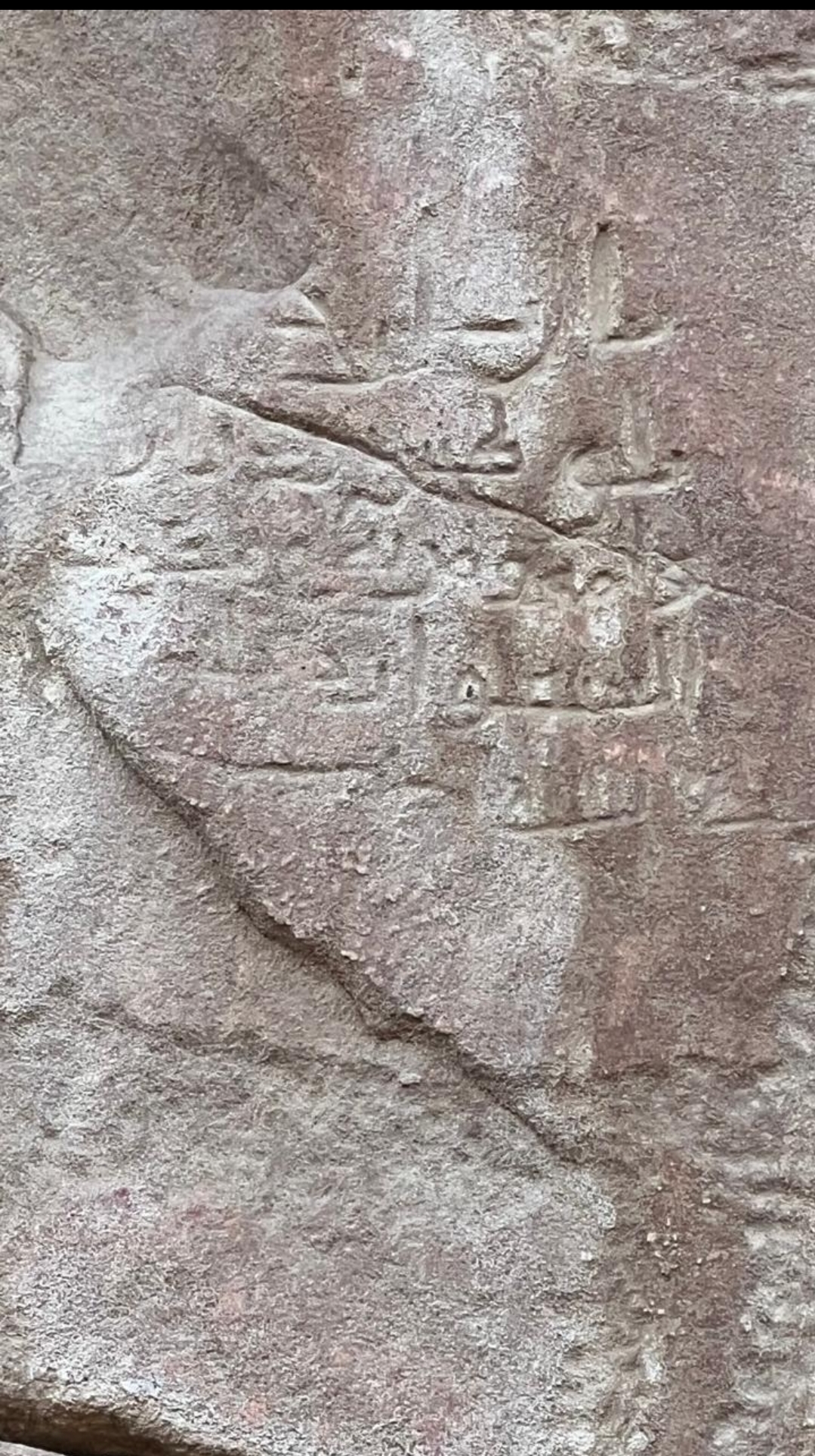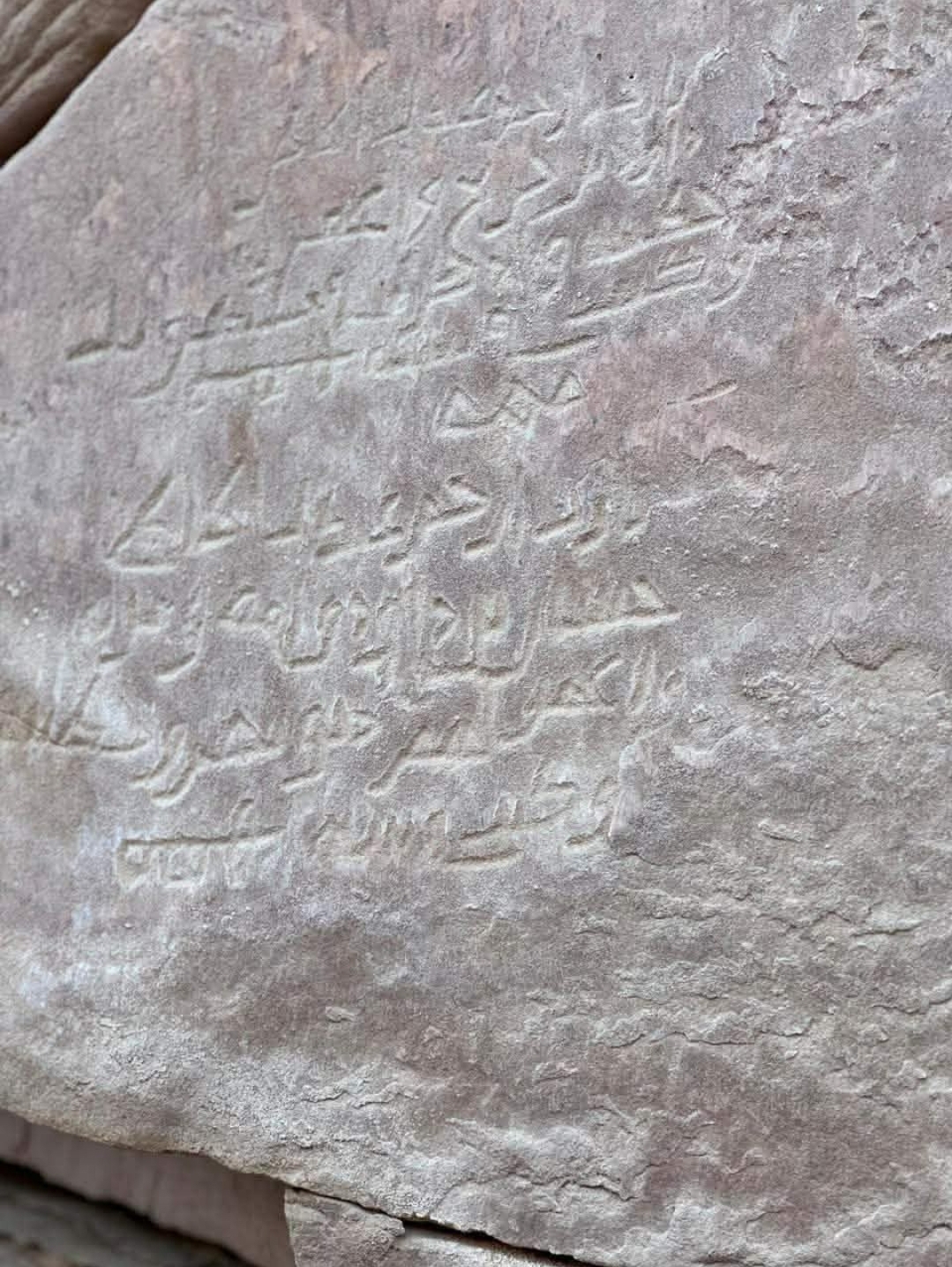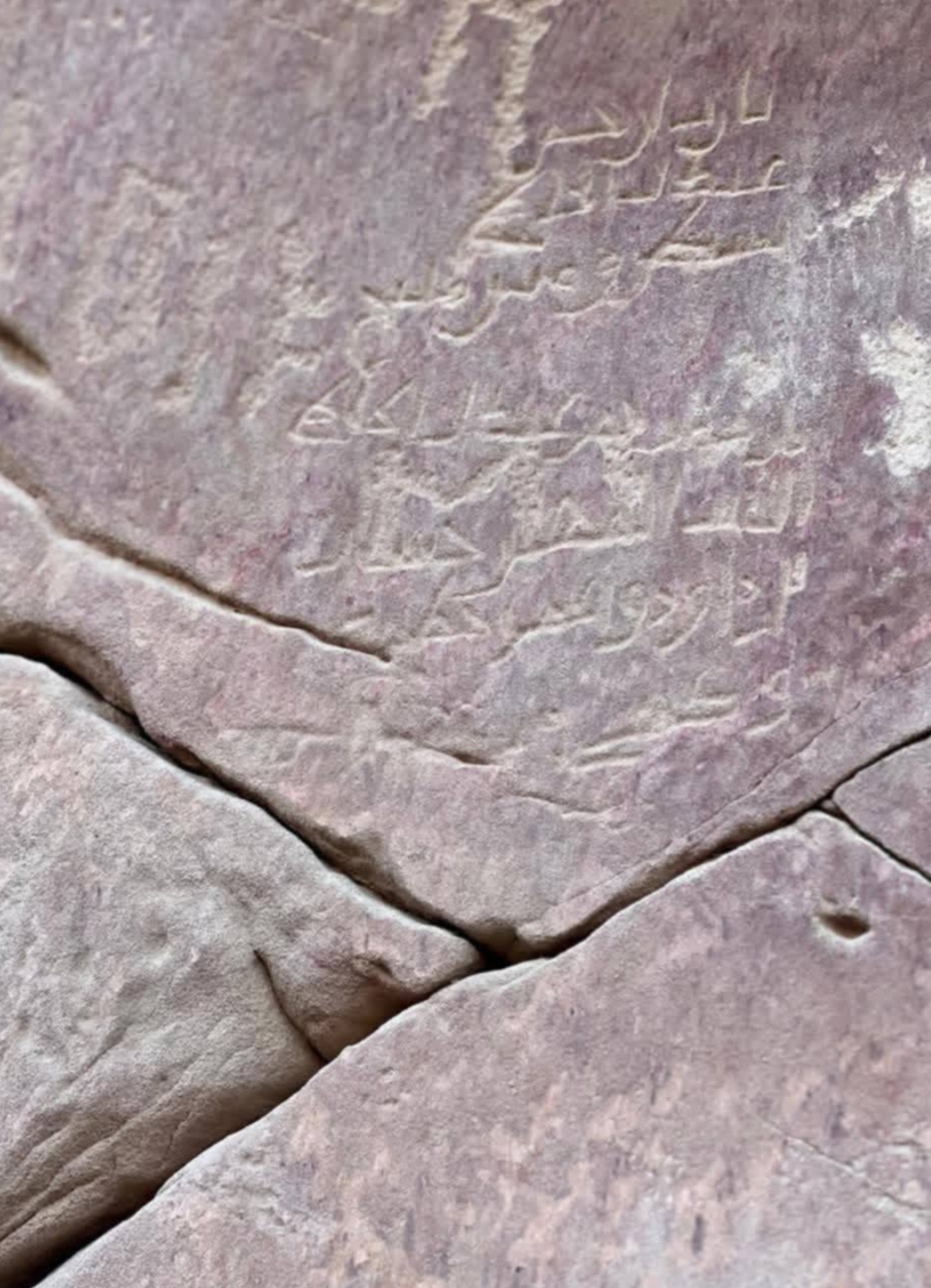

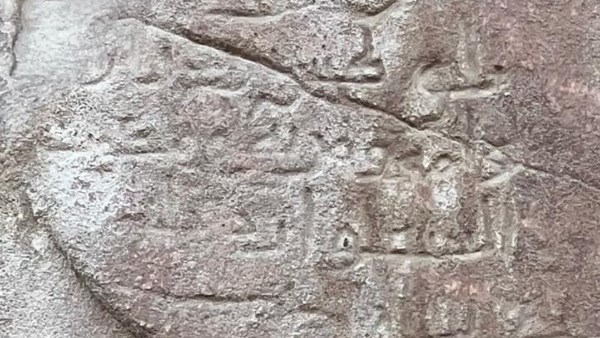
Archeology expert Dr. Abdel Rahim Rayhan, member of the History and Antiquities Committee of the Supreme Council of Culture and head of the Campaign to Defend Egyptian Civilization, revealed three rock inscriptions on the Umm Arak Plateau in the Serabit el-Khadim region, after they were pointed out by the young man Moamen Rabie Barakat and his father, a resident of Serabit el-Khadim.
The antiquities expert stated that he scientifically studied and verified these inscriptions, and came to the conclusion that they are commemorative inscriptions of Egyptian Christian pilgrims on their way to Hajj to Mount Sharia via the Western Christian pilgrimage route known in Sinai since the fourth century AD.
Dr. Rayhan continued that Dr. Jaber Ahmed Hafez, a specialist in Christian antiquities, contributed to reading the inscriptions, as the first panel contains an inscription consisting of seven lines, which are Christian propaganda phrases that read:
“O Lord, have mercy on your servant, the servant, Strauss Cross. O Lord, have mercy on your servant, the servant, the poor servant, Jaballah son of David, and forgive him, and remember him in your kingdom.”
He pointed out that the second plate read:
“O Lord, have mercy on your servant, the servant, David, son of George (Jarj), and forgive him his sins, and remember him in your kingdom, and repent upon him. Amen. O, Lord, have mercy on your servant, the servant, Makar, son of David, and his mother, and his wife, and forgive them their sins.”
The third panel contains religious supplications.
Dr. Rayhan pointed out that the goal of the Christian pilgrimage is to visit the holy places, pray, and acquire spiritual virtues. However, the prominent development of the idea of the pilgrimage to Jerusalem and Sinai occurred during the reign of Emperor Constantine, the first Christian emperor (323-337 AD), who stopped the persecution of Christianity.
He added that during that period, his mother, Empress Helena, visited Jerusalem, and Constantine consolidated her discovery by building the Church of the Holy Sepulcher. Then she came to the Sacred Valley area in Sinai (“St. Catherine’s”) today, and built a small church in the bosom of the sacred bramble tree, and a tower for the monks in the area to take shelter.
Emperor Justinian included this church within the borders of the monastery he established in the Holy Valley, and called it the Monastery of Tur Sinai, whose name later changed to the Monastery of St. Catherine.
Rayhan narrated that the Ottomans introduced the church altar, which was outside the walls of the Church of the Transfiguration within the church, and that everyone who enters it until now takes off his shoes in imitation of the Prophet Moses, and since then the holy journey to those places has become an established tradition among Christians from the East and West.
Dr. Rayhan pointed out that there is a door in the northeastern wall of St. Catherine’s Monastery through which pilgrims entered in the past, and through which visitors enter now after ascending and descending from Mount Moses. It is called several other names, such as Mount Sharia, Mount Synagogue, and Mount Sinai.
He pointed out that there are two routes for Christian pilgrims in Sinai:
A 200 km eastern route for pilgrims coming from Jerusalem.
A western route for pilgrims coming from Europe via Alexandria, then the Nile River, then overland via the Eastern Desert to Sinai, as well as for Egyptian pilgrims, as the Egyptians cross the Eastern Desert to Qalzum (currently Suez), to Oyoun Musa, Wadi Grendel, Wadi al-Maghara, and the Sarabit al-Khadim area, Wadi al-Muktab, to Wadi Firan and then Jabal al-Sharia.
Dr. Rehan concluded that Michael Stone carried out an archaeological survey and study of the inscriptions of Wadi al-Hajjaj on the eastern pilgrimage route when he visited Sinai in 1979. He uncovered 55 Armenian inscriptions, which he dated to the period between the first to the fourth century AH (seventh to tenth century AD), including an inscription by a Christian saying: “I am going around Moses,” meaning Mount Moses, and another saying: “I saw Jerusalem.”
Rayhan added that the presence of this number of Armenian inscriptions on the eastern road in Sinai and their absence on the western road indicates the density of Armenian Christians coming to Mount Sinai from Jerusalem.