
Saturday 22/November/2025 – 07:03 PM
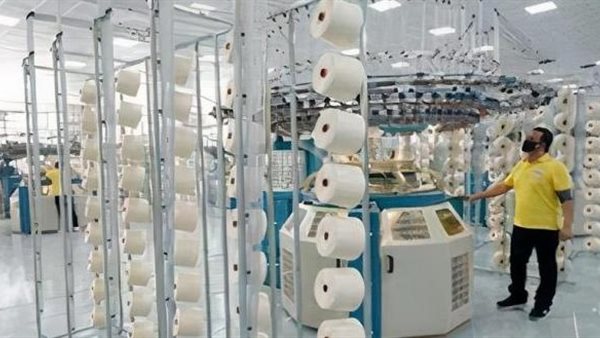
It represents an industry Spinning and weaving One of the oldest and most important industrial sectors in Egypt, as its roots go back to the Pharaonic civilization, while it was launched in its modern form in 1927 with the establishment of the Misr Spinning and Weaving Company in Mahalla al-Kubra by Talaat Harb, to become the nucleus of the national industry. However, the decline in development and modernization processes in this vital sector made it lose its global competitive advantage for many years. However, with the return of the state’s interest in spinning and weaving, this sector has become a cornerstone for reviving Egyptian economic growth, especially since it is based on a unique competitive advantage represented by the possession of Long-staple Egyptian cotton is known worldwide for its high quality.
In light of the government trend towards deepening local manufacturing and reducing dependence on imports in accordance with the economic reform program that Egypt has been implementing for several years with international institutions, the textile sector has emerged as one of the strategic pillars capable of supporting the economy, providing job opportunities, and enhancing exports if several important steps are taken into account, represented, according to the opinions of economic experts, in the continued expansion of local manufacturing, increasing the cultivation of high-quality cotton, improving the investment environment and reducing operating costs, and enhancing integration between production and export chains.
Experts stressed that implementing these requirements will enable the sector to transform into a major engine of economic growth and restore Egypt’s historical position as one of the most important textile producing countries in the world.
National projects and development efforts
A comprehensive development plan at a cost exceeding 1.1 billion euros
The state launched a major plan to restructure public business sector companies, most notably Mahalla factories, at a cost exceeding 1.1 billion euros, with the aim of building an integrated production cycle that begins with cotton cultivation and ends with a high-value final product. These efforts come in implementation of the directives of the political leadership to restore Egypt to its position as a global center for the textile industry.
Suez Canal Economic Zone projects
The Suez Canal Economic Zone supported industrial expansion by attracting Chinese and Turkish projects for spinning, weaving, and ready-made clothing in Qantara West and Ain Sokhna, with the aim of transforming the region into a regional center for textile industries. These projects are expected to provide huge added value, especially with the expansion of production capacity and linking it to global markets.
Reducing the import bill and deepening local production
Egypt annually imports approximately $2.5 billion worth of yarn, threads, dyes, and synthetic fibers, in addition to $300 million worth of ready-made clothing.
According to estimates, investing in local production could provide a large percentage of this bill, in addition to meeting the needs of a huge local market worth more than $16 billion annually, making the sector attractive for foreign and local investments.
Export growth and increased value added
Projections indicate that current exports of $4 billion could double to $8–10 billion annually in the coming years.
The sector’s contribution to the gross domestic product is also expected to rise from 3% to 5%, with public business sector companies’ exports increasing from one billion dollars to between 3 and 5 billion dollars.
The national project in Mahalla El-Kubra
The state implemented a huge project in Mahalla al-Kubra at a cost exceeding 56 billion pounds, which included the establishment of one of the largest spinning complexes in the world. Several new factories entered the stage of full operation until the end of 2025, which contributed to increasing the production of fine yarn and exporting part of it to markets such as Turkey, Italy and Algeria.
Dr. Ezz Hassanein, the economic expert, confirmed that the textile sector is one of the largest manufacturing industries in the country, and represents a social pillar due to it being a labor-intensive industry. He believes that developing the sector will lead to replacing imports, saving billions of dollars annually, increasing exports by a rate that may reach 300% in the long term, raising the added value by manufacturing Egyptian cotton locally instead of exporting it raw, and supporting foreign exchange reserves and stabilizing the exchange rate. He also stressed the importance of vertical integration of the sector to unify the entire production cycle from Growing cotton to the final product.
In the same context, Dr. Hani Abu Al-Futouh, the economic expert, explained that the period from 2021 to 2025 witnessed remarkable progress in industries related to spinning and weaving, as new projects contributed to increasing production capacity and raising the quality of products, providing tens of thousands of job opportunities despite the decrease in labor required due to modern technology, and raising the export capacity of fine yarn products.
Abu Al-Futouh pointed out that the textile industry faces ongoing fundamental challenges, the most important of which is the limited areas cultivated with long-staple cotton, approximately 195,000 acres only, the need to reduce the cost of energy and financing to achieve greater competitiveness, and the need to expand incentives for small investors.