
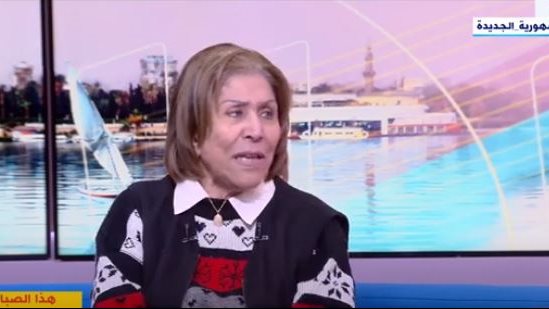
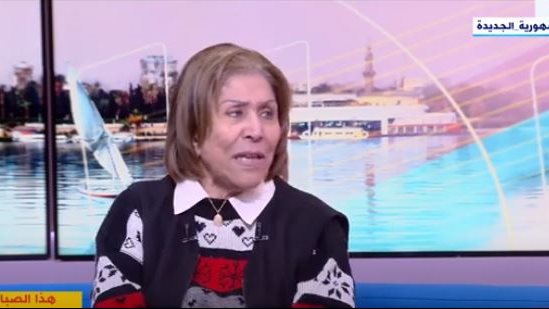
The writer and journalist said Farida Al-ShubashiEgypt witnessed a state of chaos and chaos after the Muslim Brotherhood took power, considering that the July 2013 revolution came at its time to return the country to its natural position, stressing that the current stage represents an elimination of the challenges that faced the state during that period.
Account at the end
During her interview with the journalist Nashat Al-Daihi on the “Habayeb Al-Dar” program, broadcast on “Ten” satellite channel, on Saturday evening, Farid Al-Shubashi explained her vision of the concept of religiosity, saying that religion for her “is a transaction,” stressing her refusal to reduce it to formal appearances, and added that what matters is what the hearts hide, because the reckoning in the end is on intentions, not on appearances.
In another context, she indicated that public opinion has begun to review some of the prevailing convictions, pointing out that changing the perception of Israel as a country “oppressed and searching for a better life.”
She revealed that she had been subjected to bribery attempts during her career, affirming her adherence to her principles, and adding in a simple spirit that “her best food is white cheese,” indicative of her simplicity and distance from appearances of luxury.
Regarding the family aspect, she recalled a poignant situation after her husband’s death, when major writers in Egypt wrote about him, and her son Nabil told her that it was the “best legacy” left by his father, to which she replied that she wished to leave him the same moral legacy, which she considered the highest honor she would receive in her life.
She expressed her great confidence in her grandson’s talent, noting that he wrote a distinctive poem when he was thirteen years old in French, stressing her pride in the early talent she saw in him that heralded a promising future.