

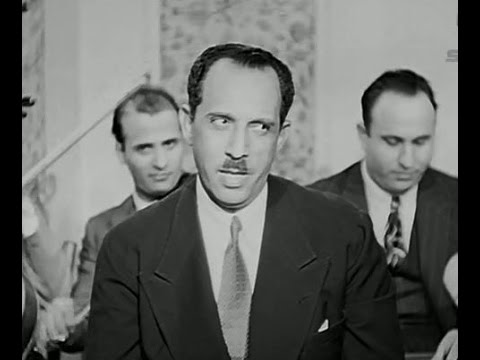
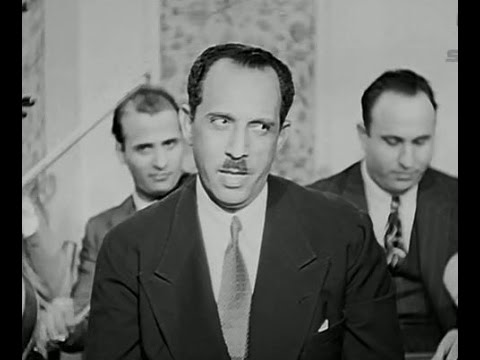
Today is the anniversary of the death of the artist Aziz Othman, who was born on January 23, 1893, and left our world on this day in 1955, at the age of 62.
Aziz Othman’s career
Aziz Othman is famous for many comedic roles, perhaps the most prominent of which is the character of Balalaika, which he presented in the movie “The Woman’s Game” with Naguib Al-Rihani and Tahia Karioka.
Aziz Othman was born into an artistic family. He is the son of the old musician Mohamed Othman. He practiced acting and singing. He was famous for his satirical songs and worked in the Badia Masabni band. His first film, for which he became famous, was “The Woman’s Game” in 1946, with the pioneer of comedy at that time, Najib Al-Rihani, the performance artist Tahia Karioka, Mary Munib, and the comedian Abdel Fattah Al-Qasri.
Behind the scenes of the film, Aziz Othman sang the famous song that we still enjoy, which is “Stop this.. and listen to this.. the crow.. oh black fella.. his husband is the sweetest dove.” He played the role of the music player “Mahmoud Balalika.”
Another of his most famous songs is “Every Day Has a New Uncle,” and he participated in the operetta “The Unknown Beloved” with the artist Laila Murad, “Forget about them, there is no one but me of value, position, and job, Mary” in the movie “Amber,” and since then his fame has spread.
Aziz Othman and his marriage to the artist Laila Fawzi
Aziz Othman married the artist Laila Fawzi, but this marriage sparked widespread controversy at the time due to the large age difference between them. In addition, the love story that was between Laila Fawzi and Anwar Wagdy was not a secret to everyone, and if Laila’s father had not objected to Anwar Wagdy, he would have been her first husband and not her second.
Regarding the secret of this marriage, Laila said: Aziz was my father’s friend, and he used to play with me and my brothers, and we used to call him (Uncle Aziz). When he proposed to me, my father refused, despite my approval, thinking that he would get me out of my father’s grip. In addition, he was a very cheerful person, and he never stopped having fun. But after marriage, I found him more strict than my father.
Aziz refused to divorce me after he learned of Anwar’s strong desire to marry me, but he agreed to the divorce after the intervention of director Fateen Abdel Wahab.
Aziz suffered from severe depression and could not live without her until he died days later on February 24, 1955, at the age of 62.