

Monday 19/January/2026 – 12:26 PM
trending sector petroleum Al-Masry seeks to expand its investments in green energy projects, within the framework of supporting the state’s commitments to reducing carbon emissions and shifting towards more sustainable energy sources, by signing contracts to produce sustainable aviation fuel (SAF), which is considered one of the most important environmental solutions to reduce emissions in the aviation sector, in addition to its high economic feasibility.
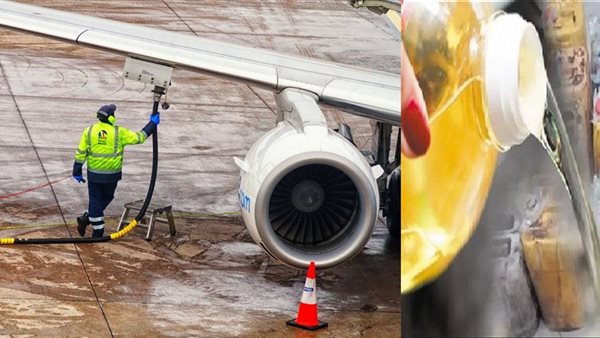
The Egyptian Petrochemical Holding Company is leading efforts to implement the first project to produce sustainable aviation fuel in Egypt. The project relies on recycling used food oil as a main input to production, which contributes to reducing waste and achieving added environmental and economic value.
The project is expected to achieve tangible returns at the local and regional levels, by providing sustainable aviation fuel in accordance with the requirements and legislation of the International Civil Aviation Organization, thus enhancing Egypt’s ability to meet the growing global demand for this type of fuel, and supporting its position as a regional center for sustainable energy.
The first factory to produce sustainable aviation fuel in Egypt
In this context, last December, the Ministry of Petroleum and Mineral Resources signed the first contract to establish a factory to produce sustainable aviation fuel with a production capacity of 120 thousand tons annually, between the Egyptian Petrochemical Holding Company, represented by the Egyptian Company for the Production of Sustainable Aviation Fuel (ESAF), and the international company Honeywell UOP.
Engineer Karim Badawy, Minister of Petroleum and Mineral Resources, confirmed that the project is the first of its kind in Egypt, and represents an important step for the petroleum sector in supporting the country’s move towards green energy transformation, and contributing to reducing carbon emissions from the aviation sector, through the production of sustainable and environmentally friendly aviation fuel.
The minister explained that the factory to be established in Alexandria Governorate depends on converting used cooking oil into sustainable aviation fuel with a capacity of up to 120,000 tons annually, which contributes to reducing about 400,000 tons annually of carbon dioxide emissions.
He pointed out that the Honeywell UOP license is one of the most prominent global licenses in sustainable aviation fuel production technologies, as it relies on advanced technology to hydrogenate used oils with a conversion efficiency of about 80%, ensuring the production of fuel that conforms to international aviation specifications, and achieves high economic feasibility while reducing carbon emissions.
New Qatari investments in the Suez Canal Economic Zone
A few days later, Dr. Mostafa Madbouly, Prime Minister, witnessed the signing of a contract for the Qatari Al Mana Holding Company project to produce sustainable aviation fuel (SAF) in the Sokhna Integrated Zone, affiliated with the General Authority for the Suez Canal Economic Zone, in addition to the establishment of the “SAF Fly Limited” company, which specializes in the production of sustainable aviation fuel.
This project is the first Qatari industrial investment within the Suez Canal Economic Zone, with a total investment of $200 million, equivalent to about 9.6 billion pounds, and is being built on a total area of up to 100,000 square meters, distributed between 70,000 square meters in the industrial zone and 30,000 square meters inside Sokhna Port.
The project’s annual production capacity reaches 200 thousand tons, including sustainable aviation fuel products (HVO), BioPropane, and Bio Naphtha, which are produced by refining used food oils.
Al Mana Holding Company also succeeded in signing a long-term supply contract with Shell International to purchase the project’s entire production of sustainable aviation fuel, with supply operations to begin by the end of 2027.
These projects come within the framework of the state’s strategy to promote green investments, reduce carbon emissions, and support the transition towards clean and sustainable energy sources, in order to achieve significant economic and environmental returns, and enhance the petroleum sector’s contribution to supporting the national economy and achieving sustainable development goals.