Tuesday 27/January/2026 – 02:09 PM
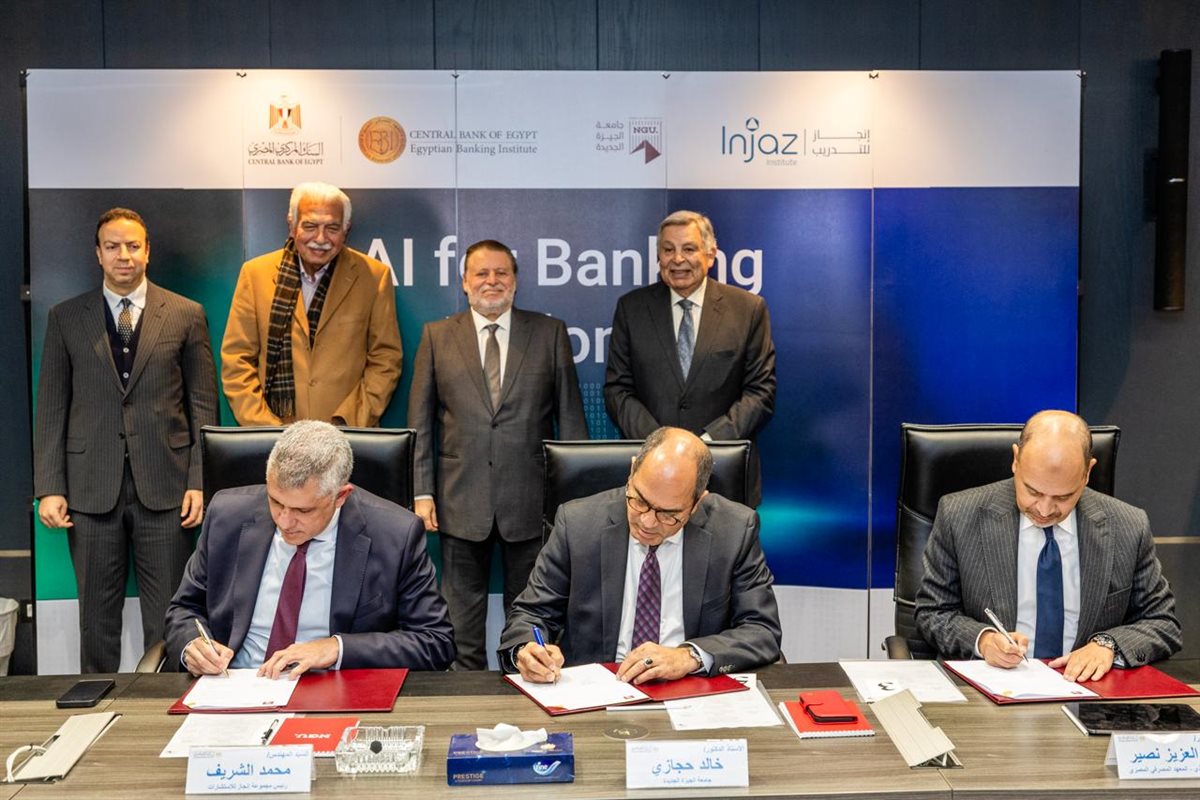
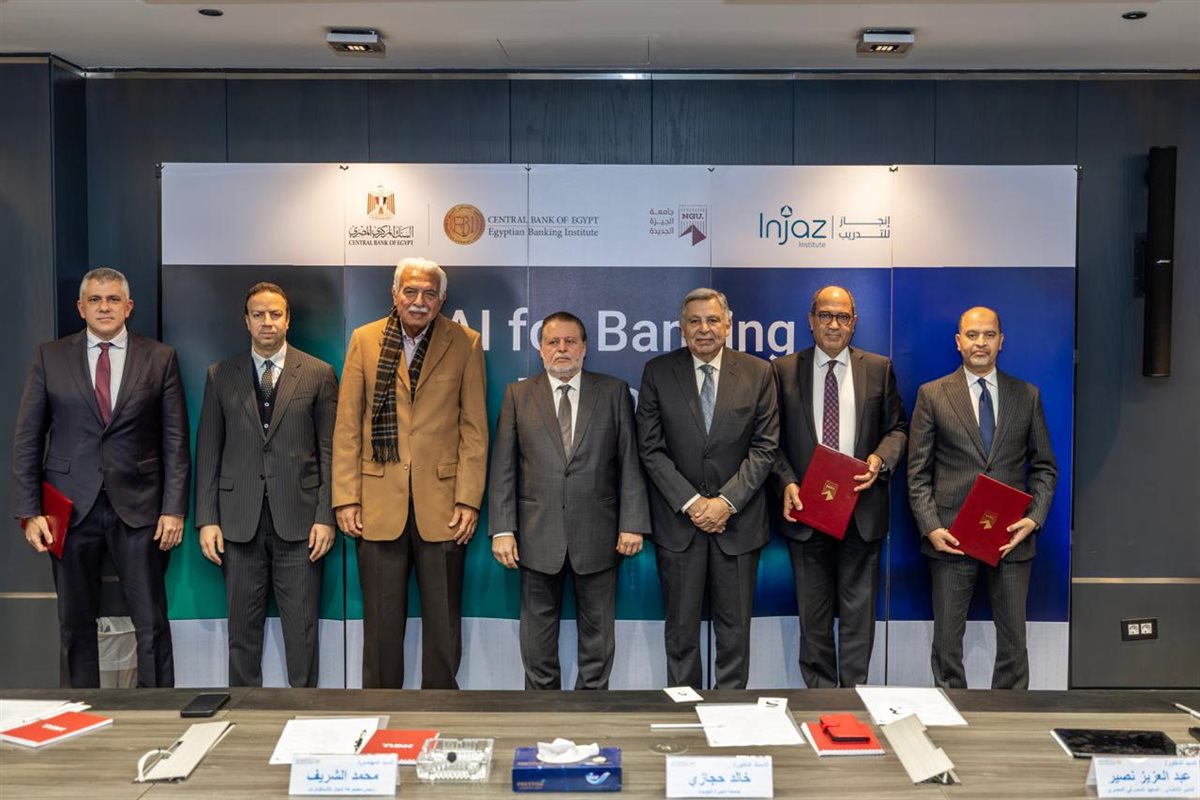
Shahad Hassan Abdullah Governor of the Central Bank of Egyptand Dr. Ahmed Sameh Farid, President of New Giza University, a signing ceremony of a memorandum of understanding to launch the first specialized diploma in artificial intelligence for bankers under the umbrella of the “Digital Academy” launched by “Fintech Egypt” affiliated with the Central Bank of Egypt, with the aim of developing the skills of banking and financial cadres in the fields of financial technology, in line with the country’s trends towards digital transformation.
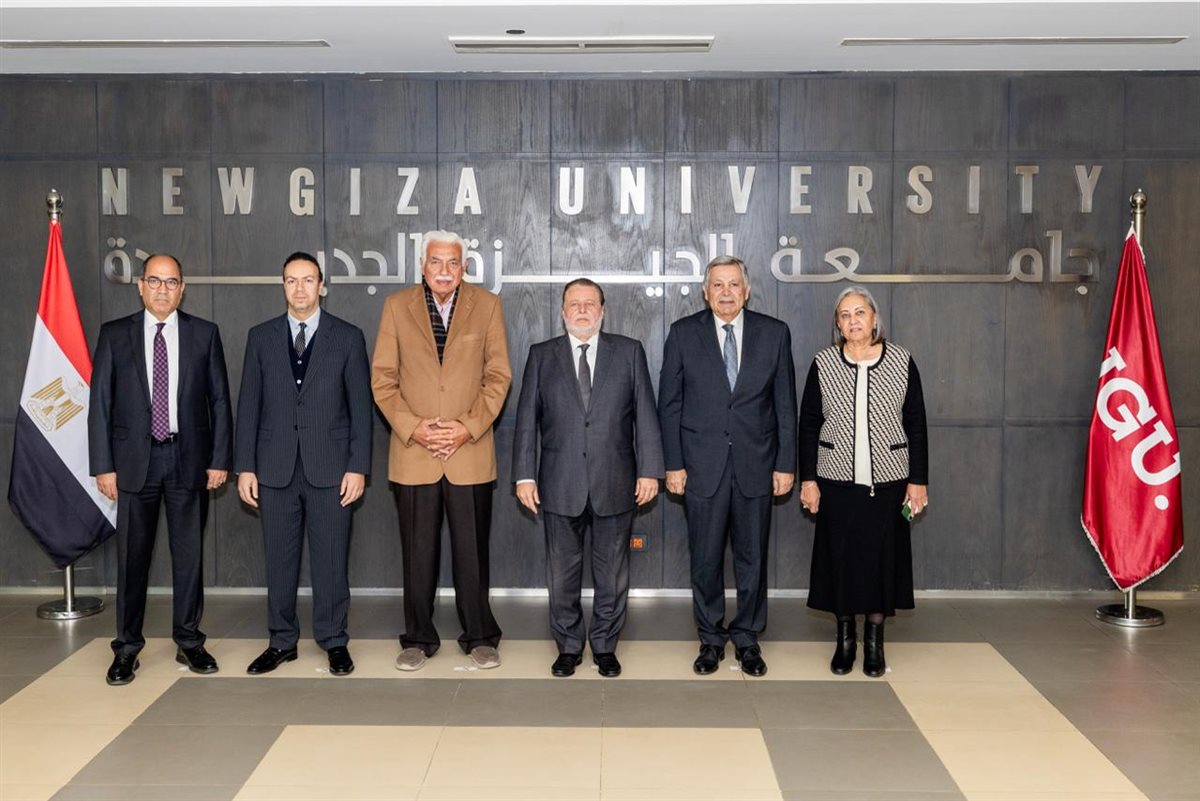
This came in the presence of Dr. Ahmed Nazif, former Prime Minister and Chairman of the Advisory Council of New Giza University, Rami Abul Naga, Deputy Governor of the Central Bank of Egypt, and Dr. Lamis Ragab, Vice President of New Giza University. The memorandum of understanding was signed by Dr. Khaled Abdel Aziz Hegazy, Dean of the Faculty of Commerce and Business Administration at New Giza University, Dr. Abdel Aziz Nosair, Executive Director of the Egyptian Banking Institute, and Engineer Mohamed Al-Sherif, CEO of Injaz Consulting Group.
On this occasion, Hassan Abdullah, Governor of the Central Bank of Egypt, stated that the launch of this diploma comes within the framework of the Central Bank of Egypt’s strategy for financial technology and innovation, which aims to transform Egypt into a leading regional center for the financial technology industry at the Arab and African levels, and a home for the next generation of qualified cadres in this field, and based on its role as a major catalyst and supporter for the adoption of advanced digital technologies, especially the field of artificial intelligence, which has become one of the most important engines of progress at the present time, due to its effective role in data analysis, forecasting, and manufacturing. The decision, in the banking field, has become a major tool for developing financial services, improving customer experience, and enhancing levels of security and operational efficiency.
Improving the efficiency of the human element
The Governor also stressed the Central Bank’s keenness to launch specific initiatives aimed at improving the efficiency of the human element, whether for employees in the banking sector or for university youth, as they are the basic foundation for achieving sustainable digital transformation and enhancing the competitiveness and stability of the financial sector.
In a related context, the governor expressed his happiness at attending the celebration events for the students of the 2024-2025 class, who completed studying the “Fundamentals of Financial Technology” course, which was included in the curricula of a number of universities, including New Giza University, within the “FinYology” initiative of Fintech Egypt at the Central Bank, which represents the culmination of fruitful cooperation between the Central Bank and the educational sector to create a new generation of qualified cadres for the labor market in the financial technology sectors and its affiliated fields.
For his part, Dr. Ahmed Sameh Farid, President of New Giza University (NGU), stressed that cooperation with the Central Bank of Egypt and the Banking Institute represents a practical embodiment of the university’s vision and mission, and comes within the framework of complete harmony with the “Digital Egypt Vision 2030,” which places investment in the human element and qualifying it to deal with modern technologies at the top of the state’s priorities.
He added that this step consolidates the strategic vision of the university’s College of Commerce and Business Administration, which believes that the role of academic institutions does not stop at granting academic degrees only, but extends beyond that to creating “change leaders” qualified to lead the digital transformation engine in various economic sectors.
In the same context, Dr. Abdel Aziz Nossair, Executive Director of the Egyptian Banking Institute, confirmed that the launch of this diploma is in line with the Institute’s plan during the current year, which focuses on refining the skills of employees in the banking sector in all areas of artificial intelligence in line with global developments.
The diploma consists of 5 integrated training programs, each of which provides a mixture of practical case studies drawn from the banking sector, in addition to tools, frameworks, and educational exercises aimed at enhancing interaction and developing applied skills, and includes the following:
- The first programme: “Principles of Artificial Intelligence”, which deals with an introduction to the concepts of artificial intelligence, with a focus on its applications in the banking sector.
- The second program: “Mastering the Basics of Artificial Intelligence,” focuses on exploring basic techniques in the field of artificial intelligence, learning about the tools used, as well as applying practical methods.
- The third programme: “Data Management and Governance”, addresses the frameworks and standards necessary to ensure that data is used securely and in compliance with laws and regulations.
- The fourth programme: “Ethics and Risk Management of Artificial Intelligence”, which highlights the importance of responsible adoption of artificial intelligence technologies, and how to align operations with established rules and standards.
- The fifth programme: “Application and Management of Artificial Intelligence”, which will focus on strategies to expand the use of artificial intelligence technologies and effectively integrate them into banking operations.
Studying in this diploma is distinguished by giving students complete flexibility to choose between studying the five courses sequentially to obtain the full diploma certificate, or enrolling in each program separately in accordance with their professional goals and development plans.
It is worth noting that the Central Bank launched the Digital Academy, in January 2023, in partnership with the Egyptian Banking Institute, with the aim of developing the skills of banking and financial cadres in the fields of financial technology, artificial intelligence, and digital innovation. The Academy began its first program with the pilot program for innovation, “The Innovator Programme.” In addition, it launched four specialized training programs in the fields of “Generative AI in Finance” from 2024 until now.
It is also worth noting that the launch of the new diploma is a continuation of the pivotal role played by the Central Bank of Egypt in linking the educational sector to the needs of the labor market, as it comes a few months after the launch of the bachelor’s degree program in banking sciences, in cooperation with the Ministry of Higher Education and Scientific Research, as the first university program of its kind offered by a number of colleges of commerce, starting from the academic year 2025/2026, with the aim of establishing an integrated applied educational path that combines academic study and practical training, and contributes to the preparation of qualified graduates who are able to integrate into the market. Work as soon as they graduate.