

Saturday 18/April/2026 – 02:33 AM
Open AI announced the launch of an early version of a new artificial intelligence model aimed at accelerating drug discovery and healthcare development processes, igniting competition with Google and sparking widespread interaction in the financial markets and the advanced medical technology sector.
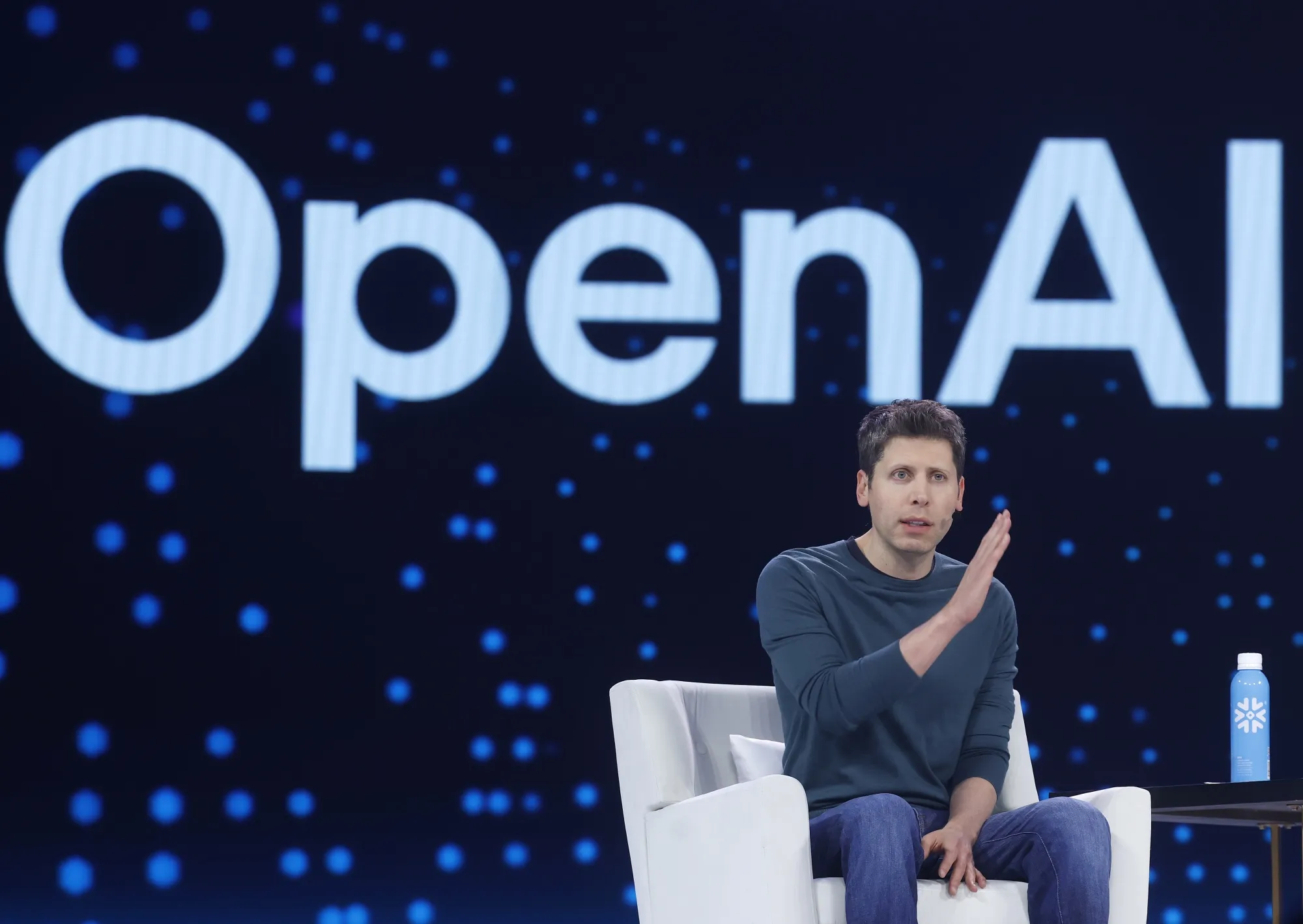
Launching the Rosalind GPT model to accelerate drug discovery
According to the Los Angeles Times, Open AI is introducing an early version of an innovative artificial intelligence model specifically designed to accelerate drug discovery processes, joining a vital field that is receiving increasing attention from the world’s major technology companies, as these global companies seek to prove the ability of generative artificial intelligence to pave the way for more medical scientific breakthroughs that save lives.
The manufacturer of the famous Chat GPT program explained on Thursday that the new model, which bears the name GPT Rosalind, is entirely dedicated to supporting complex life sciences research. This advanced technical model helps extract accurate insights from huge amounts of accumulated biological data and transform theoretical scientific studies into practical health care applications that benefit patients in hospitals. The model will initially be available as a pilot research preview for some of the company’s clients from major commercial institutions. The list of early users of this system includes Amgen, which specializes in the pharmaceutical industry, and Moderna, a company that produces medical vaccines, in addition to the Allen Institute, which is a non-profit organization specializing in Biological sciences research.
Competition with Google and the development of drug discovery tools
Major tech companies such as Open AI, Anthropic, and Alphabet Inc’s Google are increasingly focusing on scientific and health applications of AI models.
These cutting-edge applications range from using advanced technology to guide research on new drug discovery efforts to having machines review patients’ personal medical data with extreme accuracy. In 2024, two Google DeepMind scientists will share the Nobel Prize in Chemistry thanks to the creation of AlphaFold, an advanced artificial intelligence system that predicts the structures of complex proteins that form the basis of life.
This biotechnology is considered nascent but very promising in medical circles, as some of the treatments that have been developed with the help of artificial intelligence have participated in early clinical trials to support drug discovery efforts and treatment of incurable diseases.
Joy Jiao, head of life sciences research at Open AI, confirmed that the company hopes that the technology model will serve as a strong research partner for organizations, especially in biological businesses that increasingly rely on the power of computers. Although the company does not yet believe that technology can be used alone to come up with entirely new treatments for diseases, it sees a real and tangible opportunity to help researchers move faster through the most complex and time-consuming parts of the scientific process in the field of drug discovery and reduce exorbitant financial costs.
Impact of technology on markets and biosecurity concerns.
The shares of companies operating in the traditional drug discovery sector fell sharply and significantly immediately after news of the launch of the new Open AI model. The shares of IKVIA Holding Company fell by up to 3.2%, while the shares of Charles River Laboratories International fell by 2.6% on the stock exchange.
Shares of both Rekergen Pharmaceuticals and Schrödinger Company fell by more than 5%, reflecting investor anxiety about the coming technical disruptions. Open AI and its direct competitor Anthropic are racing to develop more advanced and intelligent artificial intelligence models capable of taking on a wide range of very complex tasks, including programming, science and cybersecurity, in the hope of convincing more global companies that the technology will significantly save time and money.
But as modern technology improves in certain areas, renewed global concerns have emerged about how artificial intelligence can be misused to develop destructive biological weapons rather than discover useful and legitimate medicines.
Yuyun Wang, head of life sciences products at the technology company, explained that in addition to assessing whether organizations are able to use its new model with complete safety, the company includes high-precision warning signs that are activated immediately if the user reaches certain indicators or limits related to the production of biological weapons to ensure the use of modern technology in the path of drug discovery that is safe and beneficial to all of humanity.