
Monday 13/April/2026 – 01:14 AM
In light of the clear discrepancy in the statements of Donald Trump and Benjamin Netanyahu, the state of ambiguity around the reality of the nuclear program is increasing IranianAmong those who believe that it has been completely eliminated, and others who warn that it still represents a close and dangerous threat.
Has Iran’s ability to manufacture nuclear weapons declined?
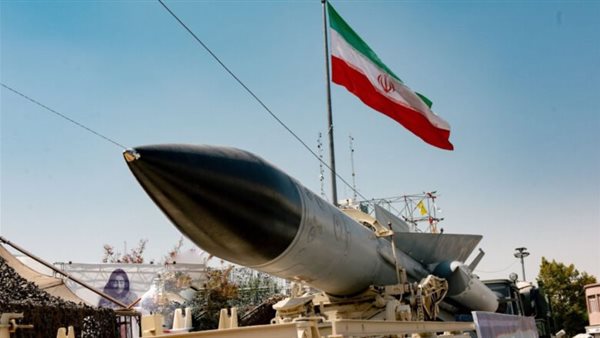
According to a report published on The Jerusalem Post website, the recent confrontation between Iran and the occupying entity was not, in essence, due to the Iranian nuclear program only, but was more linked to traditional military concerns, especially the growth of Iran’s ballistic missile arsenal, which represents a direct threat to Israel’s defense capabilities.
Some estimates also believe that political goals, such as weakening the Iranian regime or pushing it to make concessions, played an important role in directing the path of escalation.
Despite the statements that talked about eliminating the Iranian nuclear program, the reality is more complex, as the program was subjected to strong blows in mid-2025, which led to a significant decline, and it is believed that it needs a period of up to two years to restore its previous level.
But on the other hand, Iran has not made significant progress in rebuilding its nuclear capabilities since that time, which reinforces the idea that the immediate danger has declined.
The most prominent challenge remains that Iran possesses quantities of uranium enriched to 60%, a percentage that can theoretically be converted into military nuclear fuel within a short period.
However, this stockpile is not new, as Iran has possessed it for years. It is also believed to be buried under the rubble of targeted facilities and is subject to close intelligence oversight, which reduces the possibility of its quick or sudden use.
Data indicate that the Iranian nuclear threat is no longer as imminent as it is sometimes portrayed, especially in light of the destruction of a large part of the nuclear infrastructure, the decline in enrichment and development capabilities, the difficulty of accessing enriched materials, and ongoing international and intelligence monitoring.