


Tuesday 09/December/2025 – 04:33 PM
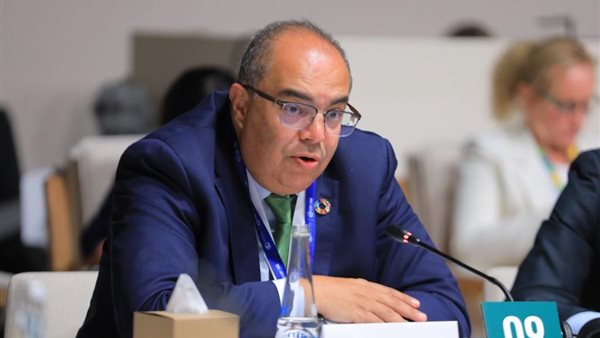
Share Dr Mahmoud MohieddinThe United Nations Secretary-General’s envoy for financing sustainable development, who is assigned by the United Nations Secretary-General to head a group of experts to provide solutions to the global debt crisis, at the “Arab Debt Management Group” event organized by ESCWA, where he gave a presentation entitled “Public Debt Management in a Changing World: Sustainable Strategies to Face Global Economic Challenges.”
Mahmoud Mohieldin: Treating the complex crisis of debt and development requires adopting national measures to strengthen fiscal space
Mohieldin stressed that the current debt crisis is not a traditional debt crisis, but rather a complex crisis that reflects structural problems in the global financial system. The crisis has also turned into a debt service crisis rather than a debt crisis, especially in middle- and low-income countries.
Mohieddin reported that the volume of public debt in the Arab region reached $1.5 trillion in 2023, and debt service pressures increased, as external payments exceeded $40 billion in the same year, which limits the financial space available for development.
He pointed to a dangerous shift in the structure of debt, as the crisis turned from external debt to a major domestic debt crisis, and most of the new debt is now not borrowed for productive investment, nor even for consumption, but rather to service the old debt.
Based on the work of the United Nations team of experts, Mohieldin presented eleven practical proposals to confront the crisis, divided into three levels, the first of which is reforms to the multilateral financial structure, where the reforms are based on the necessity of reviewing the current frameworks of influential institutions and alliances to become more effective, the most prominent of which is expanding the scope of the general framework of the G20 to include middle-income countries, activating the conditions for automatic suspension of debt service during periods of major negotiations or crises to ensure the provision of the necessary financial space, reviewing debt sustainability frameworks (DSAs) to include the needs of sustainable development and climate, and developing Frameworks that prioritize development needs over repayment and debt servicing, as well as redirect unused Special Drawing Rights (SDRs) to increase liquidity and support development in developing countries.
The second level of solutions relates to international and regional cooperation, and focuses on strengthening the voice of the borrowing countries and coordinating their efforts, by unifying the position of the borrowing countries and enhancing cooperation between them with the aim of exchanging knowledge and experiences and mobilizing reforms, strengthening the collective voice of the borrowing countries in international negotiations, and establishing an information center to provide technical assistance and guidance on innovative financial instruments, such as debt swaps for development, in addition to expanding technical assistance programs and building capabilities in areas such as debt transparency, data management and financial risks.
Mohieldin said that the third level of solutions focuses on reforms at the state level, and adopting national measures to strengthen the financial space, including enhancing institutional capabilities to address liquidity risks and monetary problems, improving the management and planning of investment projects, and establishing a national investment platform, noting the possibility of saving $110 billion through tax reforms, and saving up to $250 billion through more efficient public spending and redirecting budgets to the social sectors.