

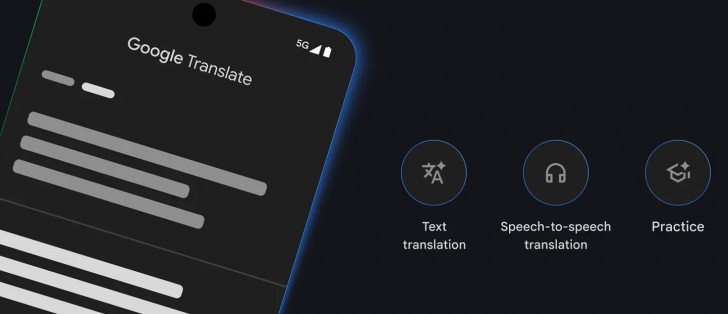
Today, Google has comprehensively redesigned Google Translate, integrating it with Gemini technologies, with the aim of increasing translation accuracy, especially when dealing with phrases with precise meanings such as proverbs, local expressions, and colloquial language.
Google explains that this update provides a level of translation that is considered one of the latest in the world, and is currently available through Google Search and the Google Translate application on iOS and Android.
The update began rolling out today in the United States and India, with support for translation between English and about 20 other languages, including Spanish, Hindi, Chinese, Japanese, and German.
In addition, Google has launched a new beta experience that allows simultaneous translation to be heard directly via headphones. This feature maintains the tone, rhythm, and emphasis of each speaker, making the translation more natural and easier to follow. To benefit from it, it is enough to wear headphones, open the Google Translate application, then click on the Live Translate option.

This beta feature begins to reach Android users via the Google Translate app in the United States, Mexico, and India, with support for more than 70 languages. Google plans to expand availability to additional regions, in addition to launching it on iOS during 2026.
In the same context, Google is improving language learning tools within the application, by providing smarter feedback and advice based on speaking practice. It also adds a new way to motivate users by tracking the number of consecutive learning days to achieve educational goals.
Finally, Google is expanding its language learning tools to nearly 20 new countries and regions, including Germany, India, Sweden, and Taiwan.