

WhatsApp groups have become in the Google search engine
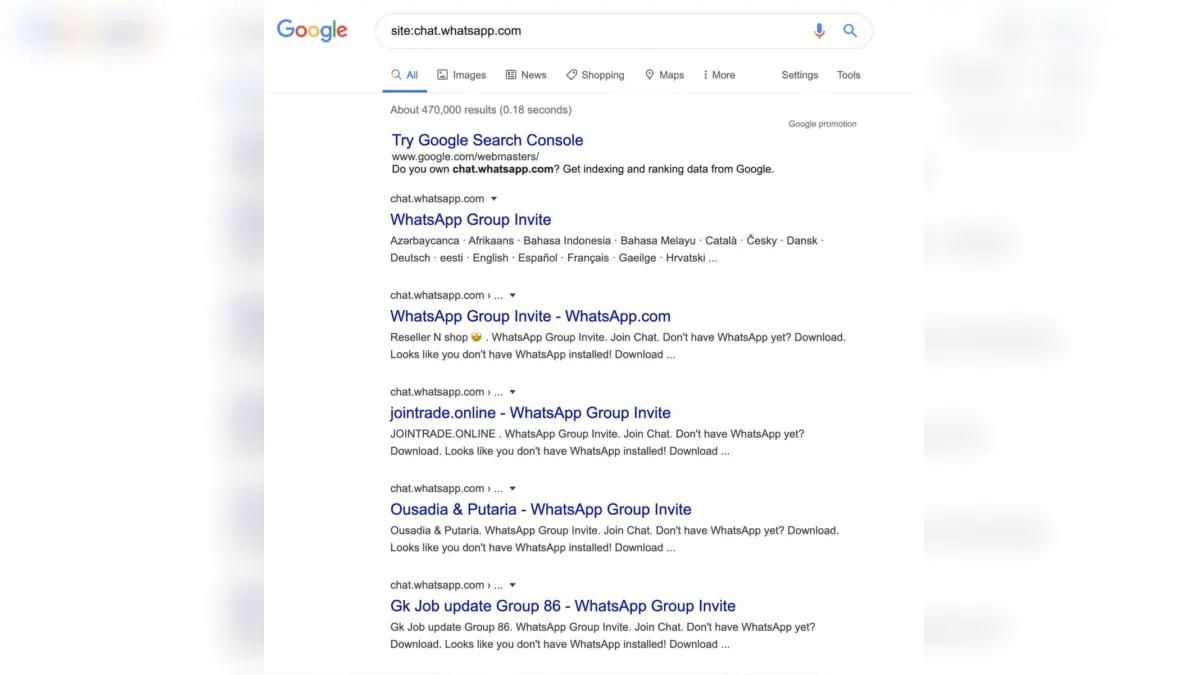
An error occurred from Google and WhatsApp yesterday, as links to groups within the WhatsApp application WhatsApp Group Chat Invite Links became indexed by the Google search engine, where anyone can enter groups, especially in the WhatsApp application, simply by searching for them on Google.
Google immediately stopped displaying search results that provided results for the group chat invitation.
The controversy erupted when a report released on Friday revealed that Google has indexed invitation links to private WhatsApp group chats, meaning anyone can join different private chat groups (including several) with a simple search.
According to the report, WhatsApp group chat invitations are indexed by Google. We were able to independently verify the presence of indexed invite links to private WhatsApp groups by searching for “site:chat.whatsapp.com” in Google after this report was published.
However, in the hours following the report, Google appears to have stopped returning results for that search, instead returning the message “Your search – site: chat.whatsapp.com – did not match any documents.”
Journalist Jordan Wildon said on Twitter that he discovered that WhatsApp’s “Invite to Group Link” feature allows Google Groups to index groups, making them available online where links are shared outside of WhatsApp’s secure private messaging service.
“WhatsApp groups may not be as secure as you think,” Wildon tweeted on Friday, adding that by using certain Google searches, people can discover links to private chats.
According to engineer Jin Wong, Google has about 470,000 results for a simple search for “site:chat.whatsapp.com,” which is part of the URL that makes up invitations to WhatsApp groups.
WhatsApp spokesperson Alison Bonny said: “Like all content shared in searchable public channels, invite links that are made public online can be found by other WhatsApp users.”
“Links that users want to share privately with people they know and trust should not be posted on a publicly accessible website,” Bonney said.
Danny Sullivan, Google’s general search coordinator, tweeted: “Search engines like Google and others list from the open web. This is what’s going on here. It’s no different than any case where a site allows URLs to be listed publicly. We provide tools that allow sites to block content that gets listed in our results.”
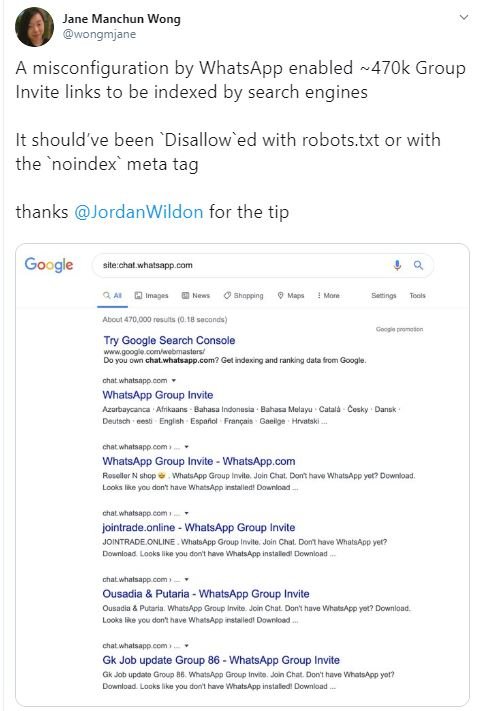
Importantly, the indexed search results also contained several instances of child porn sharing groups, according to a Twitter user. There has long been a reported child porn problem on WhatsApp, and the company has gone to great lengths to claim that it is working on a fix.
On an FAQ page earlier this month about how WhatsApp can help combat child exploitation, the company wrote, “WhatsApp has a zero-tolerance policy around child sexual abuse.
We ban users from WhatsApp if we learn they are sharing content that exploits or endangers children. … To help prevent the sharing of child exploitative images (CEI), WhatsApp relies on all available unencrypted information including user reports to detect and prevent this type of abuse.
Over the past three months, WhatsApp has banned nearly 250,000 accounts per month suspected of sharing CEI…
For example, we use a photo matching technology called PhotoDNA to proactively scan profile photos for known CEI. If our systems detect such an image, we will block the user and associated accounts within a group. ”