

Sunday 25/January/2026 – 02:14 AM
Informed sources revealed to Reuters that a meeting was held last month in the capital of Greenland between officials from the United States, Denmark and Greenland, which took place in a normal and reassuring atmosphere, without any discussion about an American military or financial seizure of the Danish territory located in the Arctic.
However, this calm did not last long, as the atmosphere changed less than two weeks later when US President Donald Trump announced the appointment of Jeff Landry as special envoy to Greenland.
Landry sparked widespread controversy after publishing a message on social media in which he talked about helping to “make Greenland part of the United States,” which shocked officials in Copenhagen and raised astonishment within the corridors of the American administration itself, especially among those working in the European and NATO files.
Centralized foreign policy making
This development reflects a recurring pattern in the Trump administration, which is centralized foreign policy making, with a clear marginalization of diplomats and national security experts.
According to sources who told Reuters, several sensitive decisions, including the implicit threat to seize control of Greenland and impose new customs tariffs on allies, came as a result of limited consultations that included the president and a small number of his close aides.
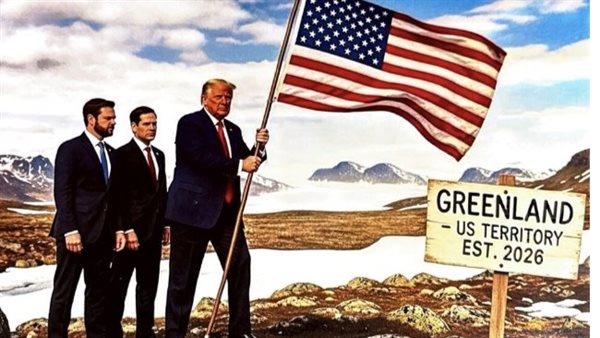
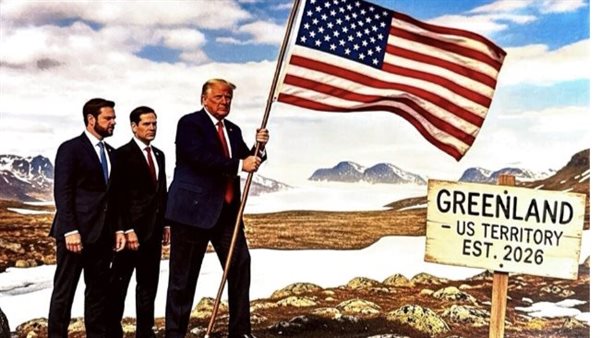
This circle included Commerce Secretary Howard Lutnick, Vice President J.D. Vance, and Secretary of State Marco Rubio, who along with other officials tried to dissuade Trump from considering using military force.
Although this approach is consistent with Trump’s desire to speed up decision-making and his distrust of Washington’s bureaucracy, the sudden announcement of policies and subsequent reversal of them has, according to observers, caused lasting damage to US relations with its allies.
Resorting to military action
Concern escalated in particular after statements made by White House Deputy Chief of Staff Stephen Miller, in which he did not clearly rule out resorting to military action to seize Greenland, which sparked confusion in Washington and anger among European allies. Lawmakers from both parties in Congress also expressed their concerns about the possibility of executive authority overstepping Congress in any possible military action.
In an attempt to contain the tension, Trump later softened his tone, withdrew his threat to impose tariffs on countries supporting Greenland, and announced that a framework of understanding had been reached with NATO regarding the future of the island and the Arctic region. Sources close to the administration confirmed that the option of military action was not seriously considered.
The United States appears untrustworthy
However, analysts believe that the political damage has already been done, as Cori Schak, a former Pentagon and White House official, said that Trump’s volatile threats made the United States appear untrustworthy to its closest allies.
Trump and his supporters assert that Greenland represents strategic importance for American national security in the face of Russia and China, but critics point out that the United States already has a military base on the island, and has powers to expand its presence under a defense agreement signed with Denmark in 1951.