
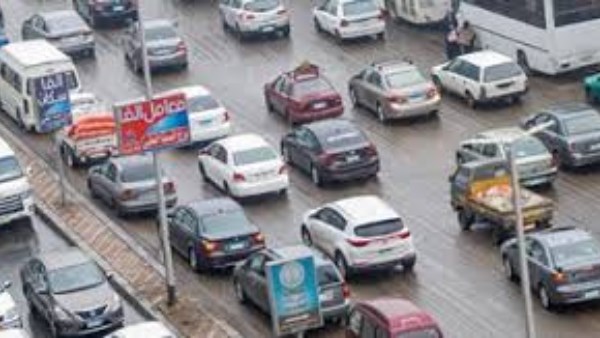
Main axes and roads in Cairo and Giza governorates witnessed this Thursday morning Traffic densities During the first peak period, despite the usual crowding, traffic remained moving without a complete stop, thanks to the intense security presence and the deployment of traffic police in the streets and vital squares.
These efforts come within the framework of the traffic departments’ plan to control morning crowding, facilitate vehicle movement, and quickly deal with any bottlenecks that may hinder movement within the most crowded areas.
Traffic monitoring indicated that there were varying crowds in central Cairo, especially in Tahrir Square and its surrounding areas, where a large flow of cars was observed, with some slowdowns at peak times, while the entrances leading to the square maintained regular movement, which contributed to preventing the worsening of congestion.
High densities were also observed on the Nile Corniche, especially in the direction leading to Helwan and the King Al-Saleh area, as a result of the increased movement of vehicles coming from residential and commercial areas in that destination during the morning hours.
In Giza, several main axes witnessed significant congestion, including Nazlet El-Bahr Al-Azam all the way to Dokki and Galaa Square, in addition to continuous congestion on the ring road at the Mariouteya area in the direction coming from the desert road.
The congestion extended to include the Fayoum Desert Road, passing through Al-Ahram Gardens and up to the Shooting Range, as they are main roads linking various areas of the governorate.
While some areas maintained clear traffic flow, such as the October Bridge, Ramses, Abdel Moneim Riad Street, and downtown, without recording major congestion.
Traffic also remained relatively stable in a number of Giza axes, including the Nile Tourist Street, Al Haram Street, the Great Sea, the Ring Road towards Upper Egypt, and the Warraq and Mariouteya areas.