


Friday 16/January/2026 – 04:43 PM
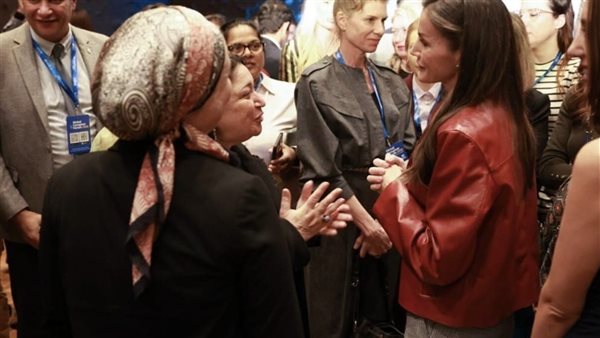
Engineer Margaret Sarofim participated as Deputy Minister Social solidarityin the work of the first Global Forum for Caregivers, whose activities were launched in the Spanish capital, Madrid, under the patronage and presence of the Queen of Spain.
The participation of the Deputy Minister of Social Solidarity came within a high-level session held entitled “Love, Play and Safety… An Integrated Environment to Support Healthy Growth,” where she stressed the importance of holding the first Global Forum for Caregivers as an international platform that highlights positive care programs and discusses the roles and skills of caregivers as they are the cornerstone in building children’s health and their physical, psychological and social development.
The Deputy Minister of Solidarity reviewed the Egyptian experience in providing care for the family through its various stages, explaining that Egypt adopts a proactive approach that begins with supporting parents before pregnancy through the national program for preserving the Egyptian family entity “Mawaddah,” which aims to support young men and women about to get married with the knowledge, values, and skills necessary to build stable and healthy families based on fair partnership and shared responsibility.
The first global carers forum in Madrid
She pointed out that the “Mawaddah” program, which was approved in December 2025 as a pioneering Egyptian national experience to support and empower families by the Council of Arab Ministers of Social Affairs, succeeded in reaching 2,000,000 beneficiaries through direct training, in addition to 5,400,000 beneficiaries via the digital platform. It was also institutionalized through universities and community partners to ensure its sustainability and spread at the national level, and contribute to consolidating the foundations of Responsible parenting and building more balanced and healthy marital relationships.
The Deputy Minister discussed the Ministry’s efforts to support mothers and families most in need through social protection programs, most notably the “Solidarity and Dignity” program, which benefits 4.7 million families and is considered the largest conditional cash support program in the Arab region.
She explained that the issuance of the new Social Security Law represented a qualitative shift in the social protection system, as it transformed the conditional cash support program into a legislative right that guarantees sustainability and provides sustainable legal protection for families in need of care.
Sarofim referred to the program of the first thousand days of a child’s life, as one of the most important critical stages in shaping the child’s growth and building the human being, explaining that 60,000 mothers per month who are beneficiaries of the Takaful program receive additional cash support from the beginning of pregnancy until the child reaches two years of age, which contributes to improving the healthy nutrition of children, reduces psychological pressures on mothers, and supports the child’s healthy growth.
Regarding the early childhood development file, the Deputy Minister of Solidarity confirmed that Egypt is working to develop an integrated system to ensure the quality of early care and education, noting that the Ministry of Social Solidarity has implemented a comprehensive national survey of nurseries nationwide, with the aim of identifying gaps and actual needs and supporting decision makers in building evidence-based policies.
The survey resulted in an inventory of 48,225 nurseries providing services for children from 0 to 4 years old, which allowed the preparation of a national development plan aimed at achieving justice and quality in early childhood services in various governorates.
She also reviewed the efforts made in the field of care across the stages of childhood and adolescence, explaining that Egypt adopts a dual approach that supports parents and children together, through training biological parents, alternative care families and caregivers, in addition to implementing life skills development programs and building psychological resilience for children from the ages of 6 to 18 years, and organizing joint camps and activities that bring together parents and children to enhance dialogue and reduce the gap between generations.
She stressed that these efforts embody the vision of the new national initiative “Affection… Education… Participation”, which is based on affection as a basis, education as a path, and participation as a guarantee of family cohesion and flexibility, explaining that the initiative took its first steps by training and preparing 742 awareness and training cadres, in preparation for training 64,000 cadres nationwide.