

Tuesday 23/December/2025 – 10:44 AM
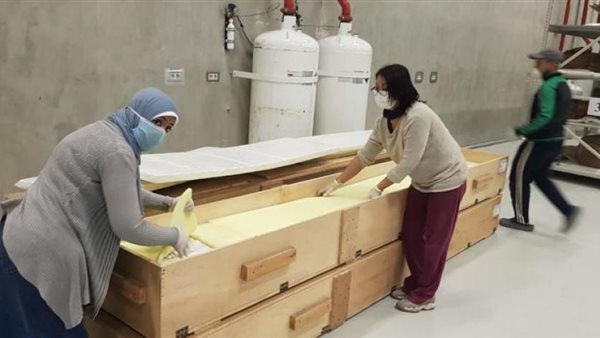
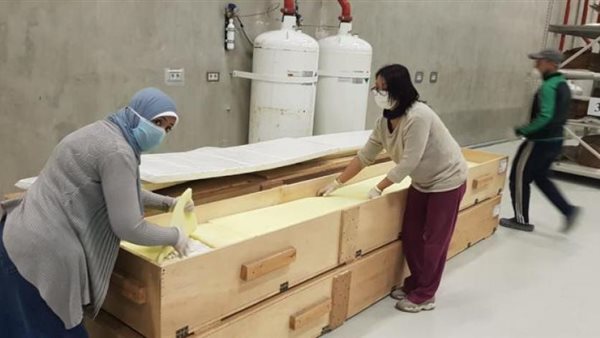
The Grand Egyptian Museum will shortly witness an important archaeological event, which is the transfer of the panels of the Second Khufu Ship from their place of restoration inside the museum to their display location in the Khufu Ship Museum, marking the start of the work of reassembling them in front of the public, in a step that revives one of the most important world heritage projects related to the Great Pyramid.
The reconstruction of Khufu’s second ship begins in front of visitors at the Grand Egyptian Museum
This event comes as a culmination of the second phase of the project to extract, restore and assemble the second Khufu complex, which was launched in 2022, after years of careful scientific work that began in 2008, and included preparing the entire excavation site, establishing an on-site laboratory for restoration, storage and documentation, in addition to employing the latest technologies such as 3D imaging and laser scanning to record and document the pieces immediately after they are extracted.
The project witnessed the implementation of preliminary restoration and strengthening work inside the hole, before transporting the wooden panels to the laboratories designated to complete the restoration work, as the necessary scientific and laboratory analyzes were conducted inside and outside Egypt to determine the signs of damage and develop appropriate treatment plans. These efforts resulted in the extraction of about 1,698 wooden pieces from within 13 layers of the pit, all of which were transported to the Grand Egyptian Museum in preparation for reassembling the boat.
These efforts are related to the discovery in 1954 of the discovery of two pits for King Khufu’s boats south of the Great Pyramid, where the first boat was reinstalled after it had remained buried for nearly five thousand years, before it was moved in 2021 to its permanent display location in the Grand Egyptian Museum. The start of assembling the second Khufu ship is a natural extension of this historical discovery, and the continuation of a unique story that combines science, archaeology, and history in one location.