
Thursday 25/December/2025 – 02:48 PM
The economic empowerment axis represents one of the strategic axes to which the Ministry of Social Solidarity pays great attention within the framework of its comprehensive vision to shift from the concept of care and support to development and self-reliance, based on the conviction that eradicating poverty is not achieved through monetary support alone, but rather through work, creating income-generating opportunities, and enhancing families’ capabilities for financial independence and effective participation in the national economy.
The Ministry is focusing its efforts on building an integrated economic empowerment system targeting vulnerable groups, especially women, youth, and people with disabilities, by providing flexible training and financing programs, providing financial inclusion services, linking social support with economic empowerment opportunities, in addition to motivating women to engage in productive activities and entrepreneurship, and strengthening the environment of the welfare economy and expanding its scope.
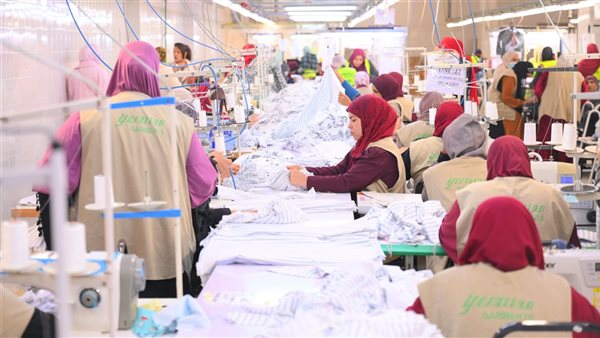
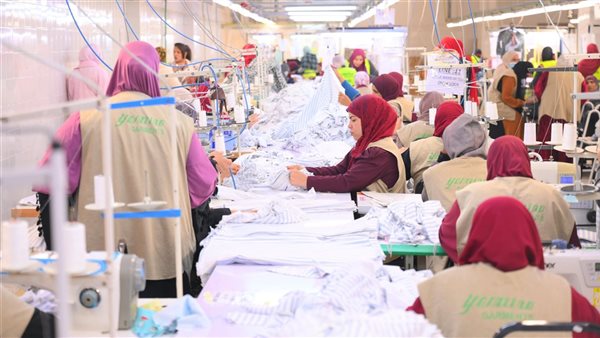
And he comes Textile factory project In West Al-Azab in Fayoum Governorate, as one of the projects implemented by the Ministry of Social Solidarity through development and economic empowerment projects and the Industries Support Fund and partnerships with civil society to empower families and groups most in need, especially women, and based on the positive results achieved by the project in terms of employment, capacity building and achieving an economic return, the Fund worked to develop the existing model and transform it from a limited experience into a system of expansion and geographical spread, by concluding new protocols for expanding existing production lines in Fayoum Governorate and doubling the number of families and women. Production, establishment and operation of new production lines in other governorates, including New Valley.
For her part, Angie Al-Yamani, Executive Director of the Rural and Environmental Industries Support Fund, said that the project comes within the Ministry of Solidarity’s programs to integrate the beneficiaries of “Solidarity and Dignity” into an integrated production system, as the Ministry provides technical, financial and operational support to make the project a success, while developing a comprehensive strategy for expansion at the governorate level and other governorates.
In exclusive statements to Cairo 24, Al-Yamani explained that the Ministry was not limited to financial support only, but also played a pivotal role in training and qualifying female workers, creating a safe work environment, and providing nurseries for children, to ensure that women continued to work and rely on themselves. The Ministry also supervised the development of production lines, ensured the quality of the products, and linked them to local and international export markets, to maximize the economic return and ensure the sustainability of the project.
She added: We are working on training women in the beginning, and teaching them to work professionally until they have a daily income to depend on. We are cooperating with the business sector until we expand and include double the number of existing women, and include the first ladies in care among the beneficiaries of Takaful and Karama and the most needy groups, describing the spinning and weaving factory project in Fayoum as one of the opportunities and successful projects, which will be transferred to New Valley, Minya and a number of other governorates soon.
The factory works to provide job opportunities for the beneficiaries of Takaful and Karama, as a specialized industrial complex for ready-made clothing was prepared and operated on an area of 12,000 square meters inside the Fayoum spinning factory, which had been closed for years. It began in April 2023 by training 250 beneficiaries in the art of knitting, and went on to train and employ 2,000 women in the first phase in various sewing, maintenance, and industrial operation skills, according to quality and modern production standards.
It is scheduled to employ 3,000 women during the second phase of the complex, which will be implemented within several months.