
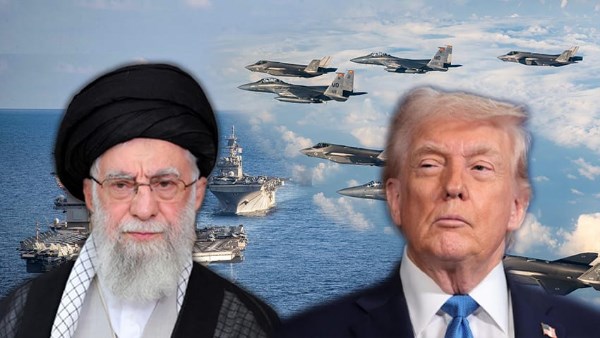
Iranian officials have increased their warning tone towards the United States, at a time when the international community is awaiting the decision of US President Donald Trump regarding the possibility of launching a strike against Iran, amid reports of the absence of a consensus within his administration about the feasibility of escalation.
Ibrahim Azizi, Chairman of the National Security and Foreign Policy Committee in the Iranian Parliament, said that his country “does not seek war, but is adept at managing it,” warning in a post on the “X” platform that “any reckless action against Iran will be met with an unfortunate response,” stressing that Tehran “will not yield to threats.” He accompanied his post with a photo of an Iranian missile launched towards Israel in October 2024.
In turn, Iranian President Masoud Pezeshkian stressed that his country is “able to overcome the current stage,” adding: “We will not bow to the pressure of world powers, and victory will be for our people.”
On the other hand, Reuters quoted sources in the White House that Trump’s advisors were divided over launching a military strike, and that some of them were calling for a focus on the economic file ahead of the midterm congressional elections next November, warning that any escalation might carry a political cost for Republicans.
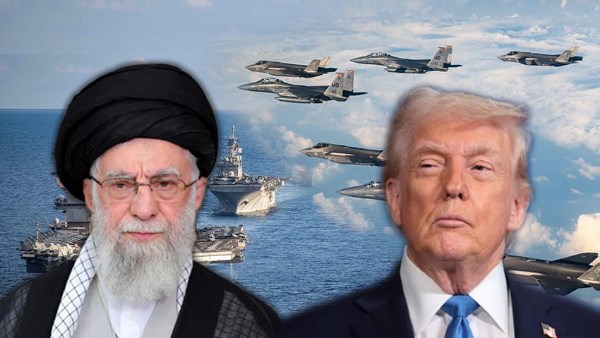
According to the report, Trump ordered sending large military reinforcements to the Middle East, including two aircraft carriers, and began preparations for an operation that could extend “for weeks.” However, the US President has not yet provided a detailed explanation to public opinion about the justifications for any potential military move against Iran, in what may be the largest direct confrontation since the Islamic Revolution in 1979.
Observers point out that the “America First” slogan, which formed the pillar of Trump’s election campaign, puts him in front of a complex equation: his popular base shows traditional skepticism towards engaging in foreign conflicts, while some Republicans believe that retreating after a large military buildup may make Washington appear hesitant.
It was also reported that Trump once again hinted at the possibility of reaching an agreement with Tehran regarding its nuclear program, saying that the next ten days may be decisive, and stressing that the diplomatic option is still on the table, provided that Iran does not possess a nuclear weapon or the ability to develop it.
In Tehran, media outlets close to the Revolutionary Guard intensified their coverage of Iran’s defensive capabilities, in conjunction with military maneuvers in the Strait of Hormuz, in a clear message that the country is prepared for any scenario.
Between the mutual warnings and military build-ups, the scene remains open to multiple possibilities, while analysts believe that any decision to escalate or retreat will carry profound strategic and political repercussions, whether at the regional level or within the United States itself.