
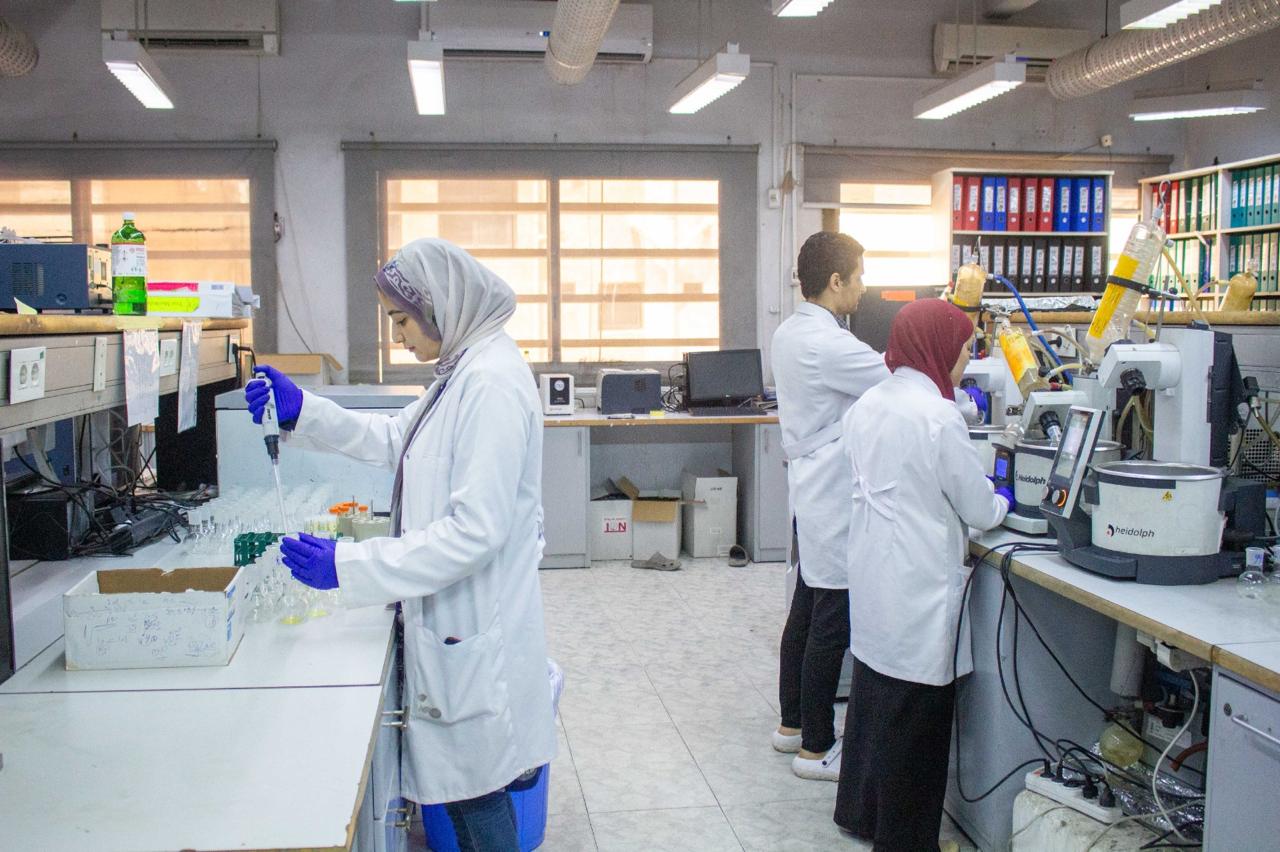
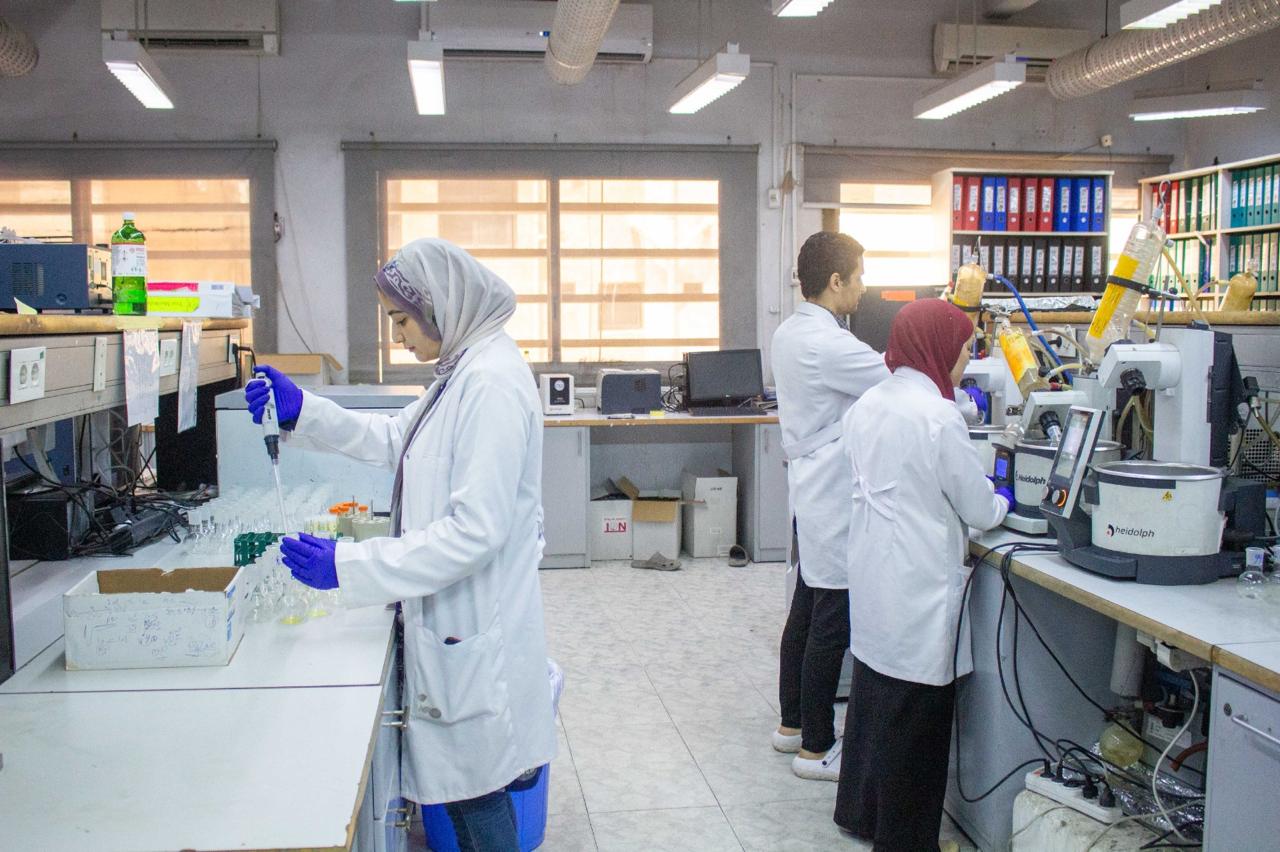
The Ministry of Agriculture and Land Reclamation revealed that the Central Laboratory for the Analysis of Pesticide Residues and Heavy Metals in Food, affiliated with the Agricultural Research Center, received during the month of last January about 34.5 thousand samples of food commodities from regulatory authorities or customers, which were analyzed in the various departments of the laboratory and their results were issued.
This comes according to an official report on the most prominent efforts of the laboratory during the month of January, within the framework of the directives of Alaa Farouk, Minister of Agriculture and Land Reclamation, and under the supervision of Dr. Adel Abdel Azim, Head of the Agricultural Research Center, to support workers in the agricultural sector and the food industry sector, and to contribute to supporting Egyptian exports of products of plant and animal origin.
Dr. Hind Abdullah, director of the laboratory, said that during the month of January, more than 6,000 samples of exports of food commodities were analyzed, in addition to analyzing samples of imported food commodities, amounting to more than 3,000 samples, in addition to analyzing samples of food commodities for customers, amounting to approximately more than 24,000 samples, representing an estimated rate of about 71% of the total samples analyzed during this month. More than 1,500 samples were also examined for the National Monitoring Project, bringing the total number of samples analyzed during the same month. Approximately 34.5 thousand samples.
The laboratory director explained that the laboratory witnessed several activities at the international level during January, as the international accreditation for ISO (17025/2017) was renewed from the American accreditation body A2LA for the fourth year in a row, in accordance with the recommendation of the accreditation body based on a review of the quality systems applied in the laboratory, stressing the laboratory’s excellence in applying international quality standards in all its departments and services, which reflects its strategy to proceed in accordance with the center’s future plan and vision.
Within the framework of international visits, Abdullah indicated that the laboratory had received a student visit from the University of Tokyo in Japan to learn about the laboratory’s role in the control system for food exports and imports by examining various food and environmental pollutants within the framework of a program to exchange student visits between Ain Shams University and the University of Tokyo. She pointed out that the training center affiliated with the laboratory had also organized a training program entitled Quality Management System in Testing Laboratories in accordance with ISO 17025:2017. For specialists from the research center and companies that produce and export fresh and processed foods.
The factory director indicated that the factory was organizing, in cooperation with Crop Life Egypt, and with the participation of the Central Administration of Agricultural Quarantine, a workshop in Luxor Governorate, aimed at supporting producers and exporters of fresh and dried tomatoes. The workshop discussed the importance of pesticide residues and their direct impact on production and export operations in Egypt. More than 80 representatives of companies producing and exporting fresh and dried tomatoes participated in attendance, and two tomato drying stations were visited at the Esna Center on the day. Next for the workshop.
Abdullah said that the factory also participated in a number of important events during January, as it participated in the technical workshop organized by the Ministry of Finance and the Organization for Economic Cooperation and Development (OECD) to discuss the implementation of the budget preparation circular for the fiscal year 26/27. The factory also participated in the Expo 2026 exhibition and conference in its eleventh edition for agricultural supplies over the three days of the exhibition, during which it received more than 400 of its customers in its pavilion and also held meetings with other companies.
In the context of raising the efficiency of the laboratory’s workers, the laboratory director indicated that some members of the laboratory’s research staff were trained on the ISO 17025:2017 standard, organized by the German Standardization Institute (BTP) in cooperation with the Egyptian General Authority for Exports and Imports. A number of technical cadres and members of the research staff were also trained on the latest technologies in the laboratory equipment supplied to the laboratory. This comes within the framework of raising the efficiency of the laboratory’s technical staff and continuing and developing the skills of the laboratory’s workers.