
In this article, we’ll examine the elements that set the Motorola Moto G57 Power’s aesthetic apart from the generic designs of many smartphones, including the vegan leather back cover, eye-catching Pantone colors, and built-in camera bump. We’ll also explore how Motorola’s highly unified design language contributes to a sense of durability and elegance, while making it difficult to differentiate between individual models.
As tech journalists, we’ve come across a whole host of ideas for smartphone bodies over the years, with companies experimenting with a wide range of finishes, including paper-like materials, glass, ceramic, titanium, faux leather, and even wood. Motorola is one of the few brands that is not shy about launching devices in bright colours, providing a contrast to the standard white, black and gray color options.
Dynamic Motorola Partnership For years, the company has partnered with color specialists at Pantone to use shades with evocative names like Cloud Dancer, Mocha Mousse, and Peach Fuzz. Motorola has also created a unified back panel design with a leather-like texture, allowing its smartphones to easily adopt “Pantone” colors across their back covers.
Following our recent review of the Motorola Moto G57 Power, we want to use the phone as an example to examine what makes Motorola’s current design language so special.

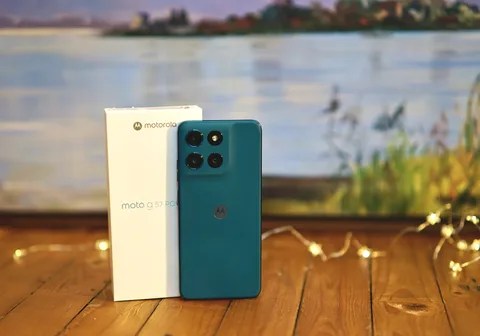
What makes the design of Moto phones so special? The first item is the previously mentioned color options: instead of the standard black, white, or grey, the Moto G57 Power comes in Pantone shades like Corsair (a mid-blue shade featured in our review unit), Fluidity (turquoise), and Pink Lemonade (bright pink). It’s definitely a good idea to offer an interesting shade without being too loud, along with a couple of livelier options, ensuring there’s something to suit everyone. The faux leather material on the back cover does not attract fingerprints and looks very luxurious thanks to its delicate texture.
Solid build quality from Motorola We also like how the camera module is integrated, as phones from other manufacturers often have camera modules that stick out noticeably from the body because they are a little thicker. Motorola addresses this by using a neat curvature to ease the transition between the camera module and the back, and the area around the lenses is coated in the same material used on the rest of the back panel.
Despite being relatively affordable, the Moto G57 Power still carries an IP64 rating and promises solid protection against dust and water splashes. The frame also proved very sturdy during our tests, and did not show any noticeable bending.


Can you still tell the difference between Motorola phones? However, one drawback of Motorola’s unified design language is that it can be difficult to differentiate between individual devices. For example, you can only tell the difference between the Moto G06 and the Moto G86 by looking closely at the details, even though there is a price difference of about $150 between the two models.