

Will Nissan’s expansion and production of an additional 10,000 cars per year really affect the prices of cars in the market? Will the proportion of the local component, which exceeds 50%, help reduce imports and provide hard currency? Can Egypt remain a true regional center for exporting cars to Africa? Will this expansion provide new job opportunities for young people? Are local factories ready to provide components with a quality that competes with international standards?
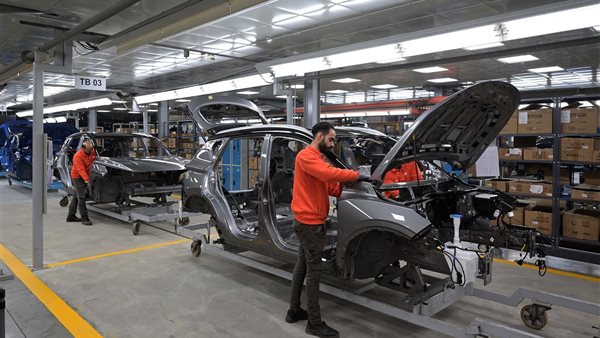
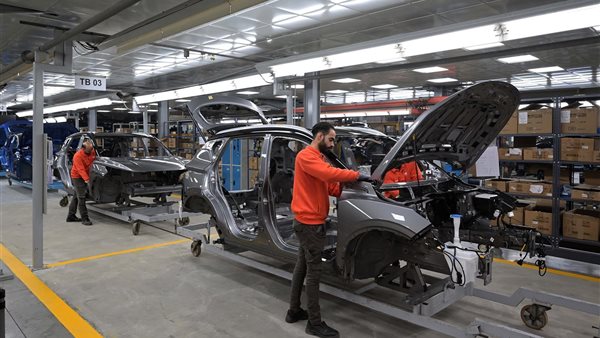
Nissan is preparing for a big surprise in Egypt, and it’s not just talk or promises. This is a new production line that will supply an additional 10,000 passenger cars in the first year of operation.
Nissan announced its plan to expand in the Egyptian market, with a new production line that will operate with a production capacity that adds 10,000 cars annually. More importantly, the percentage of the local component in these cars will exceed 50%, meaning more than half of the cars are used in Egypt.
These words came during an important meeting that brought together Engineer Khaled Hashem, Minister of Industry, with Nissan company officials, headed by Engineer Mohamed Abdel Samad, Managing Director of Nissan Africa, and in the presence of a number of ministry leaders and those responsible for the industry file and the automobile industry.
The meeting discussed the company’s plan to increase production, and also train Egyptian workers in cooperation with the Department of Productive Efficiency and Vocational Training and other bodies, in order to ensure that workers remain at the highest level and are able to keep pace with industrial and technological development in the automobile industry.
Nissan is not new to the Egyptian market, but it is now moving with a clear expansion plan. The company has exported about 25,000 cars to African countries over the past 3 years, and increased its production in the current fiscal year to 30,000 cars, which has left it at the forefront of the local market.
The goal is not only to meet the demand within Egypt, but also to use Egypt as a starting point for exports to Africa, taking advantage of its distinctive geographical location, and the free trade agreements that link it to many countries on the African continent, the Arab world, and Europe.
Not only that, Egypt is also very interested in the automobile industry, and considers it an important strategic industry for Egypt, because this sector not only provides cars, but it also opens doors for investment, employs workers, and stimulates other nutritious industries such as spare parts and components.
There has also been a noticeable growth in the number of automobile component factories during the recent period, but what is more needed is to increase the proportion of the local component, in order to reduce dependence on imports and provide hard currency, and at the same time attract more international companies that produce in Egypt instead of importing.
Nissan will also soon open a new production line that will add 10,000 cars annually, and will increase the rate of local manufacturing to more than 50%. This means that Nissan is expanding its investments, and Egypt is trying to become a regional center for the automobile industry.