
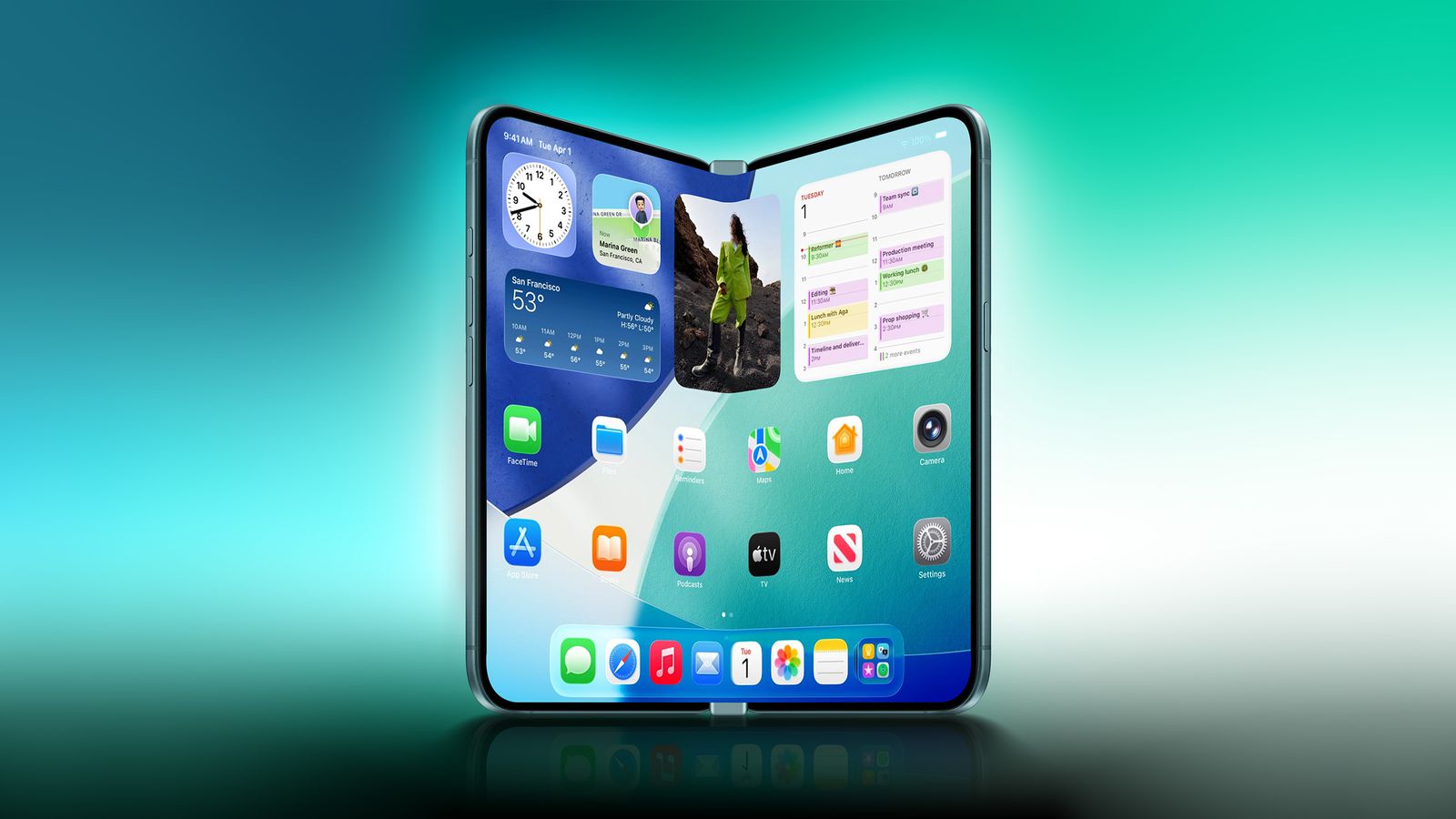
Rumors about Apple’s first foldable phone have increased as the device enters a new testing phase that precedes mass production. The latest leaks indicate the possibility of Apple abandoning the name iPhone Fold to avoid similarity with Samsung’s Galaxy Fold phones, and rely instead on the name iPhone Ultra, which is in line with the strategy of naming its advanced smart watches and car systems, a name that seems completely logical given the expected price of the device, which will exceed the two thousand dollar barrier.
In terms of design, leaked prototypes have appeared that confirm many previous rumors, as the phone is expected to come with an external screen measuring about 5.5 inches, making it the smallest current Apple phone when folded, while the internal screen expands to 7.8 inches, making it about half an inch smaller than the iPad mini. The company chose an aspect ratio of 4:3 to make the phone wider and shorter than its competitors in the market, while incorporating a dual camera setup that protrudes slightly and does not extend the entire width of the back. This ultra-thin design, which is only 4.5 mm thick when opened, imposes some concessions, the most notable of which is dispensing with Face ID facial recognition technology due to the lack of sufficient space for the sensor, and replacing it with Touch ID fingerprint technology.

Reports of the launch date are witnessing notable conflicts. While Barclays Bank analysts expected the phone to be announced next September alongside the iPhone 18 Pro series, with its actual launch postponed until December, a report from the Japanese Nikkei agency claimed that engineering challenges may push the launch to 2027. Mark Gurman from Bloomberg quickly denied these allegations, confirming that the phone will be available for sale simultaneously with the new Pro phones or shortly after, expecting its price to exceed the $2,000 barrier and may reach to $2,300 for advanced versions, while analyst Ming-Chi Kuo indicated that manufacturing complexities will inevitably lead to a severe shortage of supplies in the markets extending until 2027.