

Today, Banker platforms presented a number of special reports and analyzes on Egyptian economic and financial affairs, starting with a report on the transformation of the Shabramant cemetery in Egypt into a tourist area.
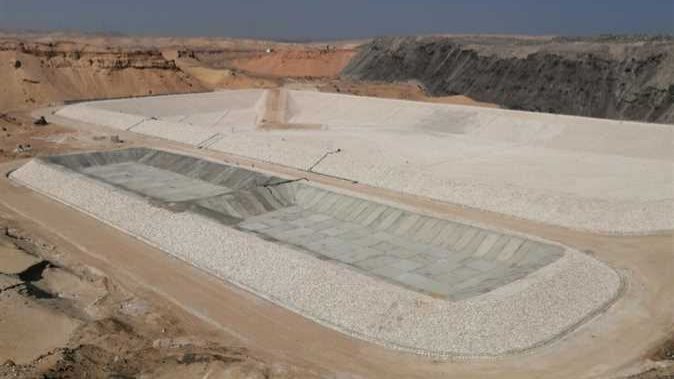
It is clear that the Shabramant project is undergoing a very major shift, and this is after the British company Polar Hydro announced that it will invest $4 billion to transform the Shabramant landfill in Giza into a global environmental and tourism zone, and all of this without the state bearing any cost.
The idea is simply that the company will start treating all the old and new waste in the landfill using modern technology that reaches zero emissions, and after the place is completely cleaned, it will turn into a huge open green garden similar to Al-Azhar Park, but on a larger area and with a historical character that suits the area between the pyramids of Giza and Saqqara.
Team Kamel Al-Wazir met with the company’s president, Julian Rogers, and reviewed with them the details of the project, which will be implemented on a huge area of up to 730 acres… The plan is that the new environmental facility will start within 36 months with a daily processing capacity of 10 thousand tons, and after that it will reach 19,200 tons, a number that makes it one of the largest treatment facilities in the Middle East.
The big advantage is that all investments are fully funded by the British company, and with the participation of Egyptian companies in implementation, this means many job opportunities and direct economic benefit.
The project will also not only treat waste, but will include environmental educational centers, recreational and tourist areas, and vast green spaces that will change the appearance of the area and give it great cultural value.
Banker platforms presented a different report today about Egypt’s use of Chinese expertise to enhance the pumping and storage of water and energy.
The Minister of Electricity, Dr. Mahmoud Esmat, received a large delegation from the China South International Electricity Grid Company (CSGI), led by Shengwen Sun, to discuss expanding cooperation between Egypt and China in developing electricity transmission and distribution networks, especially after the recent increase in reliance on renewable energy in Egypt.
The meeting focused on water pumping and storage projects, modern control systems, energy planning methods, and also how to integrate renewable energies into the network in a way that ensures its stability and increases its efficiency.
The results of the waste reduction project in Abu Rawash were reviewed, which achieved clear success in raising operating efficiency and reducing losses, and this opened the way for the use of this model in other regions across the republic.
They also talked about the importance of transferring Chinese technology to Egypt, such as smart monitoring, restructuring lines, and improving loads, so that we can build a strong and modern electricity network based on technical development and smart management… Implementation plans, investment returns, and forms of partnerships in the coming period were discussed.
One of the most important files was hydroelectric pumping and storage projects, because they are a key element in supporting the stability of the national grid, especially with the great trend towards renewable energy and reducing dependence on fossil fuels.
The Minister confirmed that the Ministry is working on a plan to develop the quality of electrical supply, raise energy efficiency, and reduce losses, and this is in cooperation with local and international companies and using the latest operating technologies. He also pointed out the importance of water pumping and storage projects as a stable source of clean energy.
In the end, he stressed that Egypt is moving at a steady pace to transform into a smart electricity network, while diversifying energy sources in order to reach 42% renewable energy in 2030 and 65% in 2040, while maximizing the use of our natural resources and cooperating with Chinese partners.
The Banker Research Unit presented a special report today about the private sector taking off in Egypt: investments reaching 167.6 billion pounds in one quarter.
Dr. Rania Al-Mashat, Minister of Planning, presented an important report on the performance of the Egyptian economy in the first quarter of the fiscal year 2025/2026, which witnessed a major boom, especially in private sector investments, which reached 167.6 billion pounds, and this is the highest level in years.
The gross domestic product also achieved a growth of 5.3% for the first time in 3 years, and this is due to the recovery of important sectors such as the non-petroleum industry, which rose 14.5%, communications 14.5%, and tourism 13.8%. Industry in particular was the main engine of growth, and sectors such as vehicles, chemicals, beverages, and clothing achieved strong increases in production and exports.
Industrial exports also increased, whether semi-finished or finished, and the pharmaceutical, paper and ready-made clothing sector achieved great leaps in exports, and this reflects that factories are now able to convert production to direct exports. The communications sector also continued strong growth thanks to investment in digital infrastructure and the increase in Internet speed, and Egypt took the regional leadership award in developing Internet domains.
Tourism achieved remarkable growth, whether in the number of tourists or tourist nights, and Egypt was ranked first in Africa for the third year in a row, and with the opening of the Grand Egyptian Museum approaching, higher numbers are expected.. The Suez Canal also returned to achieve growth of 8.6% after the geopolitical influences began to subside, and electricity recorded a growth of 5.4% with an increase in consumption as a result of the expansion of activities.
Transportation, storage, construction, banking, and insurance also achieved significant growth, and the insurance sector in particular increased by 8.9% with the support of financial inclusion efforts. In the end, the minister said that growth expectations for the entire year are positive and could exceed 5%, especially with the continuation of reforms and the improvement of the investment environment.