
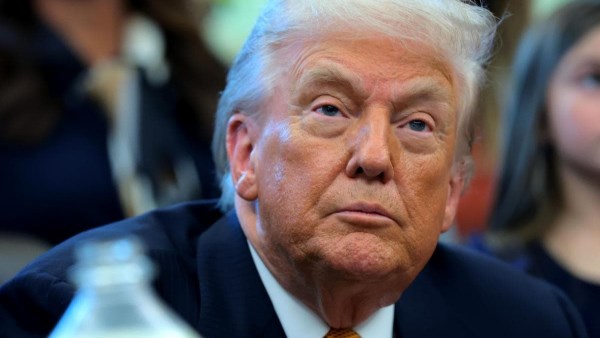
New 10% global tariffs imposed by US President Donald Trump went into effect Tuesday morning, marking the beginning of a move by the White House to preserve its trade agenda after the Supreme Court invalidated the broad tariffs it had previously imposed.
Trump signed an executive order last Friday authorizing the imposition of a 10% import tax, just hours after the court ruling was issued. According to what was reported by the American (Bloomberg) agency.
He later hinted at raising the rate to 15%, but he did not issue an official directive to increase the rate before the 10% fee came into effect.
According to an administration official who spoke on condition of anonymity, the White House is currently working on preparing an official order to raise the global tariff to 15%, but the timetable for implementing this increase has not yet been decided.
The ambiguity coming from Washington has sparked global confusion about the course of Trump’s tariff policy. Countries and companies have begun reviewing existing trade agreements to see how they are affected by the new threats, and major trading parties, including the European Union and India, have suddenly halted ongoing negotiations in light of the current uncertainty.
Trump applies the basic 10% duty under Section 122 of the Trade Act of 1974, which authorizes him to impose these duties for 150 days without the approval of Congress.
He resorted to this path after the court ruled that he violated the Emergency Economic Powers Law when he used it to impose what he described as “reciprocal duties” on imports from countries around the world.
The executive order maintained some exceptions, including goods compatible with the North American Trade Agreement between the United States, Canada and Mexico, in addition to exemptions for some agricultural products that were included in the duties that were invalidated by the court.
According to a Bloomberg Economist analysis, the average effective tariff rate in the United States will stabilize at about 10.2% after accounting for exceptions, down from 13.6% before the court’s decision; If the global fee is raised to 15%, it is expected that the actual rate will reach about 12%.
Trump’s team stressed that tariffs will remain a key pillar of his trade policy, with plans to launch a series of investigations according to accelerated timetables that allow for unilateral imposition of tariffs, with the aim of rebuilding the tariff system that was overthrown by the court ruling.
However, the legal tools being considered by the White House, such as Sections 301 and 232, do not provide the same flexibility as the emergency law that Trump previously used to pressure trading partners.
The US administration is preparing to launch investigations into the impact of imports of a range of industrial goods – including batteries, cast iron and its fittings, electrical and telecommunications network equipment, plastic pipes, and some chemicals – based on national security considerations.
These investigations have not yet been officially announced, but they may pave the way for new charges, which may take several months to complete.
In an attempt to contain the repercussions, administration officials urged trading partners to adhere to agreements reached over the past year.
“We want them to understand that these agreements will be good, we will adhere to them and we expect our partners to adhere to them as well,” US Trade Representative Jamison Greer said.
This proposal did not dispel concerns in some major economies. The European Union has frozen the ratification of its agreement with the United States until Trump’s tariff plans become clear. India also postponed talks scheduled this week in Washington to complete an interim trade agreement, for the same reasons.
On Monday, Trump threatened to impose higher fees on partners who “play games” with regard to their existing agreements.
For her part, European Central Bank President Christine Lagarde stressed the “extreme importance” of clarity from the US administration regarding the future of global trade.
The threat of raising the basic tariff to 15% has also alarmed some traditional allies who have struck agreements with Trump, including the United Kingdom, which negotiated a 10% rate last year, as a higher rate could create a less favorable situation for its exports.
In contrast, more adversarial countries, such as China, may find their negotiating position strengthened after Trump’s emergency powers were restricted.
The US President is scheduled to visit Beijing late next month to hold an upcoming meeting with his Chinese counterpart.