


Saturday 18/April/2026 – 10:02 PM
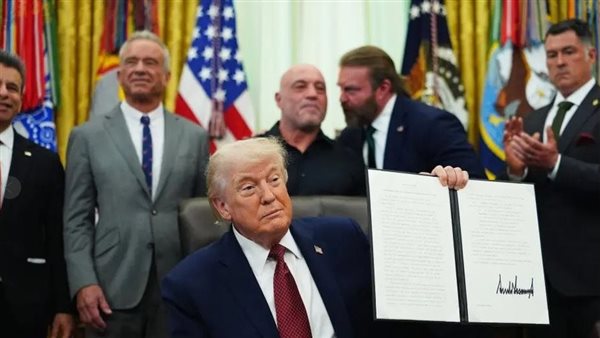
US President Donald Trump has signed an executive order to speed up medical reviews of ibogaine and other psychedelic drugs, which have gained growing support from veterans and lawmakers despite their serious heart health risks.
Trump signs order to speed up drug review
According to the agency The Associated Press Health, US President Donald Trump has directed his administration to expedite medical reviews of some psychedelics, including the controversial drug ibogaine, due to growing interest in it from veterans and conservative lawmakers, despite serious patient safety risks, as ibogaine and other psychedelics remain banned under the strictest federal classification of illegal and high-risk drugs.
The US administration is taking serious steps to ease these strict restrictions and stimulate scientific research on the use of these drugs for purely medical purposes, including treating cases of severe depression. Trump stressed during his signing of the executive order in the Oval Office that this decision will guarantee people suffering from debilitating symptoms a real opportunity to restore their normal lives and live a happier and more stable life, adding that his directives will help significantly accelerate access to potential treatments, which will have a tremendous and positive impact if they are proven effective, as is being said in medical circles.
FDA moves to speed up approvals
The signing ceremony was attended by the country’s top health officials, including Secretary of Health and Human Services Robert Kennedy Jr. and conservative podcaster Joe Rogan, as well as Marcus Luttrell, a former US Navy SEAL. During the ceremony, Luttrell assured the president that this decision would save many lives as the treatment had radically changed his life for the better.
Next week, the US Food and Drug Administration will issue national priority vouchers for three narcotic drugs. FDA Commissioner Marty McCurry explained that this step will allow certain drugs to be approved very quickly if they are in line with national health priorities. These important vouchers can reduce medical review times from several long months to a few weeks, as this is the first time that the Food and Drug Administration has provided a fast track for any narcotic drug. The administration is also taking decisive steps to pave the way for conducting the first human trials on ibogaine within the United States.
Medical challenges and heart disease risks
Trump’s decision surprised many advocates and longtime researchers in the field of psychiatry, given that the drug ibogaine is known to cause heart problems that can be fatal, and the US National Institutes of Health had funded research on the drug in the 1990s but stopped the work completely due to serious cardiovascular toxicity.
According to the same source, Frederick Barrett, director of the Johns Hopkins Center for Anesthesia and Consciousness Research, explained that it has been very difficult to study ibogaine in the United States due to its known cardiac toxicity. No psychedelic drug has been approved in the United States yet, but a number of them are being studied in large-scale trials for various mental health conditions.
All of these drugs remain illegal and are classified as Schedule I substances, along with other drugs such as heroin. Only two states, Oregon and Colorado, have begun to legalize psychotherapy using some narcotic substances. Ibogaine is known to cause irregular heartbeats and has been linked to more than 30 deaths in documented medical literature.
Federal funding and the future of treatment in clinics
Trump’s executive order requires the Department of Health and Human Services to direct at least $50 million to states that have enacted or are developing programs to pay for psychedelics to treat serious mental illnesses, and support from veterans groups and former Texas Governor Rick Perry led to the enactment of a law last year that provides $50 million for ibogaine research in that state.
The owners of specialized medical clinics explained that the impact of this executive order will not be immediate or quick, and Tom Vigil, who runs a medical clinic in Mexico, pointed out that there will be no insurance coverage and the treatment will remain considered unapproved care and not financially covered.
Vigil added that his clinic treated 2,000 people with ibogaine last year at a cost of $15,000 to $20,000 per patient while offering free treatment to about 100 veterans, and a recent study of 30 veterans found significant improvement in symptoms of traumatic brain injury, depression, and anxiety.