

Sunday 04/January/2026 – 02:21 PM
The inhabitants of the Earth are awaiting the 2026 solar eclipse of the new Gregorian year, which opened its first days with a phenomenon. Giant wolf moon Yesterday, Saturday, the solar eclipse was the second anticipated astronomical event of the new year. The year 2026 will witness two types of solar eclipses, one of which will be partially visible and the other invisible, while the date of the first solar eclipse coincides with the approaching month of Ramadan. Through Cairo 24, we learn about the expected dates of the solar eclipse and the possibility of witnessing the phenomenon or not.
Solar eclipse 2026
The new year, 2026, will witness two cases of solar eclipse, which is the astronomical phenomenon that occurs when the moon blocks sunlight from the Earth during the day, and it occurs during the new moon phase, that is, at the end of the Hijri month, which this year is the end of the next month of Shaban 1447.
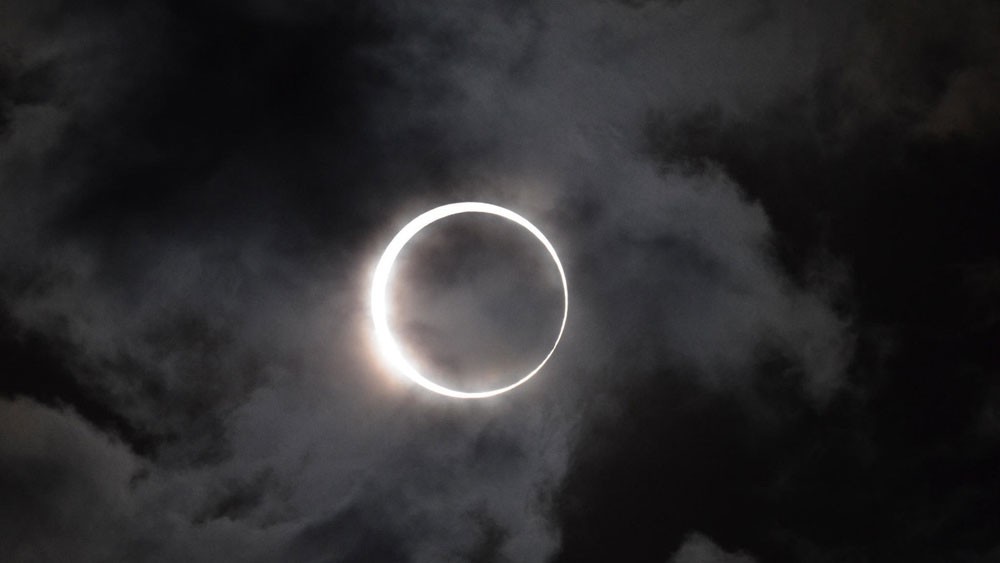
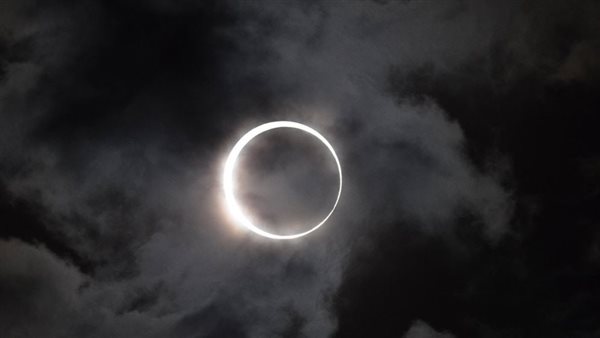
The Space website published the dates of the expected solar eclipse during the current calendar year 2026, the first of which is the annular solar eclipse, or called the “Ring of Fire,” which will occur for a period of up to two minutes and 20 seconds on February 17, 2026, coinciding with the first night of the month of Ramadan according to astronomical calculations.
Which countries will witness a solar eclipse?
The annular solar eclipse, known as the “Ring of Fire,” is expected to obscure the Moon by about 96% of the center of the Sun, so scientists can only observe it from research stations such as the French-Italian Concordia Station inland and the Russian Mirny Station on Queen Mary Land on the coast of the Davis Sea.
The partial annular solar eclipse is also visible across Antarctica and from parts of South Africa and Argentina.
Solar eclipse date 2026
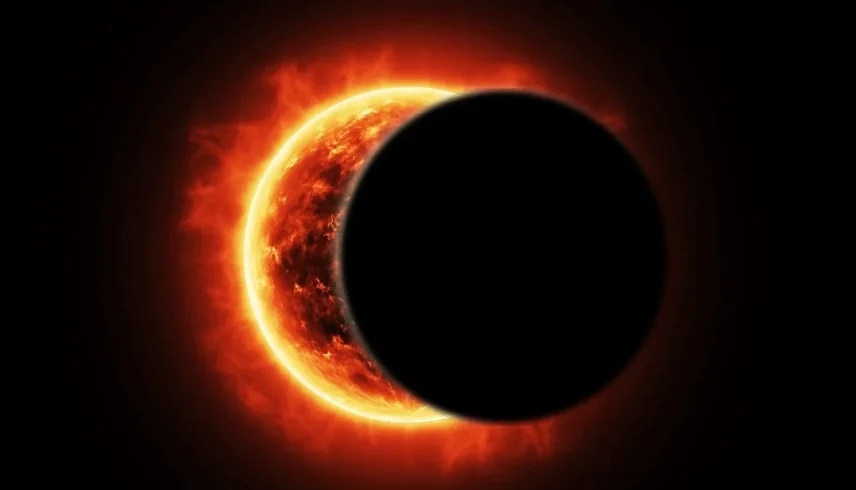
Following the solar eclipse next February, the date of the last solar eclipse in 2026 will be invisible in parts of Europe on August 12, 2026, even though it is a total eclipse, which is described as an astronomical trick, as the moon’s shadow will completely obscure the sun for up to two minutes and 18 seconds.
A total solar eclipse will occur next August, in the skies of eastern Greenland, western Iceland, and northern Spain. All of Europe will witness a deep partial solar eclipse, while North America will witness a small partial eclipse.
Giant wolf moon
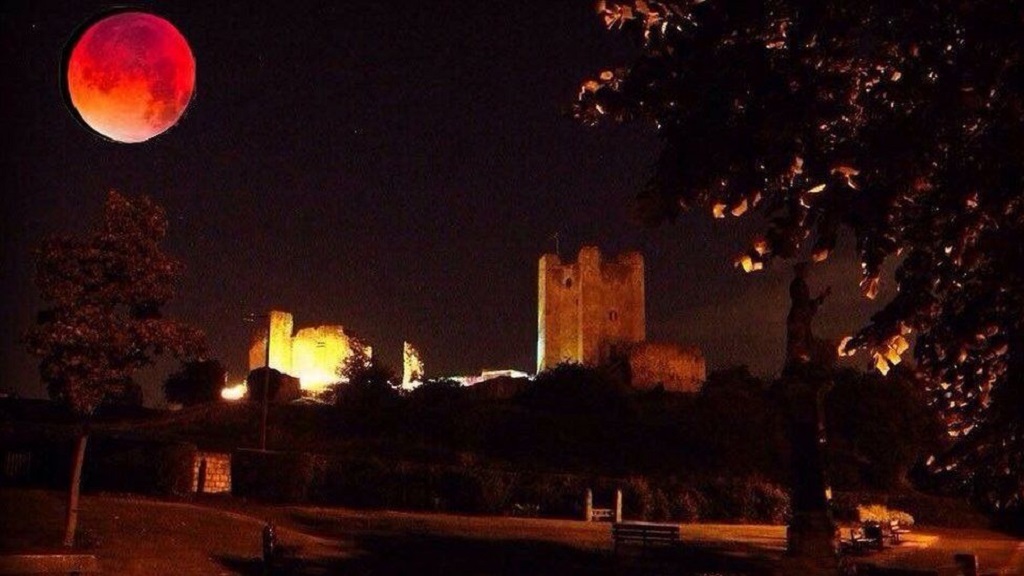
In addition to anticipating the 2026 solar eclipse, the giant wolf moon appeared in the sky yesterday, Saturday, 112 years after its last appearance in the sky, alongside the planet Jupiter, to harmonize the astronomical phenomena in the sky on the night of the middle of Rajab, which is the first full moon in the new Gregorian year 2026. It appears when the Earth approaches its closest point to the sun, so it is at the perigee point.
The Astronomical Society in Jeddah announced that the giant wolf moon, which makes it appear exceptionally large and bright, has not occurred this rare conjunction (full moon at perigee) since 1912, and observers will soon be able to see the bright planet Jupiter in the evening sky.
According to news reports, January’s Wolf Moon is the first full moon of 2026, and will peak on January 3, in the early hours of the morning local time. It is also a supermoon — that is, a full moon near perigee, which NASA notes appears larger and brighter. This January supermoon is the fourth in a row (and the last until late 2026), according to the Old Farmer’s Almanac. The name “wolf moon” derives from the howl of wolves at this time of year.
The moon appeared in the northeastern sky yesterday evening, Saturday, and many saw it when standing east shortly after sunset, at dusk, as the bright full Wolf Moon appeared between the giant planet Jupiter and the star Pollux. According to NASA, the moon glows orange when it rises due to the scattering of light in the atmosphere, and often appears larger than its true size on the horizon, “a natural optical illusion.”