

Thursday 18/December/2025 – 12:46 PM
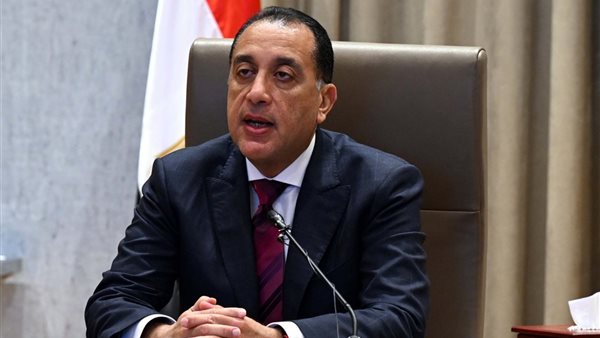
Dr. Mostafa Madbouly, Prime Minister, delivered a recorded speech during the celebration held today to mark the 65th anniversary of the founding of the National Planning Institute.
Celebrating the sixty-fifth anniversary of the founding of the National Planning Institute
At the beginning of the speech, the Prime Minister expressed his happiness to participate in the celebration, and to deliver a speech on this occasion for one of the state’s ancient monuments and institutions throughout its history spanning thousands of years, congratulating Dr. Rania Al-Mashat, Minister of Planning, Economic Development and International Cooperation, Chairman of the Board of Directors of the Institute, and Dr. Ashraf El-Arabi, President of the National Planning Institute, former Minister of Planning.
Madbouly said: Historically, the National Planning Institute is the first institute to be established in the Arab region, and even in the Middle East as well. Its establishment in the summer of 1960 coincided with Egypt’s adoption of the idea of comprehensive national planning and the start of implementing the country’s first five-year plan (60/1961-64/1965). The fields of development and planning were among the virgin fields at that time, so the establishment of the institute was a successful response to the urgent need for the scientific foundation of planning activities and development issues through research. Solid scientific research on the one hand, and the urgent need to qualify the cadres necessary for planning and development work on the other hand.
He explained that the establishment of the Institute was strong, thanks to the insightful vision and intelligent planning of its founder, Dr. Ibrahim Hilmi Abdel Rahman. The strong establishment of the Institute was based on the roles assigned to it in the law of its establishment (Law 231 of 1960), and these roles were represented in conducting research and studies in the fields of development and planning and disseminating them, and in organizing training and educational programs to qualify the human elements necessary to prepare plans and follow up on their implementation, and in holding conferences, seminars and similar scientific meetings. To encourage scientific dialogue on planning and development issues, to express opinions on draft laws and decisions related to national planning, and to contribute to spreading awareness of the importance of planning and its role in achieving the desired development.
He added that what helped in achieving the strong establishment of the institute was the keenness of the first generations to open up scientifically to the world, east, west, north and south, through foreign missions and hosting a number of senior professors and experts in fields related to issues of development and planning. He pointed out that thanks to all of these things, the institute, while it was still in its childhood and youth stage, became the destination of many students of science in Egypt and the Arab world, and the institute soon became a pioneering model modeled after it and with the help of its experts, national institutes were established. For planning in a number of Arab and African countries.
He pointed out that in confirmation of the Institute’s role as a leading local and regional center for scientific research and capacity building in issues of development and planning, and as a body that disseminates knowledge and provides scientific advice to planning practitioners and policy makers, and as a contributor also to developing community awareness of the importance of planning and its necessity for serious development, the Institute has carried out, since its inception and throughout its extended history, many scientific research, studies, reports and events, which cover methods of preparing and following up plans for the various dimensions of sustainable development, aiming to provide decision makers and policy makers with All levels, with the knowledge and scientific advice necessary to reach rational decisions and policies.
He noted that the Institute, since its founding in the early sixties of the twentieth century, has been a major source of supplying state institutions and the government in particular with cadres and competencies that assumed effective and influential leadership positions in the process of national action, especially with regard to the portfolio of the Ministry of Planning, mentioning in this regard, Dr. Ibrahim Hilmi Abdel Rahman in the sixties of the last century, and both Dr. Ismail Sabri Abdullah, and Dr. Muhammad Mahmoud Al-Imam in the seventies, and Dr. Kamal Al-Ganzouri, who assumed the presidency of the government in Two important periods in the history of Egypt, the first in the nineties and the second in the second decade of the third millennium, which is the same decade in which Dr. Othman Muhammad Othman and Dr. Ashraf El-Arabi assumed the Ministry of Planning, and Dr. Khaled Fahmy the Ministry of Environment, saying: “They all left clear imprints that history will record with pride and honor.”
He continued: I also personally experienced the Institute’s pioneering role – at the regional level – in issuing ten reports on human development in Egypt in partnership with the United Nations Development Program during the period 1994-2010, which addressed a group of important and vital issues in that period, and its importance continues to extend to the present time, as those issues included the topics of political participation, poverty, social spending, education, globalization, participatory local development, decentralization for good governance, and towards a new social contract, The social contract in Egypt, the role of civil society, as well as Egypt’s youth: the builders of our future.
He pointed out that in light of the National Planning Institute’s capabilities, qualified and diverse human cadres, and a distinguished network of relationships internationally and regionally, it expects and anticipates the Institute’s active participation in support of the Ministry of Planning, Economic Development and International Cooperation in drawing a closer-to-the-reality picture of the future of development in Egypt in light of the approaching year 2030, and the importance of developing development performance during the last five years of the sustainable development strategy and beyond, specifically in the period after 2025, and in light of what was stated. In the national narrative of economic development.
He explained that this participation is through monitoring and anticipating global trends and risks, and analyzing their potential repercussions on development conditions in Egypt and its options in the medium and long term, especially modern technological trends and developments, as well as enhancing forward-looking research, to narrow the degree of uncertainty among planners, decision-makers, and policy makers, through the use of appropriate quantitative models and big data analyses, and preparing future scenarios in light of evaluating the experience of the past years of the Sustainable Development Strategy: Egypt’s Vision 2030, as well as in light of global developments. Contemporary or expected regional and local developments in the coming years.
He added: Participation also includes anticipating the roles of the participatory economy, the knowledge economy, the digital economy, the circular economy, and other economies related to the developments of technologies and innovations of the Fourth Industrial Revolution, as well as anticipating the economic, social and environmental impacts of artificial intelligence and its applications on the future of development in Egypt, and anticipating the new roles of the state’s administrative apparatus, in light of technological developments and digital transformation in public administration, and its role in enhancing the state’s ability to withstand, anticipate and manage crises, as well as developing governance systems and evaluating performance and impact at the level. National, to ensure objective assessment of the impact of economic, social and environmental policies through appropriate performance measurement indicators.
Dr. Mostafa Madbouly expressed his hope that the Institute’s administration would direct greater attention during the coming period to some priority areas and issues, which were included in the Institute’s strategic plan (2023-2030), including: Egypt’s regional and global geopolitical role, in its relationship to Egyptian national security, especially in light of the escalating regional and global threats and conflicts and their future repercussions on Egypt, and issues related to the extent of the comprehensiveness or inclusion of development plans and policies, and leaving no one behind, including This includes dealing with issues of inclusive growth, poverty, and social justice, in addition to issues of structural reforms, and linking them to technological developments, environmental issues, green economy, clean energy, and sustainable green finance, in addition to issues of global value and supply chains, and their relationship to current and expected global geopolitical conflicts and tensions between globally influential poles, and their potential effects on Egypt, in addition to issues of urban and urban development, in their connection to issues of population and spatial justice, and issues of management development. Local issues, the roles of agencies and frameworks concerned with urban development, issues of value transformations in society, and their repercussions on the social dimensions of development, especially in light of the repercussions of modern technologies on societal value systems and human behavior, as well as issues of climate change, the dimensions and interconnections of which are linked to all areas of sustainable development and quality of life in Egypt and the world, in addition to what is related to the localization of sustainable development locally, at the level of the Egyptian governorates, and effective networking with the initiatives of the Ministry of Planning, Economic Development and International Cooperation; And civil alliances in this regard.
He expressed his wishes for success to the family of the National Planning Institute in working to further highlight the Institute’s role as a national think tank, similar to the global think tanks that influence policy making, support decision-making, and promote sustainable development, maximizing the optimal exploitation of available resources, and achieving an effective balance between development, environment, and society, which ultimately reflects on achieving the well-being of society and improving the standard of living of Egyptians, who have borne the burdens of economic reforms over the past decades, and deserve everyone to spare no effort, and for all to be exerted for them. And the precious one.