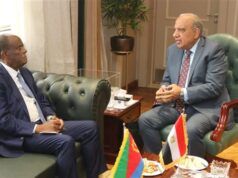

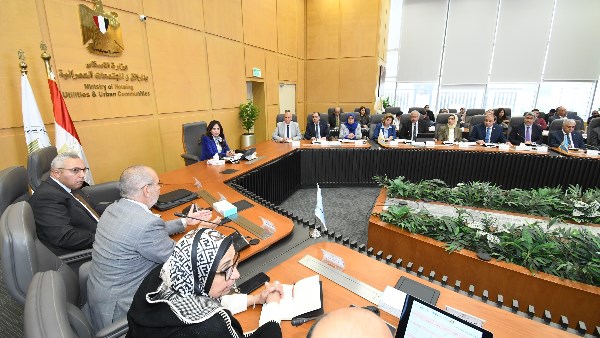
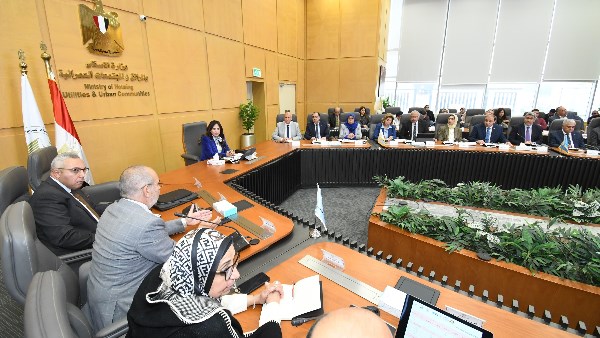
Engineer Randa El Minshawy, Minister of Housing, Utilities and Urban Communities, held an expanded meeting to follow up on the executive position of the “Fustat Hills Gardens” project, in the presence of Engineer Ahmed Omran, Deputy Minister of Housing for Utilities, officials of the ministry, the Central Reconstruction Agency, the implementing companies, and the project consultant.
At the beginning of the meeting, the Minister of Housing stressed the importance of periodically following up on the project and completing it as quickly as possible by advancing work with the implementing companies, stressing the intensification of labor and completing observations in all areas of the project.
The Minister also stressed the need to adhere to the time programs set for completion of the work and final touches on the project, while committing to apply the highest quality standards in all stages of implementation, in a manner befitting the size of the project and its historical status.
The meeting discussed the executive position of the investment zone, which is located on an area of 131,000 square meters and overlooks Ain Al-Hayat Lake and includes (12 restaurants – 4 commercial malls – 4 car garages). Behind it is an area that allows the holding of many large official celebrations, including the Roman theatre, a water fountain, and site landscaping works, in addition to a number of service buildings, lakes, and crops.
Engineer Randa Al-Minshawi followed up on the progress of work in the cultural area and the river area, as the cultural area is located opposite the main entrance gate to the Fustat Hills Park project, and it is considered one of the distinctive areas, and it has a main axis on the Museum of Civilization and is surrounded by a group of squares that include cultural activities, restaurants, and other services, and includes the main gate along with (4 restaurants and cafeterias with a building area of 216 m2, and 3 fountains, in addition to an area of 26,864 m2).
The Minister also followed up on the work being implemented in the markets area in its various stages, which is a commercial area with an area of 60,000 square meters, the aim of which is to stimulate tourism, support the state’s economy, and revitalize handicrafts and heritage, the most prominent of which are glass, ceramic, wax, and spinning and weaving works. The market area is being implemented in 3 stages and consists of (19 commercial stores – parking lots – an artificial lake – agricultural spaces – a 3-star hotel).
This is in addition to following up on the work in the hills and valley area, which is divided into three hills of varying heights between which the waterway (river) passes, and they graduate into a group of terraces starting from the edge of the river and ending at the top of the hill, giving the top of the hills views of the project and the surrounding area, Salah al-Din Citadel and the pyramids. The “Casbah Hill” established on an area of 13,000 square meters includes (a tourist hotel – service buildings – parking lots – an artificial lake), terraces and areas. Seating overlooking the waterfall, a pedestrian bridge to connect, a cafeteria, a waterfall, and the “Excavation Hill,” which is being worked on to make the area an integrated archaeological, tourist, and cultural attraction.
The Minister then followed up on the progress of work in the Adventure Zone, which contains a number of service buildings, lakes, and crops. It consists of a games area, 3 service buildings, a children’s play building with an area of 505 m2, a service building with an area of 167 m2, a toilet building with an area of 167 m2, and facilities and site coordination work with an area of 97,238 m2, in addition to the ongoing works in the river area.
It should be noted that the Fustat Hills Gardens project is located on an area of (500) acres, and is being implemented in a central location in the heart of historic Cairo (it was previously used as a waste dump). It is considered one of the largest gardens of its kind in the Middle East. The project includes a number of activities that depend on reviving Egyptian heritage across the various Pharaonic, Coptic, Islamic and modern eras, in addition to a group of cultural and commercial activities, hotel services and open-air theatres.