


Wednesday 04/February/2026 – 08:19 AM
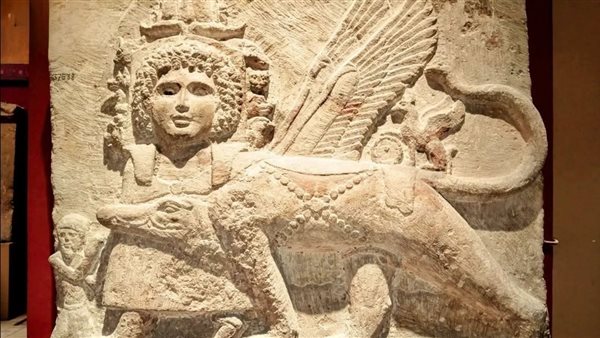
The Egyptian Museum in Tahrir displays one of the most prominent archaeological evidences that reflect the cultural interaction between ancient Egypt and the Greek world, through the inscription of the deity “Toto” (Tithoes in Greek), which dates back to the late and Greco-Roman eras, and embodies the concept of protection and power in ancient Egyptian beliefs.
“Toto” is depicted in a legendary composite form that combines the body of a winged lion, the head of a human, and the heads of falcons and crocodiles emerging from his body, and ends with a tail in the form of a snake, in a clear symbol of power and control over the forces of evil. He was known as the “Lord of Demons,” as he was believed to exorcise evil spirits, protect humans, and grant them longevity.
The idol “Toto” in the Egyptian Museum…a symbol of protection and a unique combination of Egyptian and Greek civilizations
The deity was also known by the title “The One Who Comes to Whomever Calls Him,” referring to the Egyptians’ belief in his ability to respond to the call of the needy, protect the living, and secure souls in the other world.
This unique inscription made of limestone is currently displayed on the ground floor of the Egyptian Museum in Cairo, giving visitors a rare opportunity to learn about one of the symbols of protection in ancient Egypt, and the depth of cultural interaction between civilizations throughout the ages.