Thursday 22/January/2026 – 02:42 AM
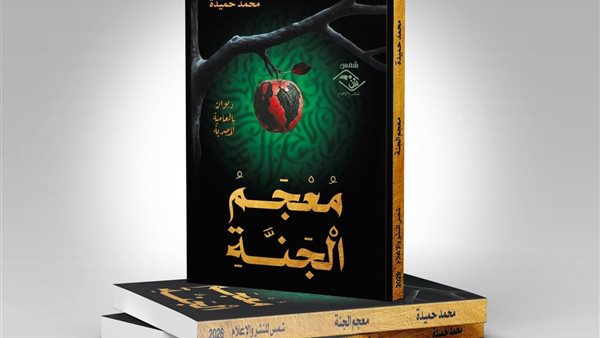
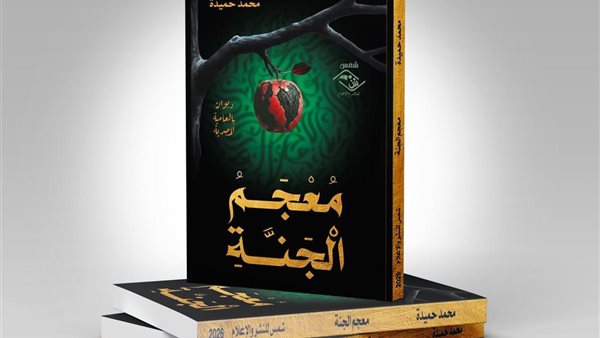
The collection Dictionary of Paradise by the poet and journalist Mohamed Hamida was recently published, which includes 39 poems in the Egyptian colloquial language. It is Hamida’s fifth publication, which he is participating in at the Cairo International Book Fair.
Regarding the collection, art critic Rihab al-Din al-Hawari says: In “classy” colloquial language approaching Classical Arabic in its compositions, preserving the warmth of the Egyptian tongue, the poet, Muhammad Hamida, began the poems of his collection, “Dictionary of Paradise,” with the duality of (the book/dictionary): “The book was in my right hand” to give sanctity to the situation, as if love here was a “method” or a “religion.” In his collection, he combined – without prior arrangement – romanticism. Dreamy, and a mystical symbolism, in a special state and a parallel world, flying between earth and sky.
Through the poems of his collection, the poet relied on calm “internal music” that did not adhere to a harsh rhyme, which made it seem like an honest emotional “disclosure,” while he succeeded, throughout his poetry collection, in condensing an entire story, which seemed mostly narrative, using the vocabulary (beginning, dream, challenge, anxiety, then surrender and submission to beauty) as if he was reflecting in his texts, flying between gardens and lands, an honest emotional experience, using nature (trees, fruits, The torso) as a mirror of human feelings, presenting its presentation, with a high ability to adapt the colloquial to serve the philosophical meaning of love.
The collection was rich in “visual” images, with the humanization of inanimate objects, making the streets and buildings feel and move, and the land that was narrowing in reality, expanded here in the imagination of lovers.
“All the streets in the winter lean on the shoulder of the walls.” Another ingenious opening describes a state of “need for warmth” and support, as if the street itself feels lonely and is looking for a shoulder. The poet surprises him with “precision and gentleness,” in an elegant condensation that summarizes the state of waiting behind closed doors.
Pain, and the questions of existence, are the moral of the cinematic image according to Muhammad Hamida, in his clearly exquisite collection: (The children of our neighborhood do not sleep)… Do you see here the lack of sleep, the misery of children, or is it the insomnia of hunger and cold?.. Existential questions, then, creep from the mirror of “Kergaard” into the texts of “Dictionary of Paradise”: “And how does he sleep on the winter night in the arms of the naked children?” Let us reach the peak of pain in the text, On the pages of the poem/collection, the image of the Aristotelian hero is represented, “who will inevitably arouse in us feelings of fear, pity, and pain.”
Mohamed Hamida has previously published 4 publications: The Top of the Homeland is Engraved with the Blood of Poplars: a collection of poetry, Holy Murder: a research book, Night Dreams of Balones: a collection of poetry, – Cairo / Marrakesh – a journalistic trip to the Atlas Mountains.