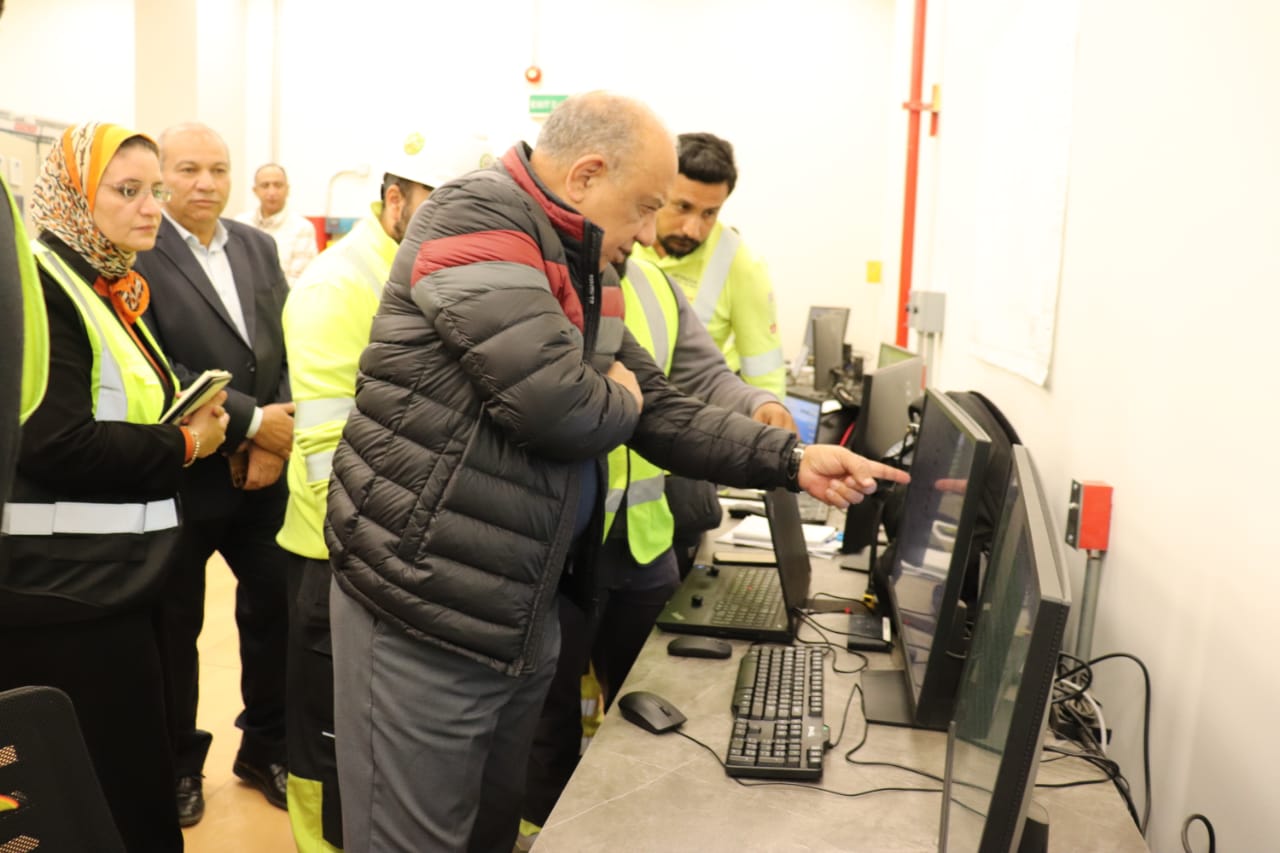
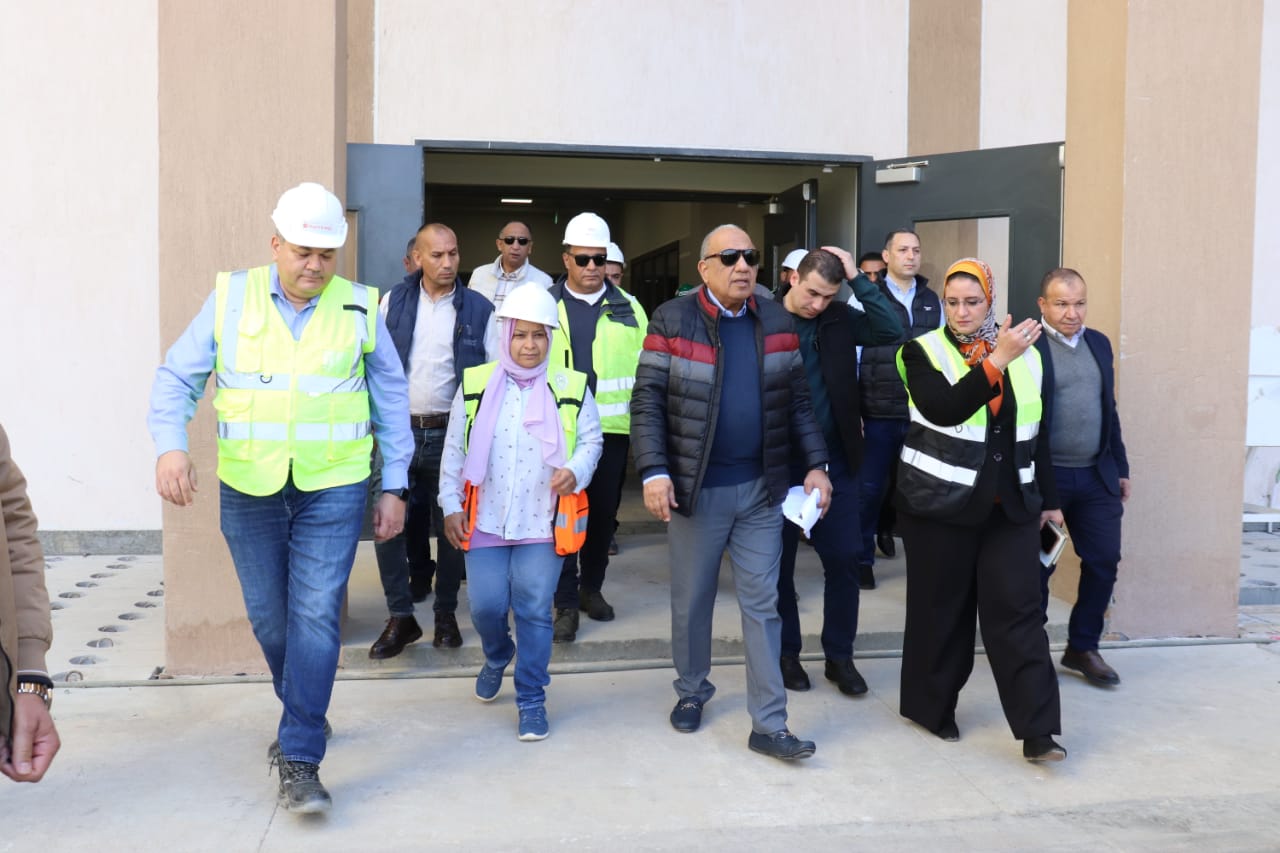
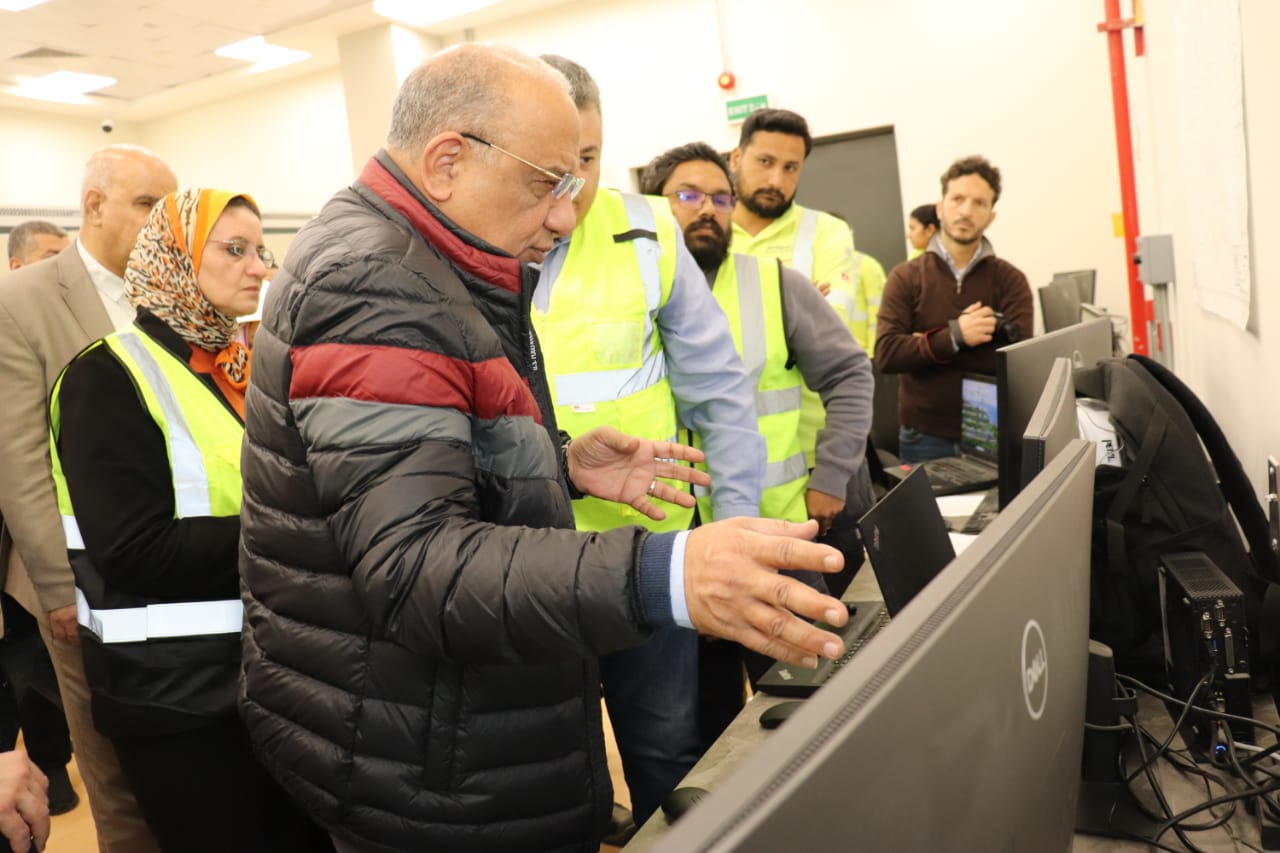
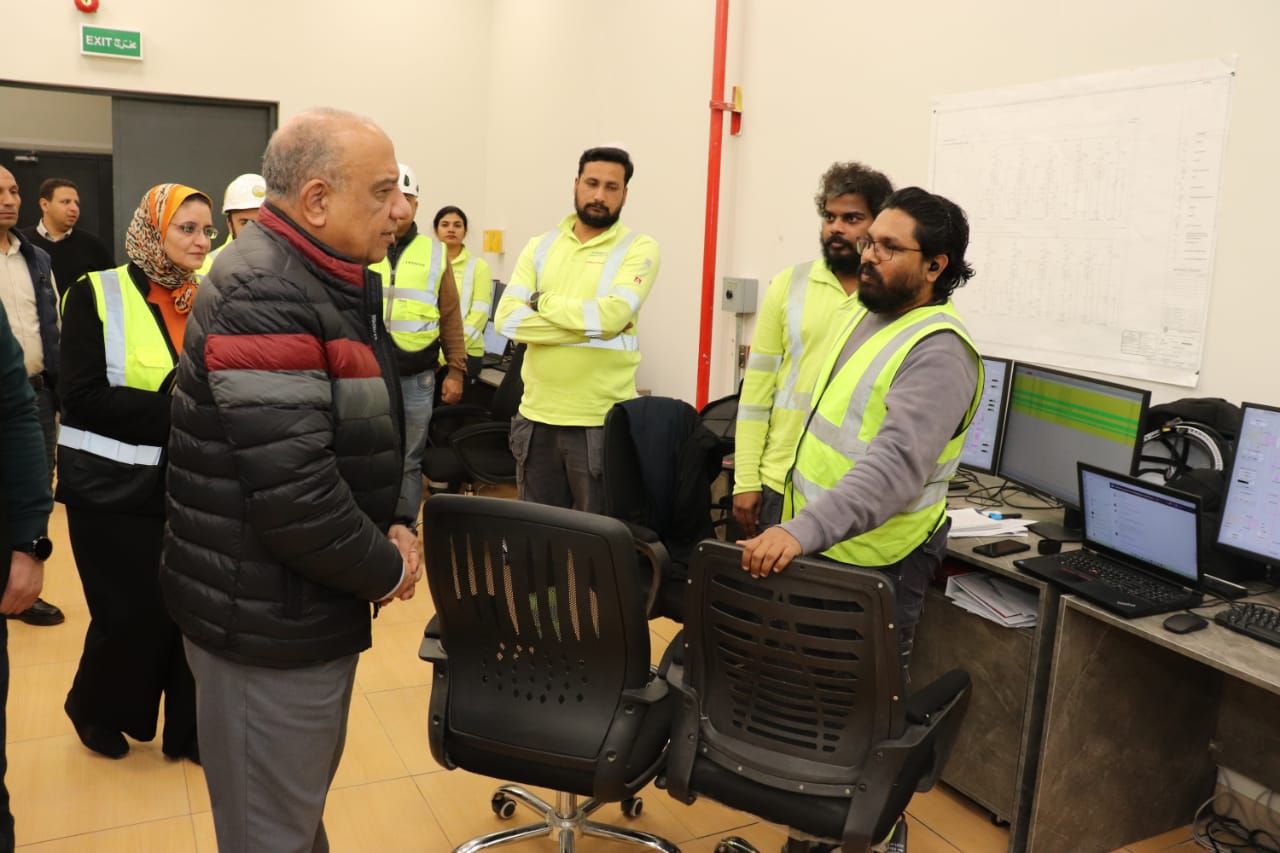
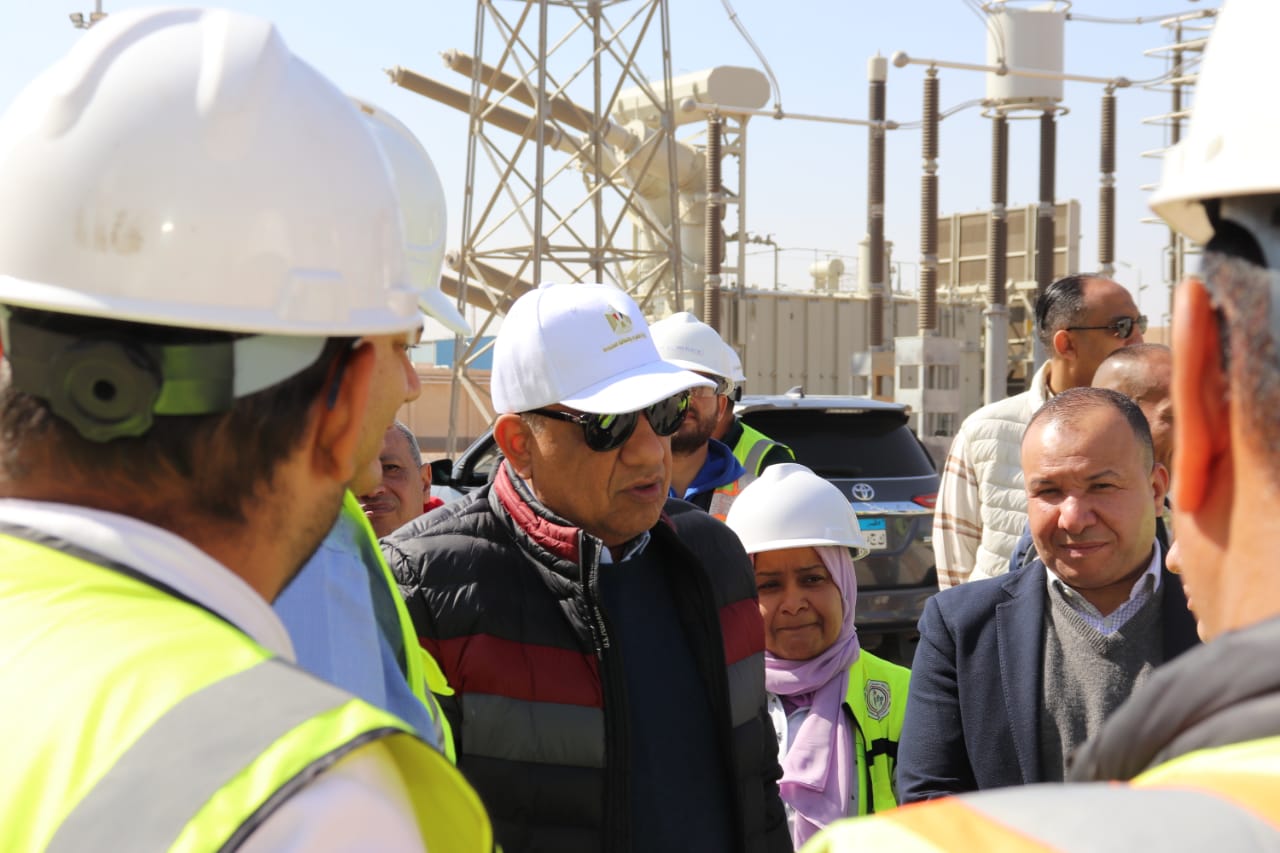
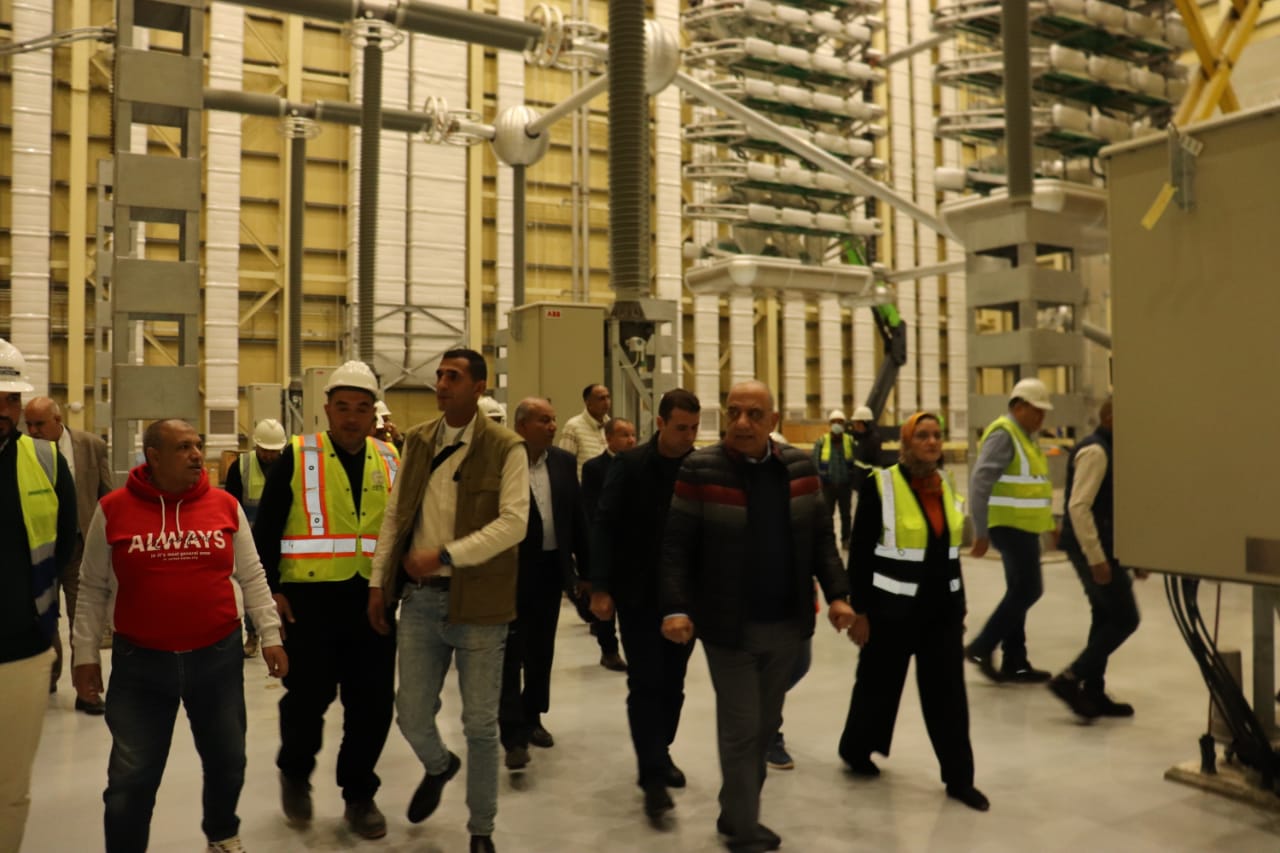
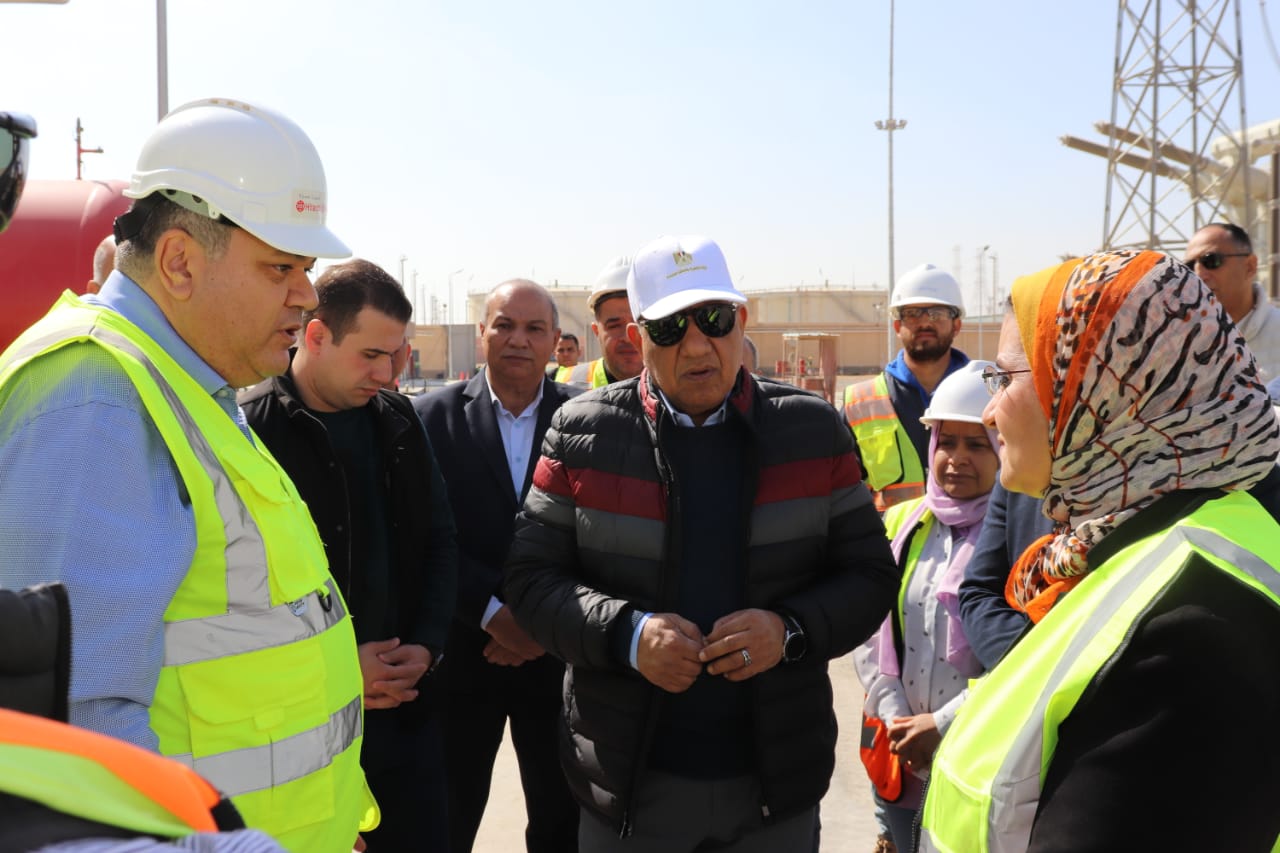
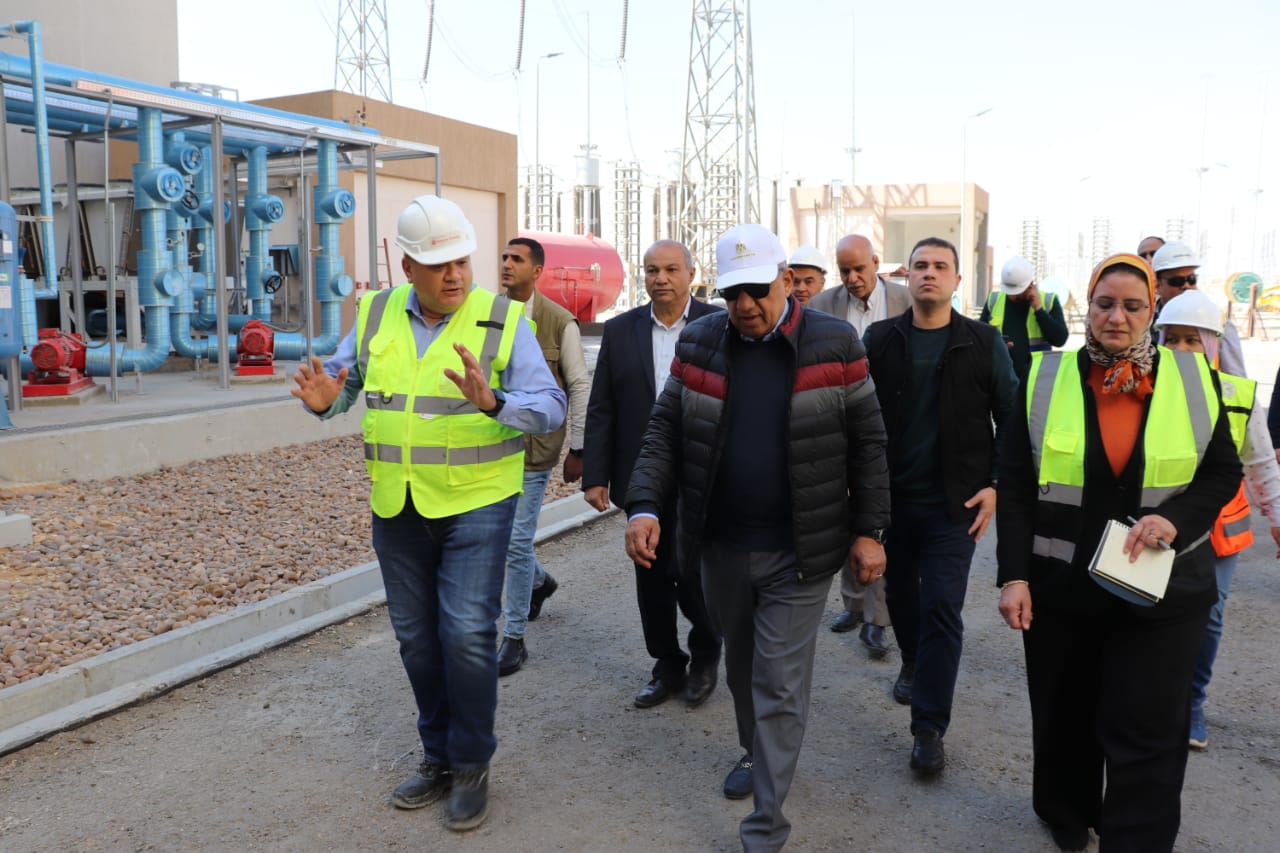
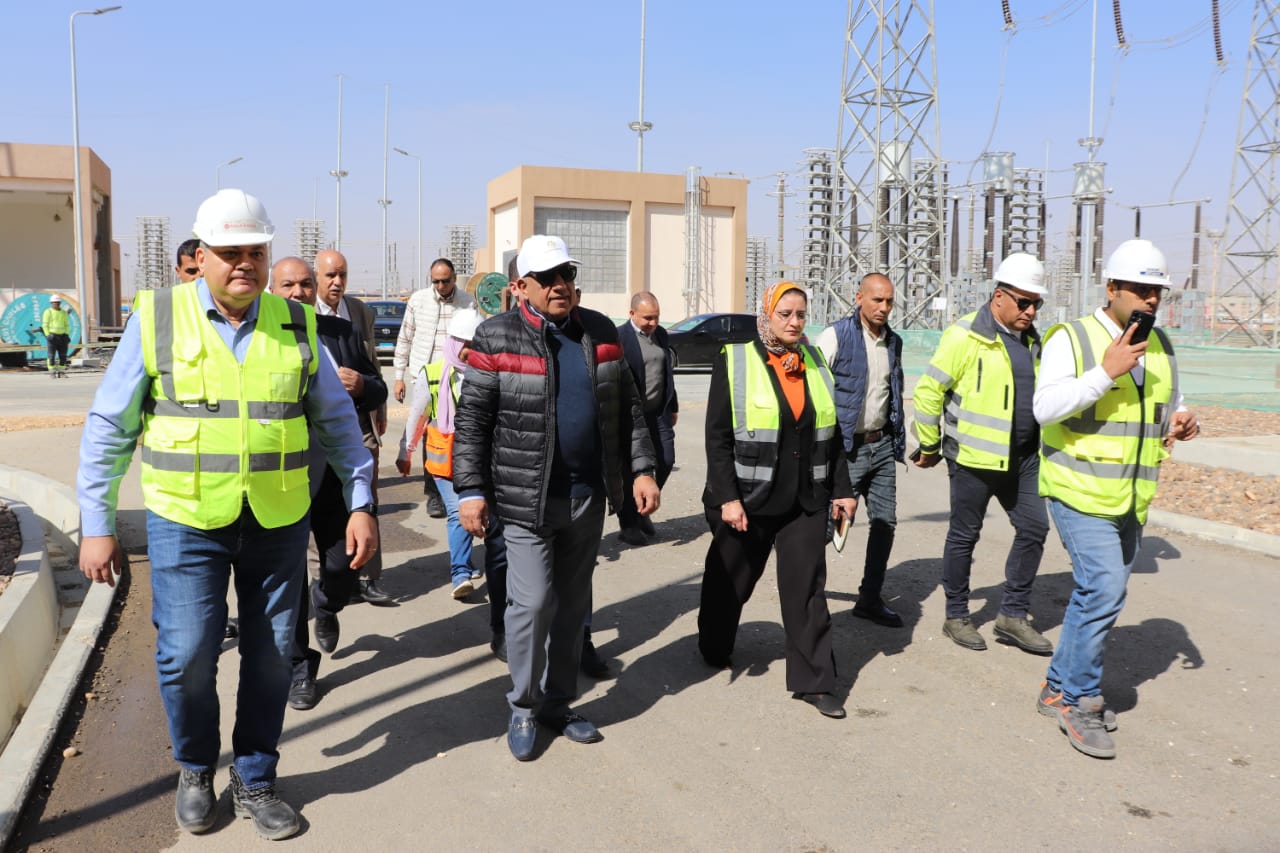
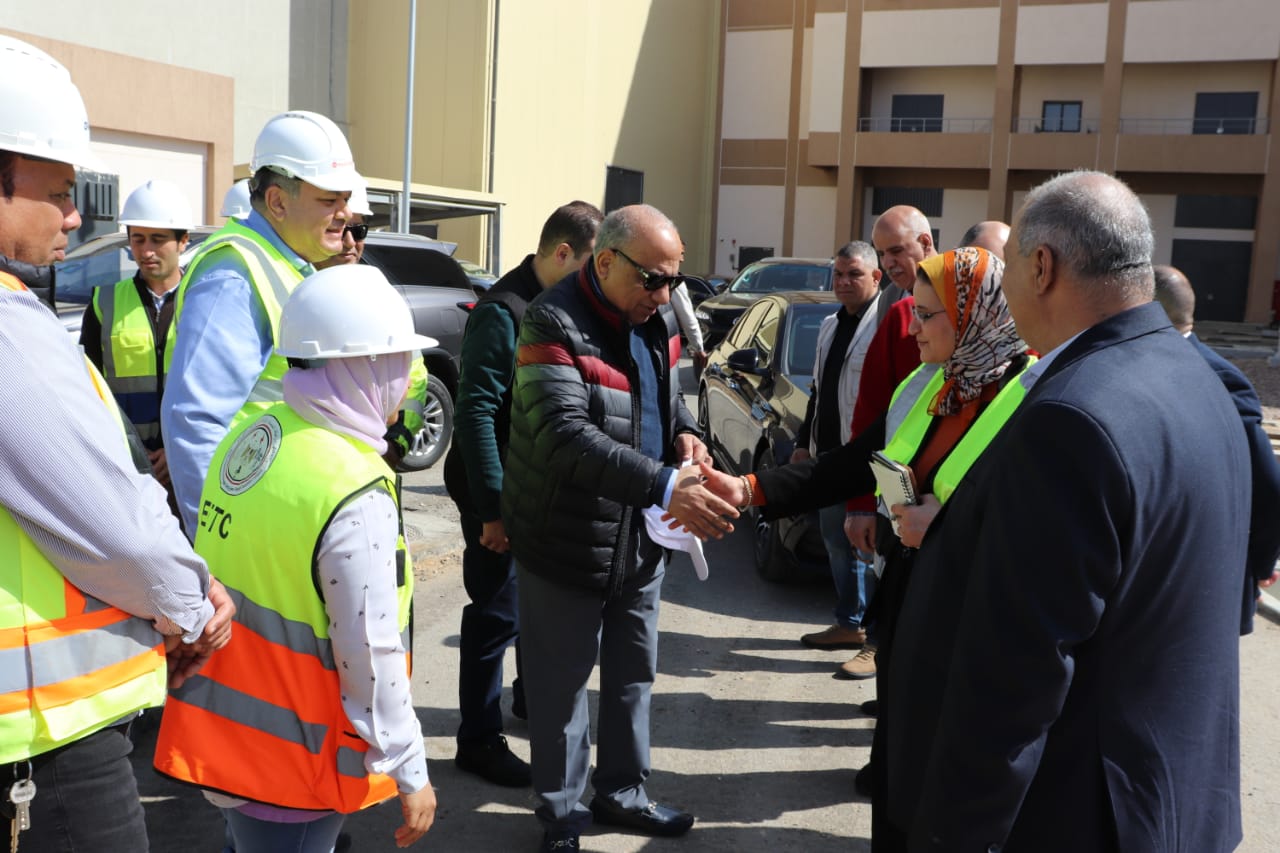
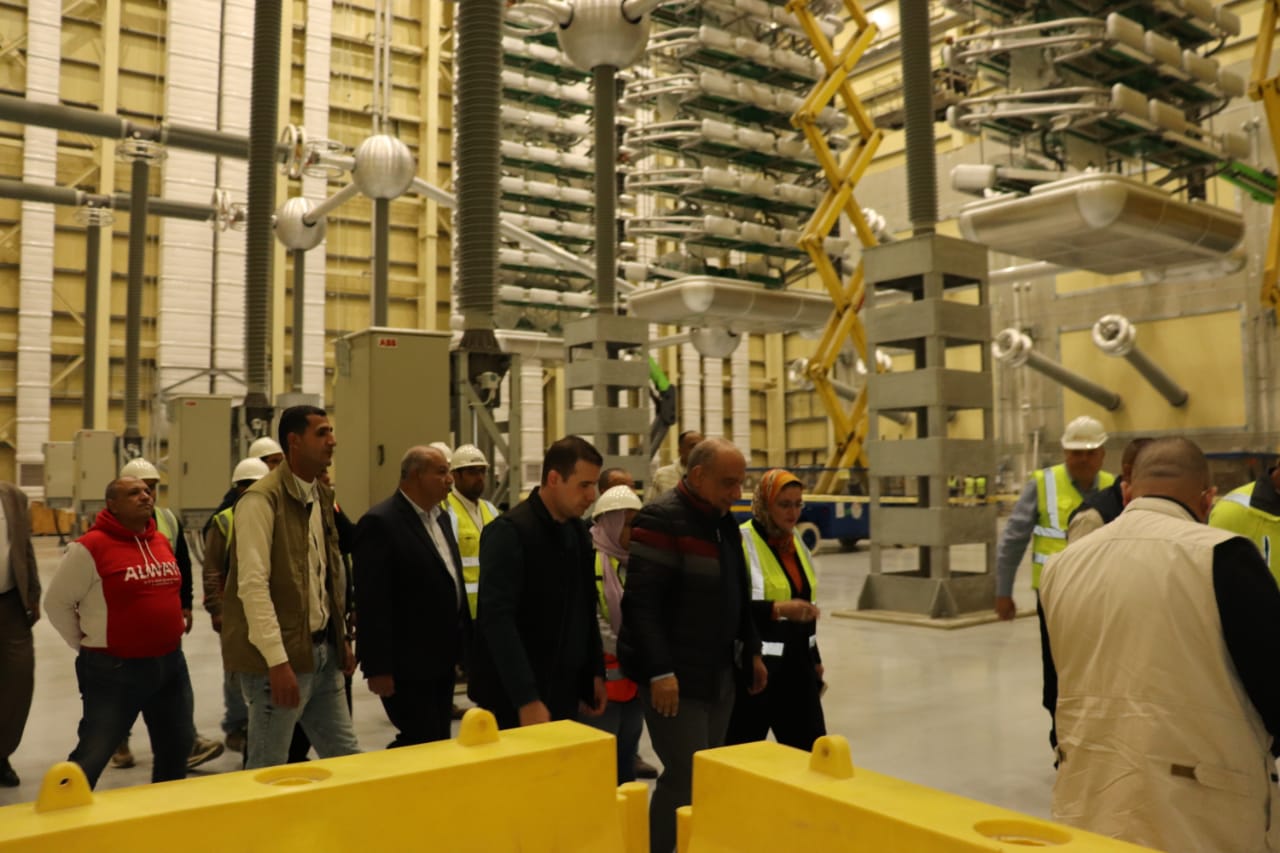
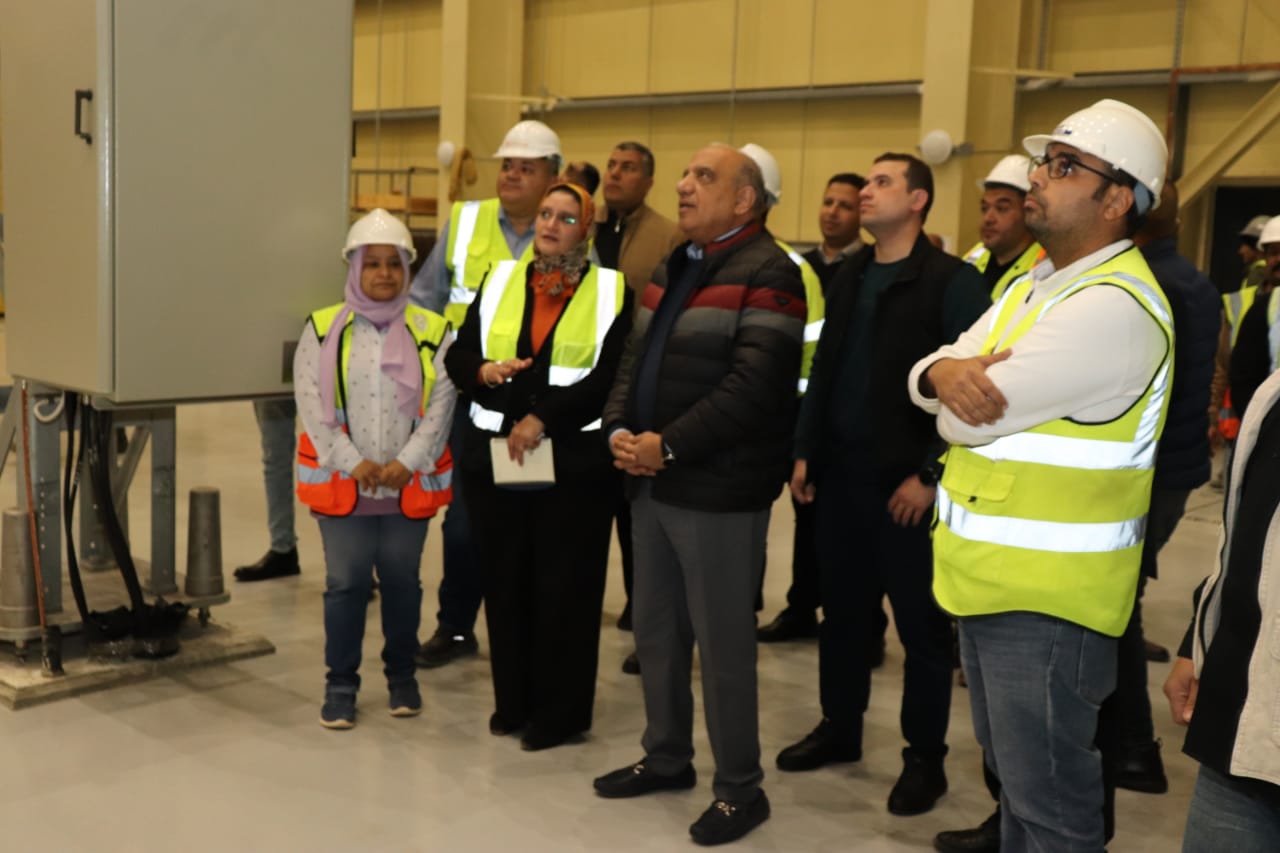
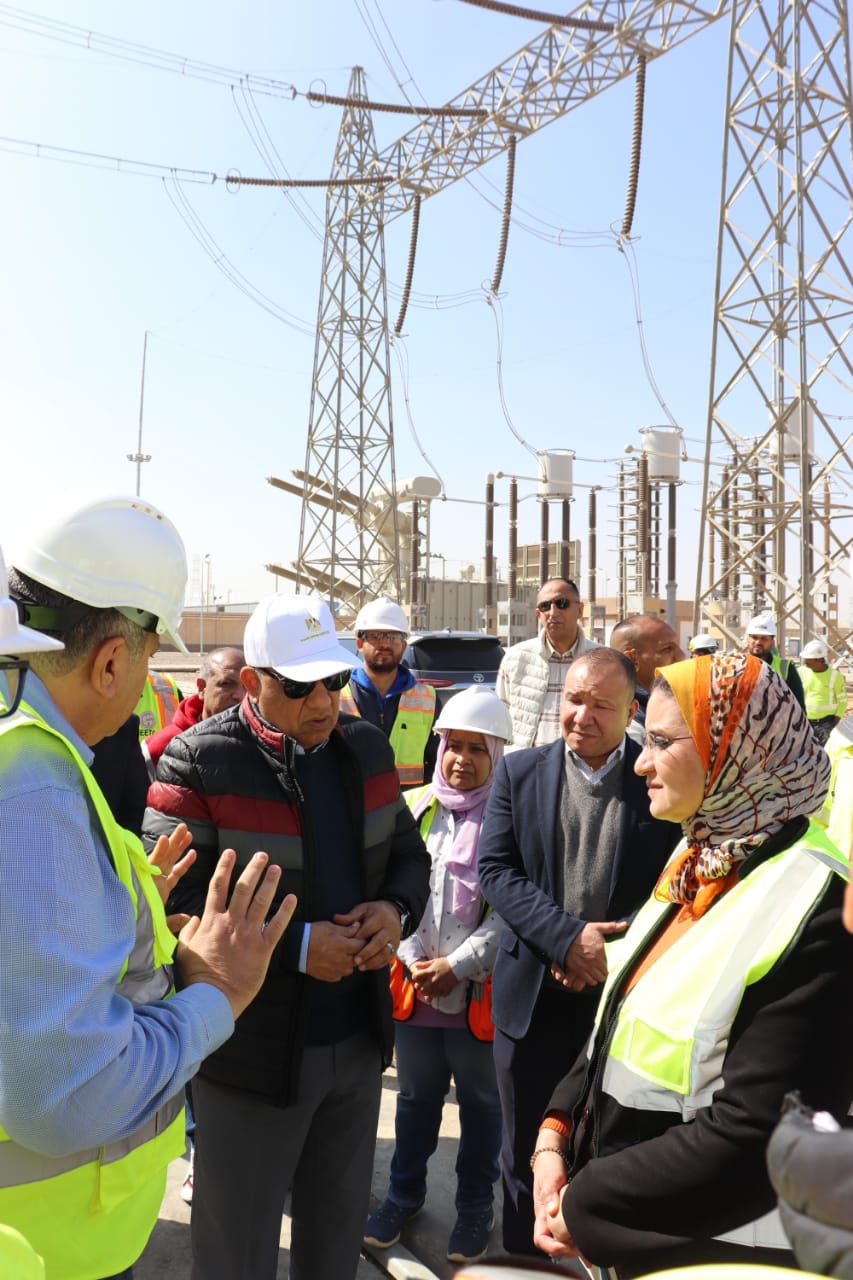
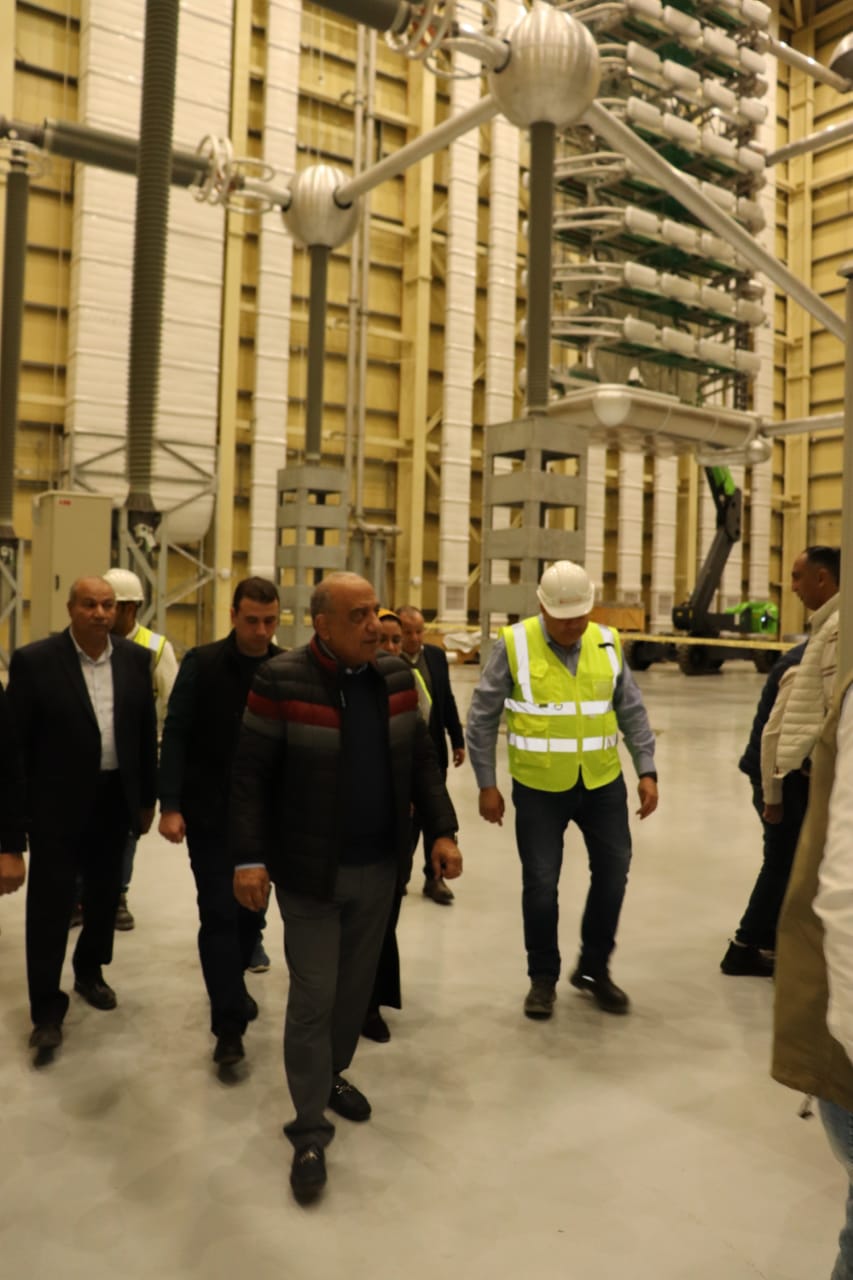
Dr. Mahmoud Esmat, Minister of Electricity and Renewable Energy, made a field visit to the Egyptian-Saudi electrical interconnection station with a voltage of 500 kilovolts direct current in Badr City, and inspected the station, which is the first of its kind in the Middle East region in terms of size, manufacturing technology, operation, and use, on the lines of connection with the electrical networks, and witnessed the actual reality of the completion of all work, and the continuation of the testing phase in preparation for operation during the coming weeks.
Dr. Mahmoud Esmat, in the presence of Engineer Mona Rizk, President of the Egyptian Electricity Transmission Company, and Engineer Mohamed Riyad, Branch Member for the Northern Region, inspected the station’s departments and the control and operation center and followed up on the completion of the testing stages for all equipment, all missions and components of the station in preparation for the start of operation of the project and connection to the unified electrical network in Egypt and Saudi Arabia during the coming weeks, within the framework of the state’s vision to find sustainable solutions to maintain the stability of the unified national network and improve the quality of nutrition. The Minister of Electricity and Renewable Energy reviewed the current status of the project and the rates of implementation of the test work, the timetable and operating dates. And the release of the current, as well as the completion of operating tests for the Badr transformer station and Taba 2 substation, and the overhead line (Badr/Taba 2) with a voltage of 500 kV and a length of about (320 km), as well as marine and land cables, installations for tasks, medium and low voltage cables, electrical feeding works with (AC – DC), operation of control panels and experiments for cable ends, tests of control panels, the drainage and water network, and optical fibers ( OPGW), and other completion procedures of the stations and the connection line in preparation for the start of operation and connection to the electrical network.
Dr. Mahmoud Esmat said that electrical interconnection projects are bridges of electrical energy to connect countries and strengthen partnership and cooperation relations and achieve common benefit and economic integration, especially the Egyptian-Saudi electrical interconnection project, which connects the two brotherly countries, and comes within the framework of work to establish an integrated electrical network linking the two countries, and the resulting exchange of electrical energy efficiently and flexibly in preparation for the establishment of a common Arab market for electricity, based on a clear vision and an integrated plan to raise the efficiency of the energy system, and create Urgent and sustainable solutions to stabilize the unified network and improve the quality of service, pointing to relying on renewable energies, raising the efficiency of operating generating stations and reducing fuel use, explaining the continuation of field follow-up to end the electrical interconnection project with Saudi Arabia and start operation, in light of the directives of His Excellency President Abdel Fattah El-Sisi, adding that the project aims to exploit the difference in the time of peak load occurrence between the two countries’ networks, including maximizing the use of generation capabilities in Egypt and Saudi Arabia, reducing fuel consumption rates, and economic operation of the network, explaining that this project is They linked the two largest electrical networks in the region, and the nucleus of an electrical connection between the continents of Africa, Asia and Europe.
It is worth noting that the Egyptian-Saudi electrical interconnection project has a capacity of 3,000 megawatts, and consists of 3 huge high-voltage transformer stations, the first in the east of the city in Saudi Arabia, the second in Tabuk, and the third in Badr City, east of Cairo, and they are connected by overhead lines with a length of about 1,350 kilometers and other marine cables.