
Tuesday 03/March/2026 – 11:06 PM
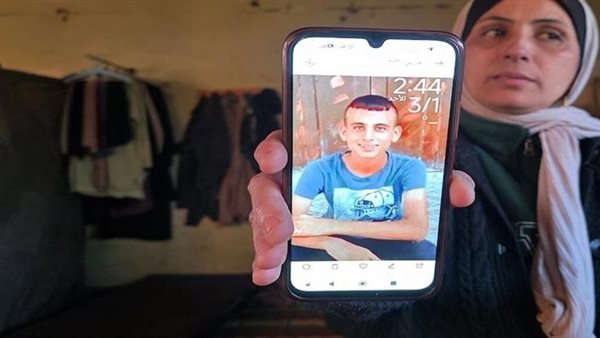
In one of the corners of a shelter school in the city of Khan Yunis in the Strip GazaThe family of the 16-year-old boy, Haitham Al-Masry, is living a cruel nightmare that does not seem to have an end. Since February 10, 2024, the life of this displaced family has turned into a spiral of terror and deadly waiting, after the Israeli occupation forces kidnapped their son during a brutal attack on the Al-Shaboura camp in the city of Rafah, leaving the family prey to feelings that oscillate between false hope and silent despair that tears at their hearts.
A nightmare in the shelter school
The occupation not only robbed the family of their home and stability, but also took away their joy by kidnapping Haitham, who was full of dreams and plans for the future. Today, the teenage boy has become merely an absent presence in the corridors of the school crowded with displaced people where his family is sheltering.

With every distant explosion or sound of sirens, the hearts of family members clench in a mixture of terror and agonizing anticipation; Cruel questions crowd into their heads: Will he be found? Was he hurt? Or has he joined the list of victims of the blind violence that relentlessly strikes the region?
Mother’s tears and father’s steadfastness
In statements to Wafa News Agency, Haitham’s parents describe this waiting as suffering beyond description and immeasurable. The grieving mother is unable to take her eyes off the center’s door, clinging to the hope that her son will suddenly appear at any moment to end this torment.
On the other hand, the father fights a tough daily battle to maintain his composure and calm in front of his young children, who do not stop innocently asking about their absent brother.
Every gesture and every question asked by the young people has become a painful reminder of the void left by Haitham, and of the violence that turned their lives into a state of constant alert and constant anxiety.
Not just a number in the annals of war
Despite the attempts of the local community and the displaced to provide psychological support to the family inside this shelter crowded with fear, no words or consolation can fill the void left by the boy’s absence.
Haitham’s case is not an individual tragedy or just a new number added to war statistics, but rather a reflection of a bitter reality that is repeated daily in Gaza, where families live under constant threat, and children and teenagers disappear without warning as part of a systematic kidnapping policy.
Every day that passes without news of Haitham, the pain increases, and his story becomes a symbol of the suffering of thousands of families whose stability was robbed, and whose children’s childhoods were assassinated in cold blood.