

Wednesday 26/November/2025 – 07:48 PM
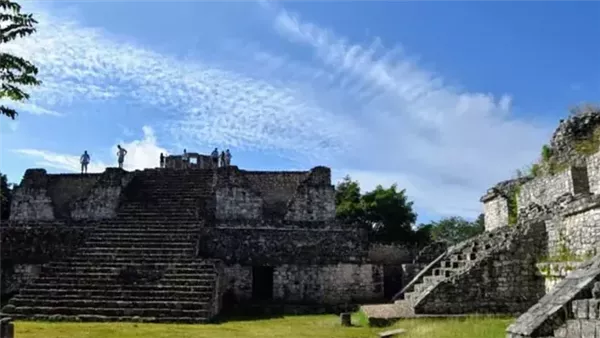
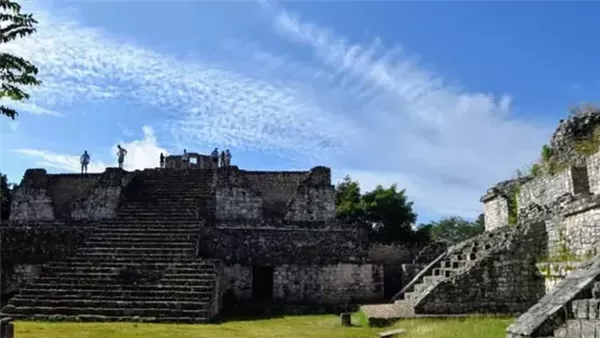
Mexicans recorded a prominent discovery at the archaeological site of Ik Balam on the Yucatán Peninsula, which would change researchers’ understanding of Mayan culture and its political and religious rituals. The discovery was made thanks to a study carried out by the National Institute of Anthropology and History in MexicoIt was officially announced during the Maya Virtual Conference at the National Institute of Anthropology and History, according to what was published in Marca.
An archaeological discovery may rewrite the history of the Mayan civilization
Archaeological investigations conducted between 2022 and 2024 revealed a distinctive architectural landmark within one of the stone arches, known as TB 29.
Researchers believe that this sign indicated the ceremonial closing of the vault inside the ancient city, an action that reflected important political and religious events.
In Room No. 79, archaeologists found a unique fresco facade representing what is known as the Maya Earth Monster, a mythical entity that personifies the entrance to the underworld.
This symbol was not just an artistic element, but was also linked to the power of the ruling elite, which reinforces the hypothesis that the building was intended for the residence of higher social classes or a place for practicing special rituals.
Symbols of authority and religion
The inscriptions that appeared on the mark included an image of the Mayan god Cahuil — the god of lightning, strength, and royal legitimacy.
The name of the well-known ruler Okit Kan Lek Tok was also found, in addition to the date September 18, 782 AD, which is likely to have been the date the crypt was ceremonially closed.
In addition to the plaster representation, complex decorations were found that included scenes of warriors and prisoners, animal symbols such as panthers, monkeys, turtles, and solar engravings linked to the concepts of life, death, and resurrection.
These details indicate an integrated symbolic system that Maya elites used to assert political authority, religious legitimacy, and perhaps a connection to the other world.
Why is this discovery important?
Ek Balam is no longer just a traditional archaeological site. It provides evidence that may reshape our understanding of the Maya civilization, especially with regard to its relationship to the rituals associated with the underworld, to the methods of representing authority, and to the architectural symbols used to enclose ceremonial spaces.
The discovery opens the door to new research on the role of the earth monster, and how it influenced the religious and political culture of the Maya, and also strengthens the hypothesis that the building was intended for elites more than a public space.