
Before CES 2026 officially kicks off, one of ZDNET’s top predictions for the show’s mega trends is already coming true: AI-powered wearables.
Memories.ai has unveiled the LUCI (Long Understanding Contextual Intelligence) project, a research model designed to provide a foundation for developing AI wearables that people actually want to use. Developers can leverage the device to create smart wearables that provide real value to users.
It is noteworthy that the name may sound familiar, as the company previously displayed the LUCI Pin at the last CES, and at that time it was just a consumer display model, but today the project has turned into a device aimed at developers.
“After the failure of several high-level AI wearables, we realized that the field needed greater maturity, so we transformed LUCI from a consumer device into a system-level reference design for other smart device companies to test and build upon using our Large Visual Memory Model (LVMM), which gives AI the ability to remember in a way similar to humans,” Shawn Chen, the company’s co-founder and CEO, told ZDNET.
LUCI’s success relies on the durable memory layer that Memories.ai provides via its LVMM model. According to the company, competing devices, such as pins, pendants, and AI-powered smart glasses, have previously failed because they could not provide true memory, resulting in inaccurate or useful responses to the user.
“Failed wearables typically captured data without understanding it, while LUCI understands your life visually, contextually, and continuously, whether to remember people you meet, turn your daily life into useful videos, or provide AI agents with full real-world context, to deliver real value from day one,” Shen added.

LUCI 2.0 processes data by converting continuous video captured by the device into encrypted frames organized on the device itself, which can be used for indexing and retrieving information in what is called “search and recall in less than a second.”
Developers can also tweak aspects such as battery life, lag, privacy control, and user experience modes, with LUCI already available as a base. The developer-dedicated device can be reserved now, with full availability expected later in 2026.
Shen emphasized that the strategy is similar to that of Google Nexus, by providing devices aimed at developers to showcase its software and push the ecosystem forward. The plan includes collaborating with leading companies in the field of artificial intelligence wearable devices, such as Rokid, Charge, and RayNeo, to integrate Memories.ai technologies into their devices.
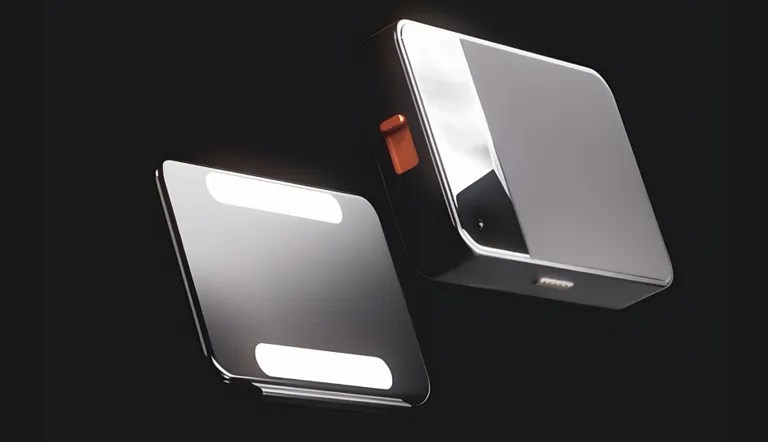
The pin itself is the key element of the LUCI project. The design maintains its elegant square appearance with a magnetic clasp, and includes a wide-angle camera with a 109-degree viewing angle, a privacy key, and a weight of less than 45 grams, with support for continuous recording for two to three hours.
“LUCI is not just a device, but rather an integrated system consisting of a light hardware (LUCI Pin), a companion application on the phone, and a real-time global model that encodes the physical world into an organized visual memory, allowing the device to understand people, events, and context over time, and not just respond to commands,” Shen asserts.
One of the company’s main concerns is data safety, especially with wearable devices that constantly capture user data. Shen explained that this concern is being addressed by collaborating with “leading cloud providers” and following “best practices to ensure enterprise-level data security, encryption, and access control across the entire system.”
The company is also working in collaboration with Qualcomm to enable a complete processing experience on the device itself, allowing all visual memories to be stored and processed locally, to provide an additional layer of privacy for users.