

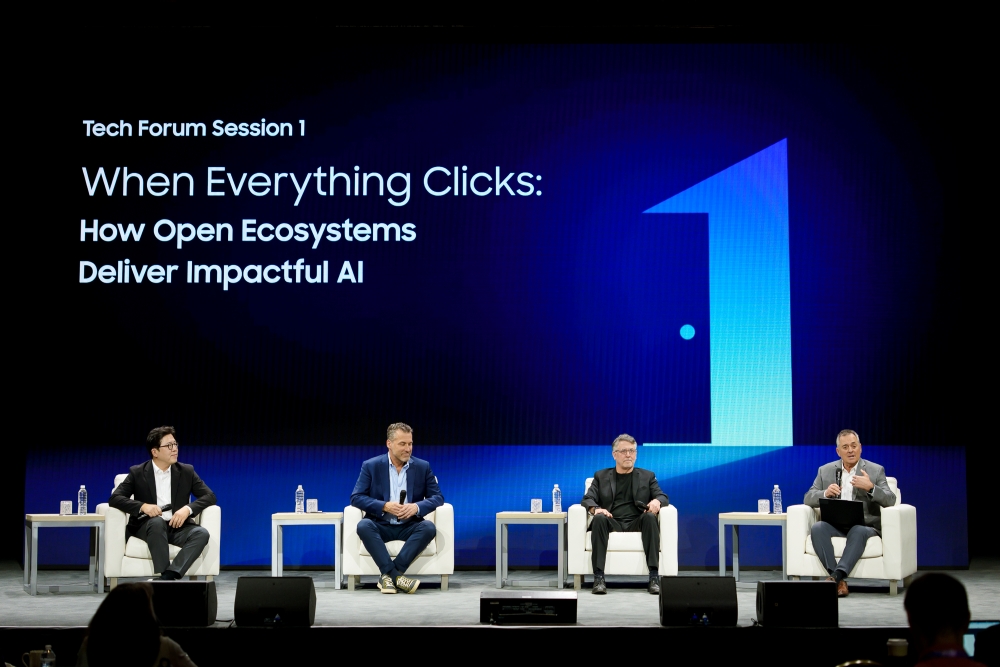
Samsung Electronics brought together leaders from various industries to discuss the importance of smart home device integration in the first sessions of its Technology Forum during CES 2026 at the Wynn Hotel in Las Vegas.
Under the title “When Everything Connects: How Open Systems Achieve Effective Home AI,” the experts focused on how partnerships between industries can transform connected homes into smart environments that operate seamlessly and provide security and support for users.
Speakers emphasized that the foundation of strong home AI lies in open collaboration, not closed systems. With homes relying on devices and services from multiple brands and industries, openness allows smart systems to work together in ways that deliver tangible impact.
Samsung shared its vision that open connectivity enables home appliances, power systems, security services and industrial partners to deliver experiences impossible in closed environments.

“Home is the most private place in our lives, so home AI must quietly and respectfully earn trust with user-felt value,” said Yoonho Choi, Chairman of the Home Connectivity Alliance and Head of Strategic Alliances at Samsung Electronics.
This requires integration between brands so that the home functions as a single system rather than separate features. “By collaborating with HCA and across industries, we turn openness into tangible results: safer homes, simpler red tape and measurable savings — all built on transparency and consent.”
Samsung highlighted the size and depth of its connected ecosystem, noting that more than 500 million users are already part of the SmartThings community.
With more than a decade of leadership in connected living, Samsung has deep experience in how AI in homes will evolve, from today’s smart devices to future systemic intelligence. This foundation enables the design of AI experiences that integrate with devices and services to deliver natural and seamless value to users.
Michael Wolf, founder and editor-in-chief of The Spoon, pointed out the importance of providing tangible benefits to users: “There is no field that will bring greater benefit than a fully connected kitchen, which enables users to know the contents of their refrigerators and connect them to the water and heating networks to obtain a comprehensive view that helps in taking preventive measures.”
The session also reviewed how open systems enable consumers to gain measurable benefits through cross-industry partnerships.
Samsung cited its partnership with Hartford Steam Boiler (HSB) as a unique example of how smart home data can be used responsibly and transparently to deliver tangible results.
“We are at a point where the connected home can seamlessly integrate into a user’s life, enhancing trust in smart devices and directly benefiting consumers,” said Jed Usich, Senior Vice President of Strategic Solutions at HSB. “Through our partnership with Samsung, we have created a bridge to the insurance industry that turns simple data into tangible savings for consumers.”
The speakers emphasized that the success of home artificial intelligence depends on it being designed to make the user feel comfortable and naturally integrate into his daily activities such as cooking, relaxing, entertaining, and caring for the family. Design, narrative, and understanding behavior all play a role in making connected devices reliable and calm companions.
All agreed that the future of home AI depends on integration between devices, responsible use of data, and collaboration across industries, to ensure smart homes deliver real value without compromising trust.
As AI becomes more widespread and system-wide, Samsung is focused on building open systems that make connected life simpler, safer and more meaningful.