
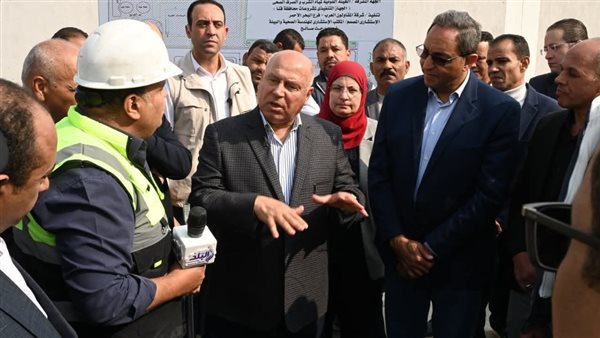
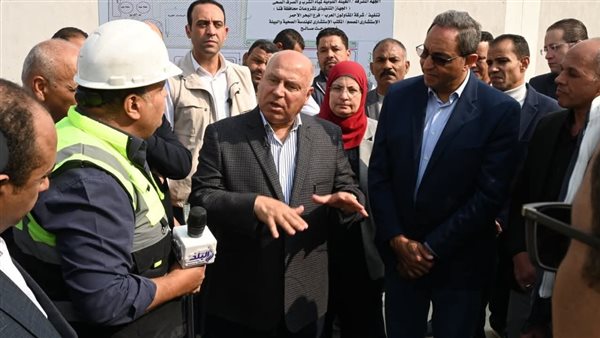
Lieutenant General Engineer Kamel Al-Wazir, Deputy Prime Minister for Industrial Development, was keen Minister of Industry And transportation, to conduct a field tour in Qena Governorate, during which it inspected the “Qaft” and “Ho” industrial zones, to follow up on the status of ongoing infrastructure projects, and to learn about the achievements achieved within the local development program in Upper Egypt, in order to ensure the readiness of industrial areas to receive new investments. The minister was accompanied during the tour by Dr. Khaled Abdel Halim, Governor of Qena, Dr. Nahed Youssef, head of the General Authority for Industrial Development, and a number of leaders of the Ministries of Industry and Local Development and representatives of companies implementing the utility works.
This came within the framework of a series of inspection tours in the governorates, especially the governorates of Upper Egypt, in implementation of the directives of the political leadership to achieve balanced regional development and boost industrial growth rates in promising regions.
The importance of supporting industrial zones
The Minister stressed the directives of the political leadership on the importance of supporting industrial zones, especially in the governorates of Upper Egypt, and completing the facility work in them at the highest level of quality and international standards, in line with the urgent plan to advance industry, deepen local manufacturing, and increase exports, by providing a competitive investment climate that provides serious investors with real opportunities for growth and industrial expansion.
The Minister began his tour by inspecting the Qift Industrial Zone, which is built on an area of 406 acres and includes 571 industrial plots of land, 477 of which were allocated, with an occupancy rate of 84%. The industrial activities in the area vary between the food, engineering, chemical, pharmaceutical, and textile sectors. The area is distinguished by its strategic location and its direct connection to a number of main axes, most notably the Qift-Qusayr Road and the Eastern Desert Road, in addition to its proximity to the city of Qift, 7 km away. km, and the ease of connecting it to various transport ports, as it is about 195 km from the Safaga seaport, 50 km from Luxor International Airport, and 7 km from the Qus high-speed train station. The industrial areas in Qena depend on labor intensiveness in spinning, weaving and ready-made clothing factories or the availability of raw materials in the mineral and quarry industries.
During the inspection, the executive position of the Qift region was reviewed, as all basic utility works related to water, drainage, electricity, fire and natural gas networks were completed by 100%, and the rates of road works (15.4 km long) and service facilities and buildings reached 95%.
During the tour, the Minister stressed the necessity of forming an investors’ association for each industrial zone so that the association would manage the industrial zone and receive and maintain all its internal facilities in coordination with the competent authorities, which would contribute to raising the efficiency of the industrial zone and maintaining the sustainability of its facilities and making it easier for investors. He pointed to the study of establishing an industrial development school in coordination and cooperation between the Productive Efficiency and Vocational Training Service and the region’s investors to train workers and meet the region’s needs for trained and qualified technical workers, directing the establishment of a goods shipping station inside the Qus express train station to serve the industrial zones in Qena.
The minister urged the region’s investors to rely on new energies such as solar energy and wind energy in industrial operations, as well as to benefit from the increased productivity of the tomato crop in the governorate by establishing tomato concentrate factories, and to benefit from the throne of tomatoes in the feed and fertilizer industry, pointing out that the vacant industrial units in the Qift industrial complex will be available for investors to apply for during the next offering on the Egypt Digital Industrial Platform.
The minister concluded his industrial tour with a visit to the Phoenix Iron Rolling Factory, which is built on an area of 62 thousand square meters, with an investment volume of 210 million Egyptian pounds. The factory hot-rolls iron and produces beams and angles, in addition to wire and sheet, with a production capacity of 190 thousand tons annually, and provides about 250 direct job opportunities. The tour also included an inspection of the water purification plant in the region, the expansion work of which has been fully completed, with a capacity of 10 thousand cubic meters. To meet the factories’ needs for treated water to ensure the sustainability of the production process and achieve the required environmental standards.
The Minister went to the “Ho” industrial area to inspect the utility work, as the project area is about 426 acres. The area includes various industrial activities, including the food, engineering, chemical, mining, metallurgical, and textile sectors. The area includes 550 industrial plots of land, and the number of plots allocated to the area reached 375 plots with an occupancy rate of 68%. During the tour, the executive position of the utility work in the area was reviewed, as the efficiency of the area was raised and 100% of the electricity, water, and gas connection works were completed, while the Nearly 98% of road works (98 km long), construction and equipping of administrative and service buildings have been completed.
The “Ho” area is distinguished by its strategic location and its connection to a number of major traffic axes, most notably the Ho-Rabbaniyeh road, the Western road, and the Qena-Nag Hammadi road, in addition to its proximity to the city of Nag Hammadi, 15 km away, and the village of Baraka, 5 km away, as well as its connection to seaports, as it is 240 km away from the Safaga port and 230 km away from the Quseir port, which supports opportunities to attract investments and enhance the industrialization movement in Qena Governorate. The Ho area includes a complex An integrated industrial complex for small projects, which was established by the Industrial Development Authority on an area of 74 acres and includes 420 industrial units, including 338 dedicated units, with an allocation rate of 80%. The complex represents a new development artery in the governorate, as it provides opportunities and fully constructed industrial units and facilities ready for immediate operation for small investors from the people of the governorate.
The Minister also inspected the new purification station in the Ho industrial zone, after its establishment with a capacity of 21,000 cubic meters per day. During his tour of the region, the Minister inspected the Al-Massa Plastics Factory, which is built on an area of 1,000 square meters, with an investment volume of 100 million pounds, with a production capacity of up to 2,000 tons annually of printed and non-printed plastic rolls and bags with a local component percentage of 99%.
During the tour, the Minister urged workers in factories to do their best to advance Egyptian industry, as they are the backbone of any industry and the main supporter of its sustainability and the transfer of expertise from generation to generation.
The Minister praised the completion rates in the facilities work in the region in accordance with the timetables set for implementation, stressing that Qena Governorate has become capable of receiving major local and foreign investments, praising the quality of products in the factories of the two regions, and their contribution to meeting the needs of the local and foreign markets, indicating the possibility of studying expansions of the Ho and Qaft regions to accommodate the increasing demand from investors for industrial lands.
At the conclusion of his visit, the Minister affirmed that the state is continuing to implement its plan to complete the remaining development work in the “Ho” and “Only” industrial zones, and to overcome any obstacles facing investors. He explained that the next stage will witness a major boom in industrial growth rates in the governorate, in continuation of the unprecedented rise in occupancy rates witnessed by the industrial zones today, which reflects the success of the local development program in Upper Egypt in achieving its development goals and pushing the wheel of industrialization in the Upper Egypt governorates towards broader horizons of growth and sustainability.