
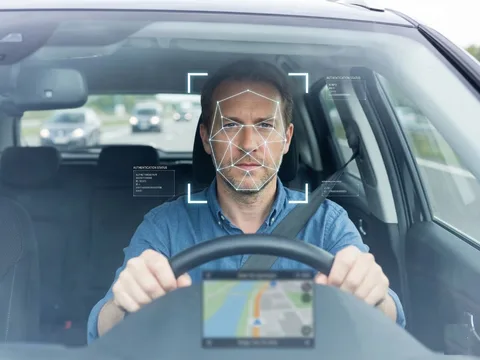
Researchers at Australia’s Edith Cowan University have developed an advanced artificial intelligence program capable of identifying drunk, fatigued and angry drivers simply by analyzing video footage of their faces while driving. This innovative system, called Jack of Many Faces, evaluates fine facial movements, eye blinks, and general expressions simultaneously to monitor three main and direct causes that lead to fatal traffic accidents on the roads.
The research team explained that the new system can detect the concentration of alcohol in the blood with an accuracy of approximately 90%, while the accuracy of monitoring drowsiness and fatigue reaches 95% to provide maximum protection. The program can also classify drivers into three clear levels, including normal, moderate, or severe states. Given that high levels of fatigue may physically mimic drunkenness, and anger may spark aggressive driving behavior, tracking these three states provides a comprehensive and accurate assessment of driver safety.
This algorithm is very intelligent, enabling it to accurately differentiate between a driver feeling sleepy, just making a passing facial expression, or being under the influence of alcohol. Researcher Zulqarnain Jilani, who is participating in this promising project, pointed out that the system’s ability to separate these overlapping factors from each other allows the program to understand the driver’s real and actual physical condition better and more deeply than previous traditional systems that rely on only superficial indicators.
Although breath alcohol meters and traditional blood tests provide very high accuracy, they are considered intrusive methods and require active cooperation from the driver and the field presence of the authorities to implement them. In complete contrast, this new technology works passively and continuously in real time to provide permanent monitoring, as it does not require any physical interaction or direct intervention from the driver, making it a practical and safe alternative that relies on visual monitoring only without distraction.
To ensure that the technology works highly efficiently during nighttime and low-light conditions, the research team created a companion model that intelligently combines standard color video with infrared night vision footage. This innovative combination of two different types of video streams allows the system to extract fine geometric details of the face in complete darkness with extreme accuracy, which enhances the overall performance of the program and makes it ready to work around the clock to protect lives and property.