

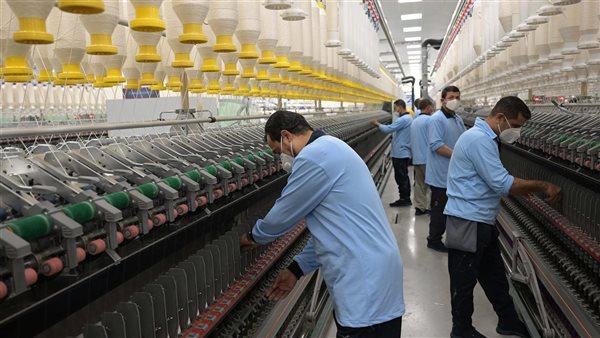
At a time when competition has become global, and all countries are trying to attract factories and investments, companies are looking for the right place that combines location, infrastructure, and the ability to export to the world. One of these companies decided that its next step would be from Egypt.
An investment of millions of dollars, a huge factory, and a production line directed to Europe and from the heart of the Egyptian market. What is the story? Why did Egypt become a strategic choice? Let’s talk about the details.
A Turkish company specializing in the manufacture of textiles and socks decided to enter the Egyptian market with a large investment amounting to $70 million, in a step that reflects growing confidence in the Egyptian economy and its ability to absorb huge export-oriented industrial projects.
The new project is based on establishing a factory with international specifications, and it will be one of the company’s largest projects outside Türkiye.
The planned factory will be built on a very large area, the first phase alone covering tens of thousands of square metres, with additional space allocated for future expansion. This means that the project has been in place from the beginning, with expansion and growth in mind, not just a temporary experiment.
The production lines will rely on thousands of modern sewing machines, and with time this number will increase, which means huge production capacity and the ability to meet the demands of large markets.
The main focus of production in the first phase will be on export to European markets, which require high quality and strict adherence to specifications, and this reflects that the factory inside Egypt will operate to the same international standards.
At the same time, part of the production will be directed to the local market, whether to provide a higher quality product or to reduce dependence on imports.
The importance of the project is not only in its size, but in its location. Egypt has become a strong attraction for the textile industry, due to its close location to Europe, its trade agreements, and the infrastructure that has developed greatly over the past years.
A modern road network, ports, railways, and smart transportation projects, all of which facilitates the movement of raw materials and exports and reduces costs.
The project also represents a real addition to the labor market, because it requires a large and trained workforce, and this means direct and indirect job opportunities, and the transfer of advanced industrial expertise, especially in the field of textiles, which Egypt already has a long history in.
Having a factory of this size helps develop local supply chains, and opens opportunities for Egyptian companies and suppliers to work with an international brand.
In the medium and long term, the project does not stop at the boundaries of one factory. There are plans to expand activity, increase production capacity, and also enter related fields such as retail within the Egyptian market.
I mean, we are looking at an investment that sees Egypt not only as a place of manufacturing, but as a market and a regional center for expansion.
In the end, this story confirms that Egypt has become an important player on the global industrial map, especially in the field of textiles. Investments of this size mean trust, and this trust comes when there is an environment that is able to accommodate and compete, and the result? Employment, exports, and real added value to the economy.