

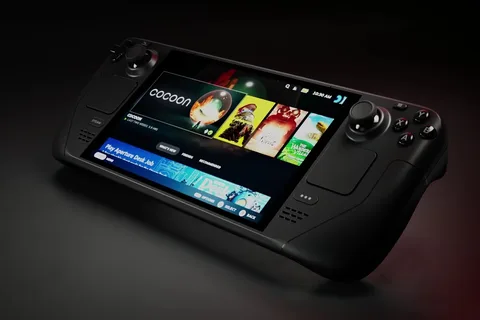
SteamDecks are now out of stock in much of Europe, Canada and Japan, as memory and storage space shortages linked to the AI data center boom have disrupted supplies. Valve confirms the issue, with restock timelines remaining unclear in several regions.
It’s becoming increasingly difficult to buy a Steam Deck handheld game console, and not just in the US. After weeks of intermittent availability in the United States and parts of Asia, the shortage has now spread to Canada and Europe.
Valve has confirmed that the problem stems from a lack of memory and storage components in certain areas. What began as isolated inventory problems is now shaping up to become a broader global supply crisis.
According to reports from Gaming on Linux and checks across multiple regional pages of the official Valve Store, the Steam Deck is currently unavailable in Germany, Austria, Poland, France, and several other EU countries, as well as in Canada and Japan. Meanwhile, at the time of writing, stock is still available in Australia, the UK, Hong Kong, South Korea and Taiwan.

There is one important caveat: the LCD version of the Steam Deck is no longer in production, which explains why this model is out of stock almost everywhere. However, wider availability issues are affecting the current lineup as well.
It is still unclear when stocks will return to normal in the affected areas. Komodo Station, Valve’s East Asia partner, estimates that availability in its markets should return by the end of the month, but no global timeline has been provided.
As for the reasons behind the shortage, Valve addressed them briefly: The Steam Deck OLED may be out of stock intermittently in some regions due to a lack of memory and storage.
The current memory and storage crisis is due to the AI infrastructure boom, as tech giants and major cloud computing companies invest billions of dollars in data centers filled with massive numbers of AI GPUs. These systems require large amounts of high-bandwidth memory and NAND storage.

Because AI companies are willing to pay premium prices, chipmakers prioritize their orders. This leaves less production capacity for consumer devices, including Steam Decks. In other words, gaming laptops now compete directly with AI stacks for the same set of memory and storage chips.
The Steam Deck isn’t the first device to feel the impact. RAM modules and solid-state drives were hit earlier, with prices rising between double and 5-fold compared to last year. Laptop manufacturers followed suit, with companies such as Dell, Lenovo, and FrameWork announcing price increases tied to component costs. Apple even warned that memory limitations will further impact its earnings in the second quarter as it works to secure supplies.
The Steamdeck may be the first portable gaming console to be hit hard, but it likely won’t be the last if supply pressures continue.