
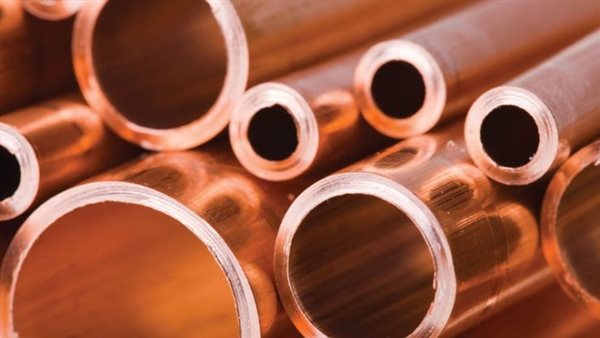
At the beginning of the new year, the Egyptian and global market faces major economic challenges due to the continuous rise in… Copper priceswhich is the main component in the manufacture of sanitary ware such as mixers, pipes, and thermal conductors.
According to recent reports, the price of copper reached its highest historical levels at $13,387.50 per ton on the London Metal Exchange, with an increase of 6.6% since the beginning of 2026, after a 42% rise in 2025.
This unprecedented rise directly affects production costs in Egypt, as industrial brass prices rose from 330 pounds per kilogram at the beginning of 2025 to 410 pounds by the end of the year, which prompted companies to increase the prices of their products by rates ranging between 15% and 40%.
As the upward trend continues in 2026, experts expect additional increases that may affect Egyptian consumers and exports.
In this report, who BankerWe review the causes, effects, and future expectations of this crisis.
Reasons for the dramatic rise in global copper prices in 2025-2026
The sharp rise in copper prices is due to a combination of global factors, including supply shortages resulting from sudden outages at major mines.
For example, a mudslide at the Grasberg mine in Indonesia – the world’s second-largest copper mine – shut down much of production until the second quarter of 2026, resulting in an expected market deficit of 150,000 metric tons by the end of the year.
Mines in Chile and Peru, which supply about 40% of the world’s copper, have also been affected by production problems and environmental disasters, reducing supply growth to just 1.4% in 2026.
In addition, US trade policies played a crucial role. Under President Donald Trump’s administration, fears of a 15% tariff on refined copper imports in 2027, with an increase to 30% in 2028, have sparked panic in markets.
This prompted dealers to ship huge quantities to the United States, depleting global inventories and raising prices to more than $13,000 per ton in January 2026.
On the demand side, consumption is increasing due to renewable energy, electric cars, and artificial intelligence.
For example, an electric car uses 183 pounds of copper compared to 48 pounds in a conventional car, with 30 million electric cars expected to be produced annually by 2026.
The impact of high copper prices on the sanitary ware industry in Egypt
In Egypt, the sanitary ware industry relies heavily on copper, which constitutes a large proportion of production costs. According to statements by Ahmed Abdel Gawad, President of the International Sanitary Ware Company and a member of the Chamber of Engineering Industries, the price of brass rose from 330 to 410 pounds per kilogram in 2025, which led to increases in the prices of mixers and water pipes by rates of up to 40%, and with international prices rising to $13,230 per ton in January 2026,
The pressure is expected to continue, as companies bear cost differences in part to avoid losing customers due to weak demand.

The electrical cable and wire industries were also affected, as Osama Zakaria, director of BICC, said that the prices of high-voltage cables rose by 15-40%, with the price per kilometer increasing to between one million and 2.5 million pounds.
In a related context, El Sewedy Cables Group reduced discounts from 34% to 18%, which raised the prices of insulated coils from 701 to 871 pounds per 1 mm, and from 1,034 to more than 12,590 pounds per 16 mm.
These increases may affect infrastructure and housing projects in Egypt, especially with reliance on imports from Bahrain, the Emirates, India, and Europe.
Opinions of Egyptian experts and manufacturers about the crisis
Experts confirm that the current increases will not significantly affect the competitiveness of Egyptian exports, as said by Sherif El-Sayyad, Chairman of the Export Council for Engineering Industries.
However, Hassan Mabrouk, Head of the Electrical Appliances Division, warned of limited future increases if the global rise continues, especially since the percentage of copper in electrical appliances is less than 5%.
Zakaria pointed to the use of futures contracts to hedge against volatility, while some manufacturers are turning to alternatives such as aluminum to reduce costs.
On the global side, Goldman Sachs expects a slight decline in prices to $10,000-11,000 in 2026, but confirms a long-term rise due to demand for green energy.
JPMorgan also sees a rise to $12,500 in the second quarter of 2026 due to ongoing shortages.
Future expectations for copper and sanitary ware prices in 2026
Experts expect a deficit in the global copper market of up to 450,000 tons in 2026.
With demand increasing by 2.1%, compared to production growth of only 0.9%. In Egypt, sanitary ware prices may see additional increases of 10-20% if the price of copper reaches an average of $12,000.
However, switching to alternatives such as aluminum can mitigate the impact, especially in connectors and cables.
Alternatives and strategies for dealing with rising copper prices
To mitigate the impact, Egyptian companies resort to diversified imports and futures contracts, and consumers are advised to search for alternative products or postpone purchases if possible.
At the government level, policies supporting local industries may help enhance competitiveness, especially with expectations of high demand for copper in renewable energy and artificial intelligence.
The rise in copper prices represents a major challenge for the Egyptian economy, but it is an opportunity for innovation and a shift towards more sustainable materials, and with Trump’s tariff decisions scheduled for mid-2026 being monitored, the market remains in a state of anticipation.