

Saturday 31 January 2026 – 10:23 PM
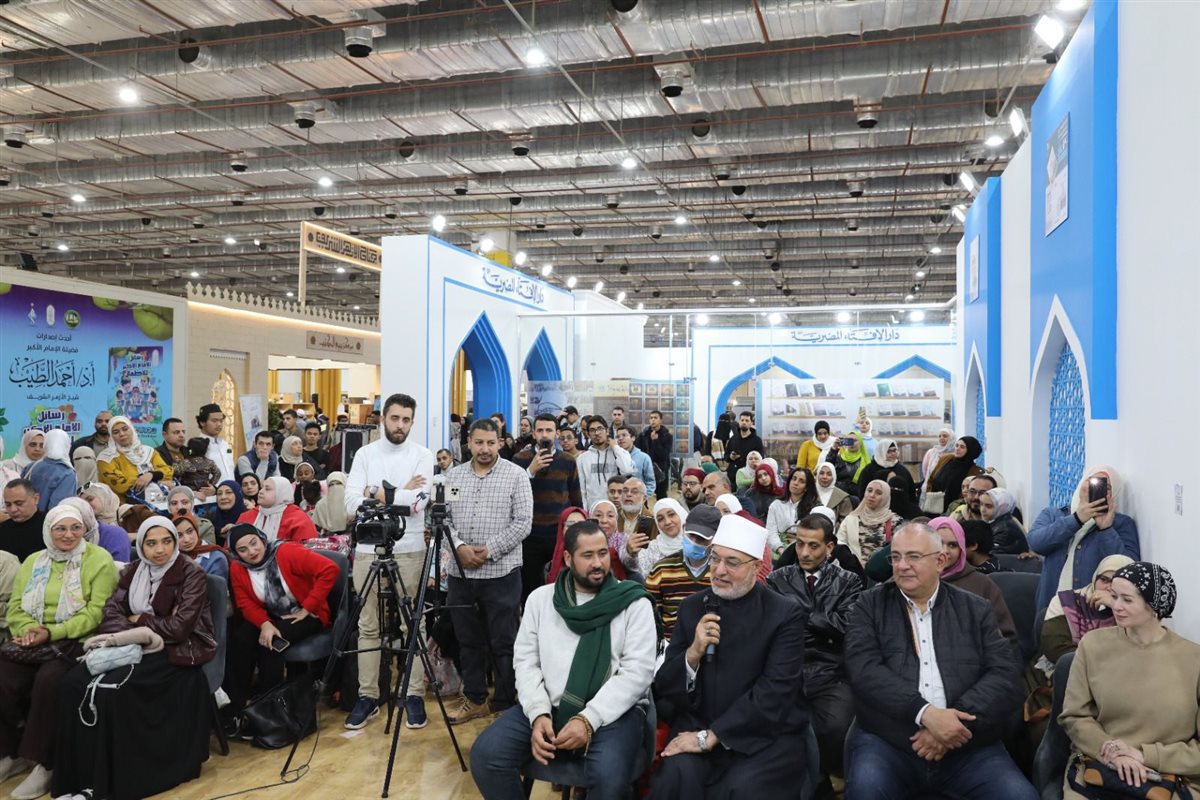
The wing of the Egyptian Fatwa House organized a scientific symposium entitled: Fatwa and Psychological Safety, which addressed the psychological dimensions of the legal fatwa and its role in supporting the psychological balance of individuals and building societal reassurance.
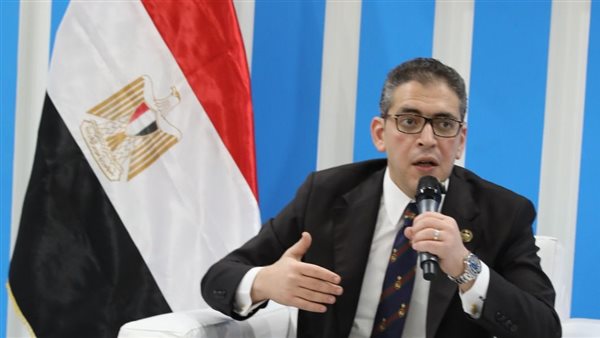
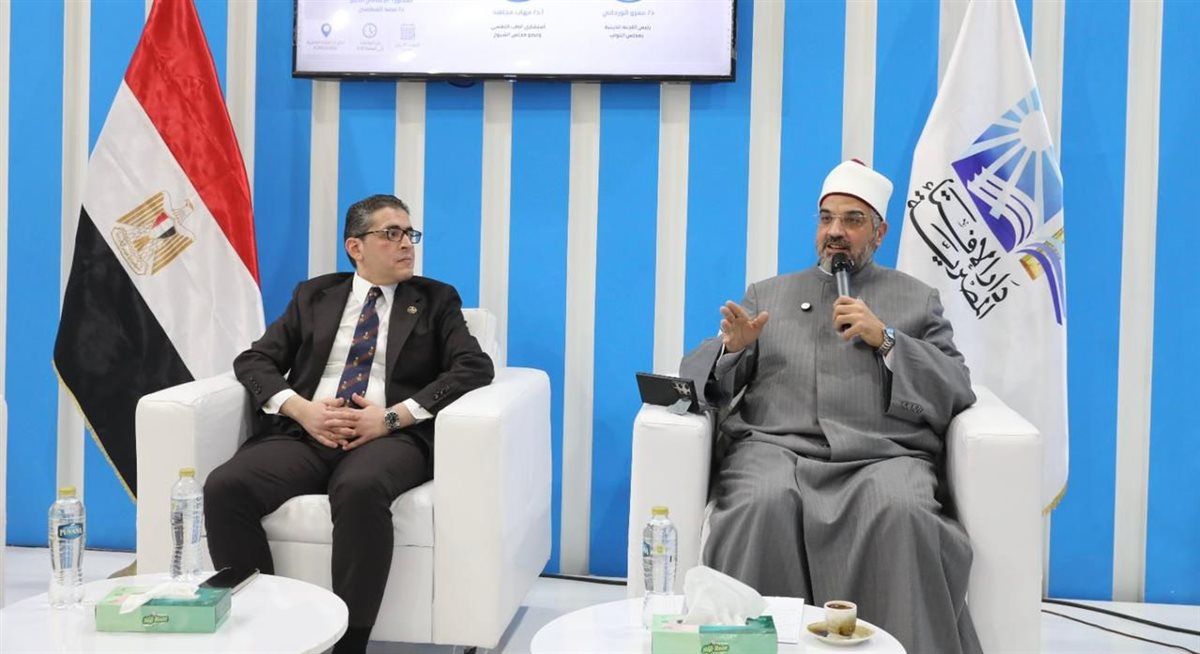
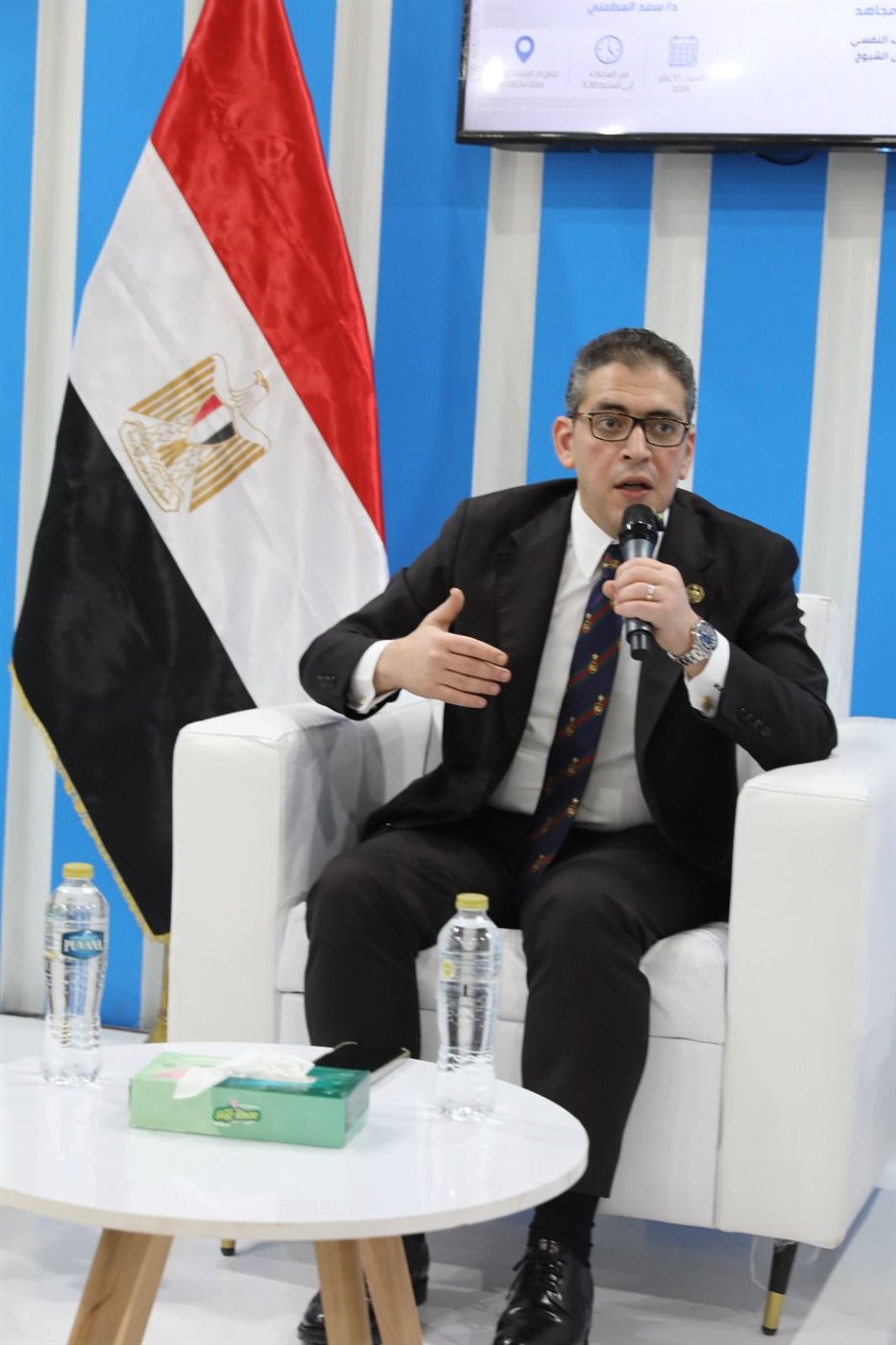
The symposium was attended by: Professor Dr. Mohab Mujahid, Consultant Psychiatrist and Member of the Senate, and Dr. Amr Al-Wardani, Secretary of the Fatwa at the Egyptian House of Fatwa and Chairman of the Religious Committee in the House of Representatives, while the symposium was presented by Sheikh Hazem Dawoud, Secretary of the Fatwa at the Egyptian House of Fatwa. The symposium was attended by His Eminence Professor Dr. Nazir Muhammad Ayyad, Mufti of the Republic, Head of the General Secretariat for Fatwa Boards and Institutions in the World, and an elite group of scholars, intellectuals, specialists, and those interested in religious and psychological affairs, in addition to the book fair audience.
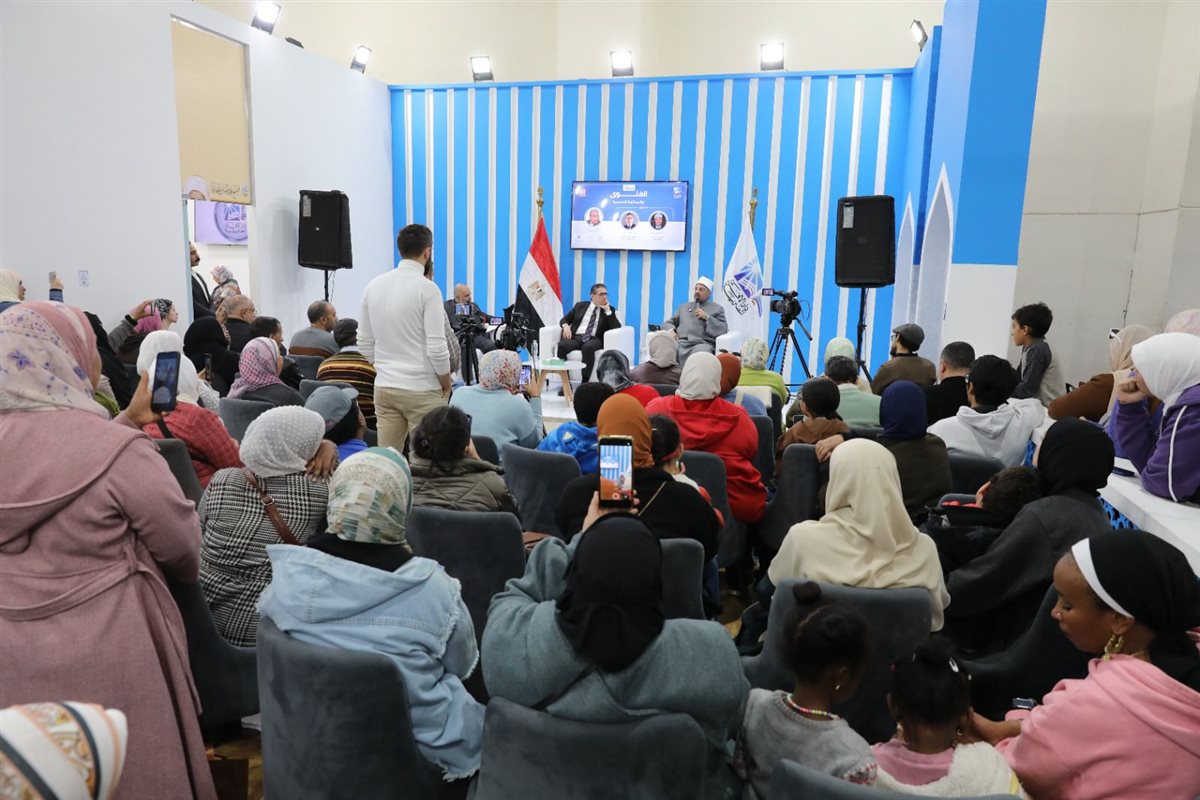
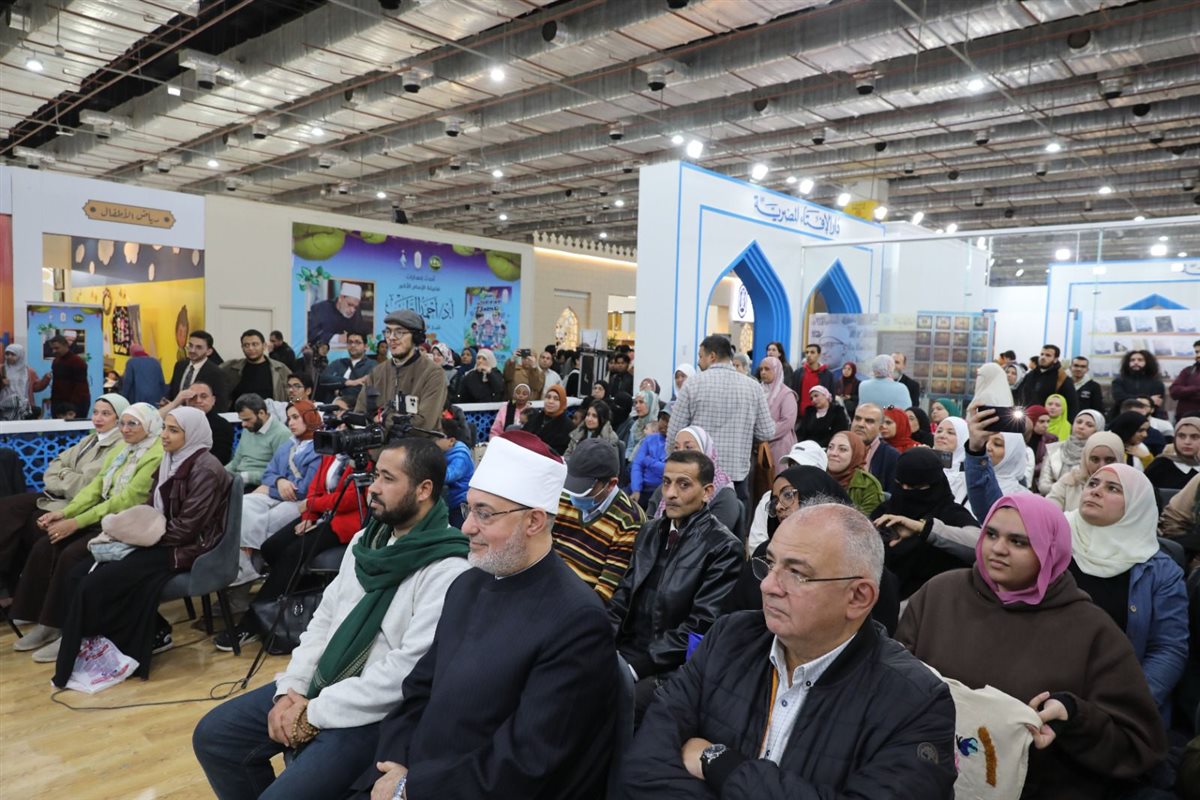
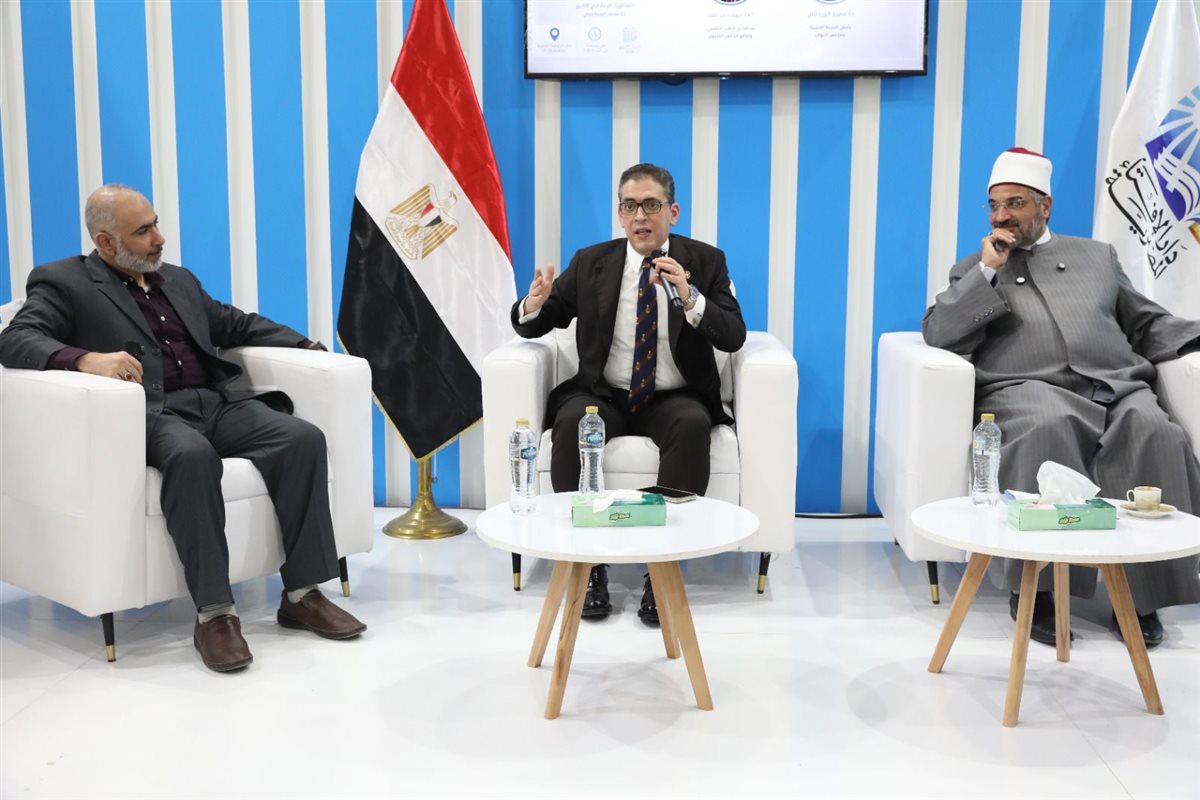
At the beginning of the symposium, Sheikh Hazem Dawoud stressed that these scientific meetings have become a distinctive feature of the Dar Al-Fatwa pavilion, as it hosts an elite group of senior scholars and sheikhs to transfer their scientific expertise and contribute to raising the level of societal awareness. He explained that the fatwa does not stop at the borders of abstract legal rule, but rather extends to touch the human being in various aspects of his life, reflecting the integration of the House of Fatwa with other human and cognitive sciences.
For his part, Dr. Mohab Mujahid explained that if the fatwa is correct, the condition of the whole person will be correct, and if it is incorrect, what was built on it will be disturbed, stressing that whoever resorts to the Fatwa House, regardless of his status or authority, is relying on an authentic pillar represented by the Fatwa House itself, and stressed that the message of the fatwa should be directed to controlling behavior, not holding feelings accountable, because feelings are beyond a person’s ability to directly control, explaining that thoughts They generate feelings, and feelings lead to behaviors, while a person is only entrusted with what he can direct and control.
He stated that asking a person about his feelings may make him feel helpless, while what is required is to direct thought and correct behavior, citing the words of God Almighty: {And those who restrain anger and pardon people} [آل عمران: 134] The text did not prohibit anger, but rather directed it to suppress it and control its behavioral effects, stressing that when the mufti speaks, he should direct his speech to practical behavior, explaining that behavior that contradicts feelings while adhering to correct behavior refines and uplifts the soul, citing the Almighty’s saying: Who trampled it? [الشمس: 9، 10]A person is responsible for his behavior, not his feelings.
The psychiatry consultant continued that mental health is one of the foundations of quality of life, and that moderate religious discourse based on compassion and facilitation directly contributes to alleviating anxiety, depression, and feelings of pathological guilt, calling for strengthening cooperation between religious institutions and psychiatric specialists when addressing such sensitive issues.
In the same context, Dr. Amr Al-Wardani, Chairman of the Religious Committee in the House of Representatives, referred to previous examples of deviant fatwas that spread in society, such as what was known as the phenomenon of “university marriage” and “blood marriage,” which resulted in grave human tragedies. He reviewed an incident of a girl who became pregnant as a result of an unregulated marriage, so she sought refuge with an apparent religious person who gave her a fatwa that she was an adulteress and that what was in her womb was a child of adultery, which led her to commit suicide.
His Eminence explained that his orientation to studying psychological sciences came with the motive of correcting these deviations and liberating man from the effects of a wrong understanding of religion, stressing that a rational fatwa is inseparable from understanding the human soul nor from the purposes of Sharia law in preserving man and his dignity.
Dr. Amr Al-Wardani touched on a number of frightening dangers that link the science of fatwa and psychological sciences, noting that the most prominent of them are: existential nihilism, futility, existential anxiety, identity crisis, emotional atheism, dryness of love, psychological impotence, fear of fate, deification of the mind, and distortion of the mind, warning that the mufti must consider these dangers when issuing fatwas, stressing that dealing with patients with obsessive-compulsive disorder requires an approach. Based on compassion and containment instead of criticism that exacerbates their psychological suffering, he warned of the danger of religious discourse based on blame and negative upbringing in exacerbating obsessions. He stressed the need to correct the misconception that links illness with weak faith, and that these individuals need special support and assistance.
In response to the question: How does a questioner choose a mufti to answer his fatwa? Dr. Amr Al-Wardani answered that there are standards that the person who seeks a fatwa must be aware of when he wants to give a fatwa, the most prominent of which is that he should choose a skilled mufti. Only reputable religious institutions that have been refined by cumulative experience should ask for a fatwa. The mufti is not just a transmitter of texts, but rather an expert who understands the implications of the fatwa, in addition to asking those who have a scientific method, so that their reliance is on a recognized scientific method, represented by the established jurisprudential schools of thought that guarantee the absence of anomalies in opinion. The fatwa protects against individual whims. He continued, saying: The contemporary mufti needs skills that go beyond memorizing texts; It needs real sciences, such as: sociology, psychology, and economics. So that he can link the text to the changing reality in a package of skills that make his fatwa realistic and applicable. There is also the moral context represented by an effective system of values, as the fatwa is not a dry ruling, but rather a mercy. Therefore, it must be issued through a value system that takes into account kindness, concealment, and the preservation of human dignity and community cohesion.
Dr. Al-Wardani concluded his speech by warning against neglecting the psychological aspect when issuing the fatwa. Which leads to dangerous phenomena, including what he called emotional atheism, which he defined as escaping religion, not because of lack of conviction in the existence of God Almighty, but because of the cruelty that the person faces from some fatwas or preachers, as well as spiritual dryness, which means turning worship into mechanical duties devoid of reassurance.
At the conclusion of the symposium, His Eminence Professor Dr. Nazir Muhammad Ayyad, the Mufti of the Republic, stressed that the fatwa is a science and an artefact that is taken from people and not from what people have made, such as applications for artificial intelligence such as GBT chat and others. He pointed out the importance of deriving the fatwa through direct interaction with the questioner and understanding his condition and circumstances. The mufti discovers the extent of the sincerity and consistency of the questioner’s words through direct dialogue with him, and observing his body language and behavior, explaining that this aspect Human and psychological is what ensures the accuracy, justice, and connection of the fatwa to reality, away from the mechanical transmission of ready-made words or texts.
This symposium comes within the efforts of the Egyptian Fatwa House to develop contemporary fatwa discourse and link it to modern human sciences, in a way that consolidates the values of compassion and moderation, and enhances psychological safety as one of the purposes of Sharia law in the service of humanity and society.