

Saturday 11/April/2026 – 01:26 PM
The Ministry of Agriculture and Land Reclamation announced the conclusion of the activities of the first training program for the initiative “Empowering our children on the autism spectrum to produce biological enemies as a small project,” which was organized by the Plant Protection Research Institute, in cooperation with the Egyptian Association for the Advancement of Persons with Disabilities and Autism, headed by Maha Hilali, at the institute’s headquarters in Giza, in a qualitative step that reflects the state’s orientation towards promoting community integration.
Successful conclusion of the first training program to empower people of determination in plant protection
The implementation of this program comes within the framework of the directives of Mr. Alaa Farouk, Minister of Agriculture and Land Reclamation, on the necessity of involving people of determination in development paths, and with the follow-up of Dr. Adel Abdel Azim, Head of the Agricultural Research Center, to expand the adoption of empowering programs that open new horizons for them in the agricultural labor market, based on the social responsibility of the research centers.
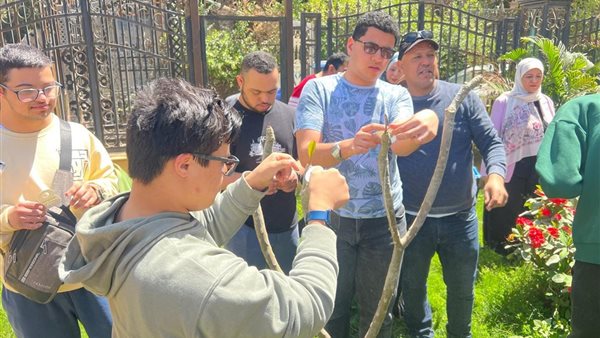
The program witnessed the participation of 12 trainees from the autism spectrum, accompanied by specialists from the association, where integrated training content was prepared that suits their abilities, especially those in the high functional performance category, while relying on visual education methods and precise practical applications.
The first training program to empower people of determination in plant protection
For his part, Dr. Tariq Afifi, Director of the Plant Protection Research Institute, stressed that this initiative aims to invest in the distinguished capabilities of young people on the autism spectrum, especially their precision and focus, in supporting the areas of sustainable agriculture and strengthening the food security system, noting the Institute’s keenness to repeat this experience and expand its scope in a way that contributes to achieving economic independence for them and improving their life skills.
He explained that the program included specialized practical training that included learning about the institute’s role in producing safe food, preparing the host needed to raise vital enemies, obtaining grain moth eggs and preparing them for parasitism operations, as well as learning about the manifestations of parasitism and methods of monitoring it, and mechanisms for preserving and storing the parasite, leading to field training on preparing envelopes for releasing the parasite in the fields and hanging them, which qualifies the trainees to manage small projects efficiently and professionally.
In the same context, Dr. Farha Hosni, Director of Quality Management and supervisor of organizing the initiative, confirmed that the program represents a successful model of integration between scientific research and humanitarian responsibility, noting that these initiatives contribute to preparing productive cadres capable of supporting food security, in addition to enhancing their social skills in order to achieve their full integration into society.
She added that the Institute continues to implement and develop these training programs, and is working to expand their scope to include larger numbers of young people, thus enhancing the role of people of determination as active partners in achieving sustainable agricultural development.
During the program activities, the trainees were honored and given certificates for passing the course, amid widespread praise for the outstanding level of the program and the positive results achieved, which reflect the success of integrating the scientific and humanitarian dimensions in empowering this important segment of society.