

Wednesday 08/April/2026 – 10:29 AM
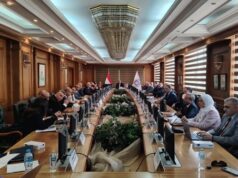
Ministry participated Solidarity Social Affairs, within the Egyptian delegation in the study visit hosted by the Greek capital, Athens, on asylum procedures in the context of mixed migration flows and identifying vulnerable groups, within the framework of the regional protection project of the European Union Asylum Agency for the Southern Neighborhood Countries, and to enhance regional partnership and exchange of international experiences.
The workshop was opened by Amr Wazzaz, International Cooperation Officer at the European Union Asylum Agency (EUAA), Konstantina Papakosta, Secretary General for Migration at the Greek Ministry of Migration and Asylum, and Spyridon Stathoulis, Secretary General for Reception of Asylum Seekers at the Greek Ministry of Migration and Asylum.
The Egyptian delegation included representatives of the Ministries of Foreign Affairs, Justice, and Interior, while the Ministry of Social Solidarity was represented by Mustafa Abdel Rafi, Director General of the General Administration of Legal Affairs and Head of the Ministry’s Human Rights Unit.
The workshop dealt with a comprehensive overview of asylum procedures, basic rights, and mechanisms for meeting the needs of vulnerable people and people with special needs. The visit focused on the reciprocal aspect of countries’ experiences, as the participating delegations reviewed their field experiences.
The Egyptian delegation presented the broad Egyptian experience in absorbing refugees, explaining the efforts and services provided.
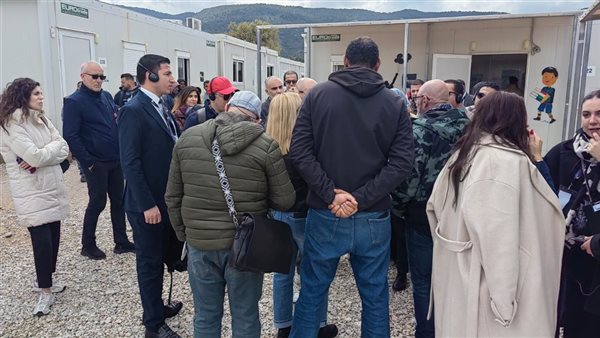
The workshop witnessed the presentation of the Greek national experience of the local asylum system and presentation of practical examples, and a visit was organized to the reception and identification center in Malaska and the closed access facility to accommodate asylum seekers in Malaska.
The sessions presented the international and regional legal framework of fundamental rights applicable in the context of access to procedures, such as the principle of non-refoulement and the right to asylum, and provided participants with a common ground basis regarding the different steps of the asylum procedure, in line with the Common European Asylum System, as well as the role of first-line officials. The sessions introduce the concept of special needs and provide initial insights into identifying situations of vulnerability and focusing in particular on unaccompanied minors and potential victims of human trafficking.
The visit included a field aspect that included inspecting the reception and identification center in Malaska (A, B) and the closed access facility to accommodate asylum seekers there, in addition to presenting the Greek national experience of the local asylum system and presenting practical examples from the reality of field work.
The event witnessed wide international participation to exchange experiences, including invited countries from outside the European Union, namely Egypt, Algeria, Libya, Mauritania, and Morocco, in addition to the European Union countries: Austria, Belgium, Denmark, Germany, Greece, Italy, Malta, the Netherlands, Slovakia, Slovenia, and Sweden.