

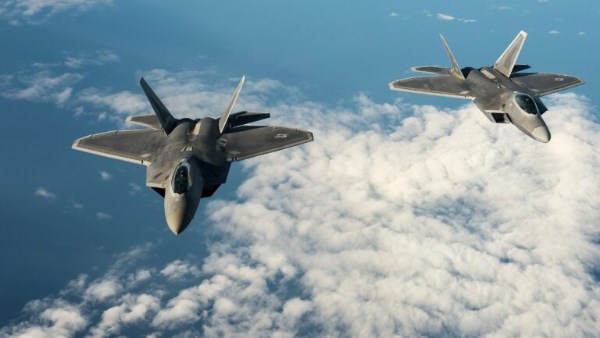
The Middle East region is witnessing a remarkable military escalation, with the United States announcing, Tuesday evening, the deployment of 12 F-22 Raptor fighters in Israel, in a move described as among the largest in years, as part of preparations for a possible regional confrontation with Iran.
According to American and Israeli reports, the stealth fighters took off from bases in the United Kingdom before landing at an Israeli Air Force base, coinciding with the arrival of KC-135 refueling planes and C-17 strategic transport planes to Lod Airport (Ben Gurion).
An official at the US Central Command (CENTCOM) confirmed that the deployment comes as part of “the United States’ ongoing regional preparations in the Middle East.”
“Queen of Heaven” is at the heart of the spread
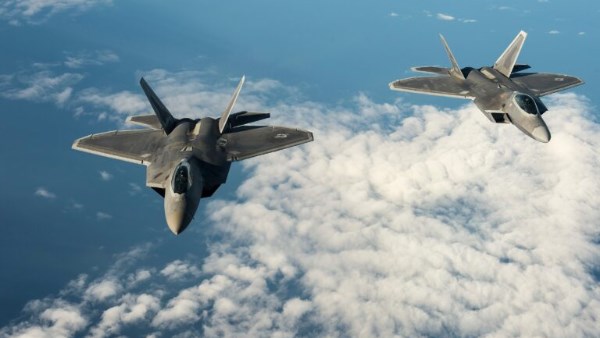
Produced by Lockheed Martin, the F-22 is one of the world’s most advanced fighter jets, a fifth-generation stealth fighter designed to achieve absolute air superiority, especially in close-air combat.
It is distinguished by its ability to fly at supersonic speeds ranging between Mach 1.5 and 1.8 without the need to operate the afterburner (Supercruise), which gives it a significant advantage in fuel consumption, operational range, and maintaining its low radar signature.
The aircraft also has superior maneuvering capabilities thanks to the Thrust Vectoring system, which gives it a decisive advantage in air engagements. Possession of this model is limited exclusively to the US Air Force, which makes its deployment outside US territory a step that carries great military and political implications.
The largest spread since 2003
The deployment of fighters comes within a wide American deployment in the Middle East, described as one of the largest since the invasion of Iraq in 2003. These movements include strengthening the naval presence in the Arabian Sea and the eastern Mediterranean, with the deployment of aircraft carriers, warships, and advanced air defense systems, in addition to long-range attack aircraft.
The United States has also strengthened its military presence in a number of bases in allied countries in the region, including Jordan, Qatar, Bahrain, and Oman, as part of what Washington describes as “deterring any potential threats” and ensuring the protection of its interests and partners.