

Tuesday 07 April 2026 – 03:34 PM
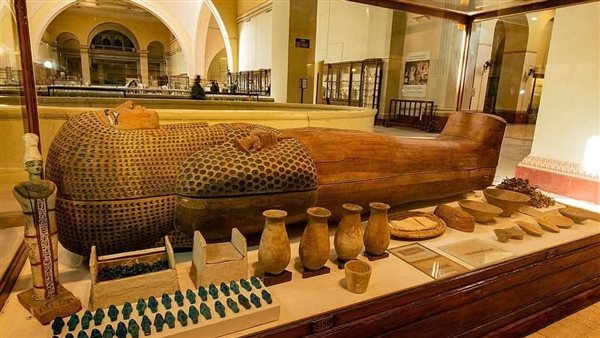
The Egyptian Museum in Tahrir displays the coffin of Queen Ahmose Meritamun, one of the distinctive archaeological evidence that reflects the status of royal women in the early modern state, as she was the royal daughter of King Ahmose I and Queen Ahmose Nefertari, who were among the most prominent symbols of the reunification of Egypt and the beginning of the era of power and prosperity.
Between inscriptions and eternity.. The sarcophagus of Ahmose-Meritamun is a witness to the birth of the modern state
The coffin was found in Thebes, inside Cemetery No. TT358 in the Deir el-Bahari area, which is one of the most important funerary sites on the western mainland of Luxor, which was associated with the elite of the ruling family and senior statesmen.
The coffin is distinguished by its precise artistic style, which embodies the features of art in the early Eighteenth Dynasty, where funerary decorations and texts appear that reflect the religious beliefs associated with the afterlife, in addition to highlighting the high status of its owner within the royal court.
This coffin represents a unique example of coffin art in that period, as it combines relative simplicity in composition and accuracy in details, reflecting an important transitional stage in the development of Egyptian funerary art.
The coffin is currently displayed in the collections of the Egyptian Museum, where it continues to attract the attention of visitors and researchers, as it is a living witness to a rich royal history and one of the oldest chapters of the New Kingdom in ancient Egypt.