

Friday 06/March/2026 – 09:46 PM
Can love survive if it is subject to conditions?
When does the heart become an item on a list, and emotion an agreement to which terms and conditions are attached?
Questions that at first glance seem closer to philosophical reflections than dramatic tales, but they soon find their way to the screen. In an Egyptian season full of dramatic works, stacked together like the shelves of a library that cannot breathe, until the scene seemed as if the screen could not accommodate more, the name of a Kuwaiti series entitled “Terms and Conditions Apply” began to be heard in Egypt, in circles of friends, in cafes, and on the walls of social media. A work that seems to capture those same questions and place them at the heart of the story.
It was not a loud advertisement, but rather a passing recommendation, then another recommendation, as if someone was patting you on the shoulder and saying: Try it. Over time, the recommendations increased, the audience expanded, and the series had many viewers, admirers, and lovers. Out of curiosity – that motive that sometimes leads us to our greatest little discoveries – I went in to watch the first episode. I entered the viewing without expectations, and perhaps without preparation.
The first episode wasn’t just the beginning of a story; It was the beginning of an entanglement. I did not know that I was about to fall in love with a work that sneaks up on you without pretension, without noise, but rather with a soft, dramatic sleight of hand. An episode followed an episode, as if time had become a closed circle revolving around me, until I found myself emptying all the episodes, and I in turn was looking for who to nominate this series for, as if I were repaying the debt of my first astonishment.
The idea strikes directly at the Arab consciousness: the interference of parents in the destinies of their children, the firm belief that the parental vision is truer than the heartbeat, that guardianship that extends across generations, and their belief that they know better about the interests of their children than they do, but antiquity here is not a defect; It is a sign of a wound that has not yet healed. We are members of a culture that does not see children as complete individuals, but rather as extensions. The father never rests from worry, and the grandfather never stops thinking, not out of control alone, but out of love tinged with fear. We are the children of a culture that says: The dearest child is the dearest child, a culture that sees family extension as one tree, with its roots in the past and its branches in the future, and no branch has the right to be separated from the trunk without being accused of disobedience.
From here the engagement in the series begins. Terms and conditions apply. Aziz, who returns from abroad, not only has a degree, but also has a different outlook on life. The grandfather stands facing him, not as an opponent, but as a guide. He clashes with the grandfather’s desire to marry him to Lulu, and his word is a strict legal contract that has nothing to do with the first beating of the heart.
Events escalate through a clever dramatic trick, which is setting terms and conditions for their marriage, while each of the spouses seeks in mutual attempts to thwart the relationship and prove to the family the impossibility of its continuation. But the paradox woven into the text – written by the brilliant Maryam Al-Qallaf and Ibrahim Nayrouz – is that the attempts to thwart the relationship, those small maneuvers, reveal something deeper: love is not always born in absolute freedom, but sometimes in resistance to restrictions, as if the pressure itself creates the spark, and what begins as a game of evasion gradually turns into an indirect confession of need, into love.
Although it is a real story that we live every day, what is different here is the presentation. Comedy here is not laughter, but a slight slippage in the ground of the situation. Comedy comes from a silent confession, from human embarrassment, from a confused look, a lightness that creeps into the wound. Comedy does not scream, but rather smiles quietly. Funny situations are not built on ready-made “evidences,” but rather on real human confusion, on small entanglements that reveal the fragility of the characters. The comedy flowed very smoothly, it was not loud laughter as much as it was real smiles, and this is what gave the work its special lightness, without losing its depth.
The philosophy of the series, in its essence, does not stop at the borders of marriage, but rather goes beyond them to the question of ownership itself: Do parents own their children? Or do they only have the right to love and pray? Here the poet Elia Abu Madi’s phrase echoes: “Your children are not your children.” The phrase, which at first glance seems shocking, is, in its depth, a call to liberate love from possession. The series clashes with the idea of the family transforming from a refuge into a system, and from an embrace into an institution. However, the work does not fall into an unjust dualism between a tyrannical generation and a victim generation. Rather, it reveals that the intervention itself stems from anxious love, from fear accumulated across generations that have known loss more than they have known reassurance. The series discusses a collective memory that is afraid to let its children experience pain alone, and precisely from this tension the philosophy of the series is born: freedom does not come with the abolition of the family, but rather with the redefinition of its role; To love our children as temporary beings in our lives, not as eternal possessions.
One of the genius of the series is that it engages with this idea without a direct speech, without slogans, but rather through daily details: a grandfather’s look, a mother’s confusion, the confusion of a young man and a girl between the family’s righteousness and the call of the heart. It does not condemn the family, but rather rearranges the distance between it and the freedom of the individual. It poses the question without imposing an answer, and leaves the viewer to become morally involved in the story.
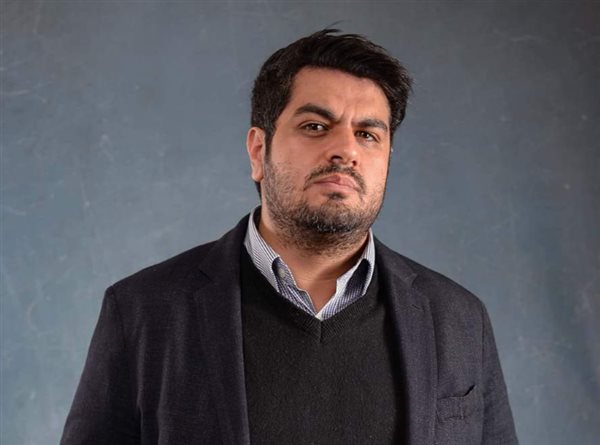
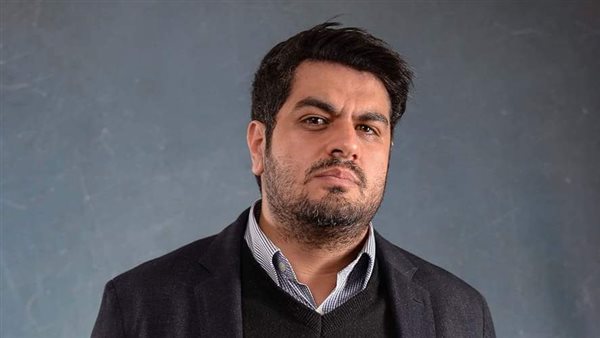
If there must be a hidden hero for this work, I see him as the director of the work and the owner of his idea Muhammad Adel Al BalochY. Although this is the first time I have watched his work, I admit that the directorial vision here is not traditional; I felt like I was watching an Arabic series with a Hollywood idea and implementation. We were not in front of fixed cameras waiting for the actors to perform their roles in a calculated framework, but rather in front of a mobile camera, a little anxious, shaking lightly, as if it were a living, breathing organism with the characters. This simple tremor was not a technical defect, nor was it a formal adornment, but rather an aesthetic situation: we are not in front of a scene that we are observing, but rather in front of a situation that we are living, a technique in which the director succeeded in conveying the tension of situations, the confusion of decisions, and giving the viewer the feeling of participation, not reception. It is as if the director is telling us: You will not sit in the spectator seats; You will come with us on the journey, you are partners in the dilemma. You will enter homes, you will stand in the middle of arguments, you will receive embarrassment as heroes do, and in fact, I did not feel like I was watching a series as much as I felt like I was accompanying its characters on a small, but intense, human adventure.
One of the smartest directorial tricks is to interrupt the traditional illusion of acting, when the heroes turn directly to the camera, address it, explain their motives, comment on the actions of others, and even mock themselves. This breaking of the fourth wall was not a formal show, but rather doubled the narrative; We now have two levels: the level of the event, and the level of awareness of the event. This technique gave the work a double comic dimension, because personal confessions revealed funny contradictions, and at the same time it deepened the dramatic dimension, as it made us partners in the characters’ inner secrets.
As for the writing, it seemed coherent and aware of its rhythm. The dialogue did not fall into the trap of preaching, nor did it drift into direct rhetoric. The text respects the viewer’s intelligence and trusts his ability to pick up the signal without excessive explanation, and this is to the credit of the aforementioned authors.
The performance was consistent with this vision. Abdulaziz Al-Nassar gave the main character that difficult balance between obedience and rebellion, between the person of Eastern origin burdened by American culture. Haneen Hamed played the role of the bride brilliantly; No exaggeration, no fabrication, but thoughtful simplicity, and a conscious partner in the game of tug of war.
Zainab Karam, Farah Al-Mahdi, Fatima Al-Basiri, Nadeema Sinan, Noura Faisal, and Julnar, each character carried its own shades, and brilliantly expressed the various female characters in society. Likewise, Khaled Al-Sajari, Musa Kazem, and Muhammad Fayek performed well, so we felt that they were part of our family. Salah Al-Mulla, the able artist, presented the grandfather not as a harsh and tyrannical authority, but rather as a tense love, a lover afraid for his family legacy, and he excelled and created, because we loved him despite our disagreement with him.
In the end, Terms and Conditions Apply is not just a story about a marriage with conditions imposed on it. It is a delicate meditation on the meaning of guardianship and love, on the delicate distance between care and control, between fear and freedom, a work that confirms that repeating an idea does not kill it if it is rewritten with a new awareness, and if it is depicted with an eye that sees the small details that make the difference.
I came away from the series feeling that I was not only watching a piece of entertainment, but rather a mirror held up to our relationship with our children, our parents, and ourselves. Perhaps precisely for this reason, the initial curiosity turned into love, and viewing turned into a recommendation. Because honest work, no matter how simple its idea, always has the ability to bring us back to the first question: Who has the right to choose our lives?