


Monday 26/January/2026 – 08:59 PM
The Guide to Academic Integrity and Ethics in Scientific Research in Egypt, issued by the Supreme Council of Universities, stressed the prohibition of a number of research practices related to the use of animals in scientific research, while establishing strict controls to ensure their safety and adherence to ethical and scientific standards.
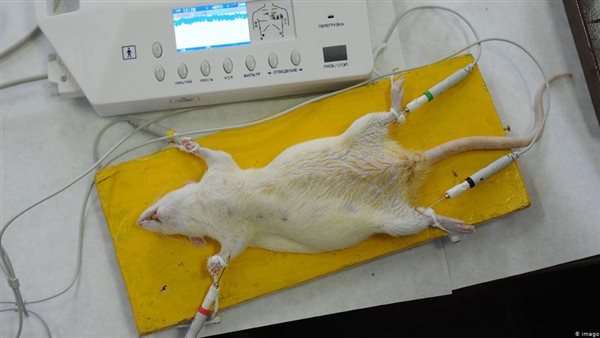
Animal experiments
Article 58 of the guide stipulates that it is prohibited to perform any genetic modification of animals in the current situation, and it is also prohibited to conduct experiments on rare or endangered breeds except in specific cases related to their increased breeding, after obtaining the necessary legal approvals and in accordance with the regulations in force to protect the natural environment, while preventing any insemination between animals that do not belong to the same species.
- The care of laboratory animals must be taken care of by those handling them, and their sensitivity to pain must be recognized.
- Any experiments on animals should be planned in a careful and scientific manner according to the knowledge and experience available about the research problem by writing the research methodology in a scientific manner that can be approved by the Scientific Research Ethics Committee at the institution affiliated with the research.
- Selection of animals for experiments is an essential part of the success of the study method, and laboratory animal health specialists should be consulted to determine their health status before the final step of selection.
- When selecting an animal, its health condition, genetic characteristics, etc. are taken into account. No genetic modification of animals is permissible in the current situation.
- It is not permissible to conduct experiments on rare and endangered breeds except for the purpose of increasing their breeding, after obtaining legal approval and in accordance with the regulations in force to preserve natural environmental life. It is also not permissible to carry out any insemination between animals that do not belong to the same species.
- Animals must be taken care of during experiments under the care of a veterinarian or a qualified specialist.
- The animal’s housing must be taken care of in terms of water, food, hygiene, sleep, waste disposal, and health care in order to avoid diseases, injuries, crowding, stress, and infection from external and internal parasites.
- The animal must be cared for daily, even after official working hours, under the care of qualified specialists, including weekends and holidays, to ensure its safety in line with research requirements.
- The environment of the cages or pens must be controlled according to what is known, and the animal’s needs for social life, such as physical contact and visual, auditory and olfactory communication, must be taken into account.
- Researchers must avoid or reduce anxiety, stress, and fear that can result from the way experiments are conducted, by observing the clinical signs that occur in the animal. The ethical aspect and religious motives must also be taken into account.
- Anyone who wishes to conduct research on animals must be qualified and trained with approved certificates on how to deal with them according to the nature and type of experiments, or seek the assistance of someone who is qualified to do so.
- Laboratory animals should not be reused again in experiments if they have been used before, with the exception of animals that were used slightly after the Scientific Research Ethics Committee approved the possibility of using them again according to the nature of the experiment.
- In the event that an animal used in scientific experiments becomes incapable of life due to severe and unstoppable pain, or loss of some vital organs, etc., it must be euthanized in a manner through which it is completely anesthetized in order to put an end to its suffering.
- In light of the committee’s role to follow up on the steps for conducting the experiment, if it becomes clear that the animals are exposed to imminent danger that could lead to their lives, it must immediately decide to stop the research.
- When conducting research on animals, the research team is committed to the following:
- Identify the smallest possible number of animals suitable for experiments.
- Limiting it to people qualified to deal with animals, while adhering to the ethical approach in conducting research on animals, according to the model prepared in advance.