
Sunday 19/April/2026 – 07:46 AM
The Spanish archaeological mission affiliated with the University of Barcelona and the Institute of the Ancient Near East, headed by Dr. Maite Mascort and Dr. Esther Ponce Mellado, succeeded in uncovering a cemetery dating back to the Roman era in the Al-Bahnasa area in Minya Governorate, during the ongoing excavations at the site.
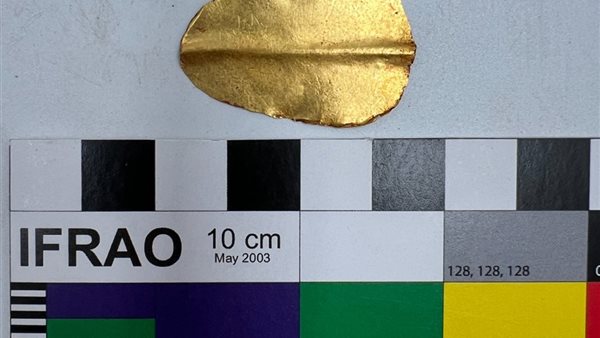
The excavations resulted in the discovery of a number of mummies dating back to the Roman era, including mummies wrapped in scrolls decorated with delicate geometric decorations, in addition to the discovery of well-preserved wooden coffins, in addition to three golden tongues and another tongue made of copper, in addition to evidence of the use of gold foil to decorate some of the mummies.

Al-Bahnasa surprises the world… Roman burial rituals with golden tongues inside mummies
In a related context, specialists explained that golden tongues are one of the rare and uncommon items in archaeological excavations, and are linked to a religious ritual known as “opening the mouth,” which was believed to help the deceased speak in the other world.
He pointed out that the goal of this ritual was to enable the deceased to speak during the trial of the dead before the god Osiris, according to ancient Egyptian beliefs, where the tongue was seen as a symbolic means linked to speech and innocence in the other world.
This discovery is a new addition to the understanding of funerary rituals in Egypt during the Greek and Roman eras, and confirms the continuation of ancient Egyptian religious influences until those later periods, in addition to highlighting the importance of the Bahnsa region as an archaeological site rich in important discoveries.