
Millions of people use phones iPhone Every day to send messages, take photos, make payments, navigate, and manage business. But apart from the well-known features, the device includes an advanced security mode that is not highlighted much, because it is designed for rare and sensitive circumstances when digital risks are at their highest levels.
This feature has not been announced Apple At conferences to launch its new products, it prepares a precautionary measure intended for exceptional cases that require the utmost levels of protection, especially for people exposed to advanced electronic threats.
Lockdown mode: protection intended for high-risk groups
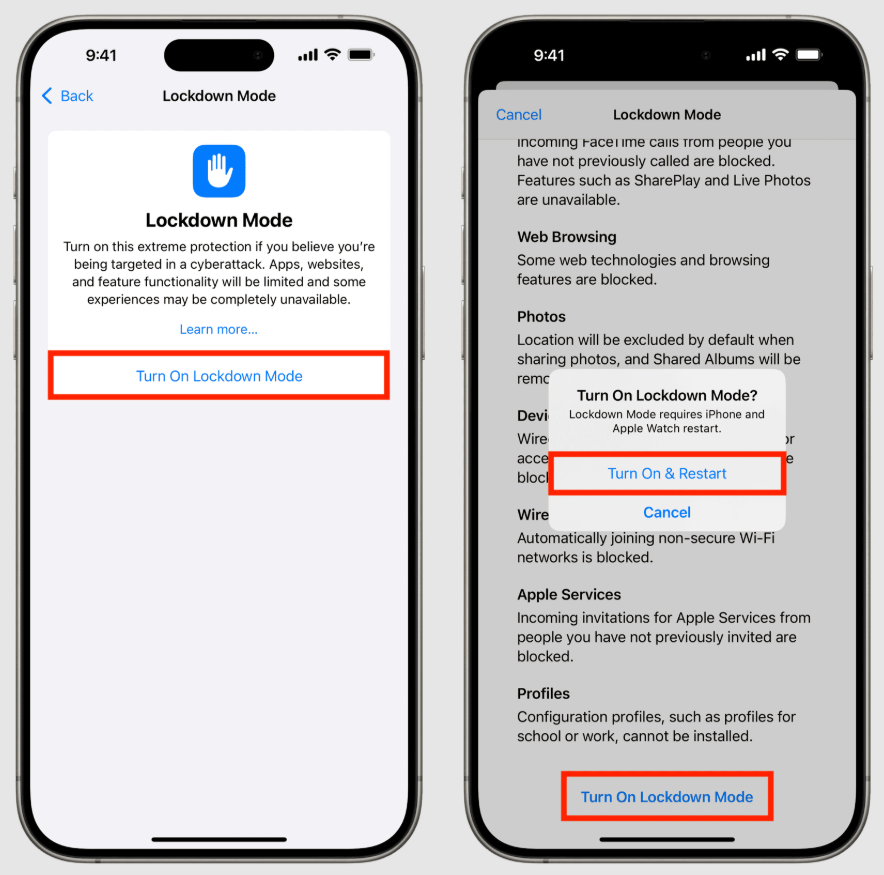
Within the iPhone settings, Apple provides a feature known as “Lockdown Mode,” which is an additional layer of security directed to a limited number of users who may be direct targets of advanced electronic attacks.
According to the company, this mode is intended for individuals who may be exposed to complex digital threats due to the nature of their work or location and who deal with sensitive information.
This measure comes in light of the escalation of cyberattacks and advanced spyware, as Apple provides an additional option to enhance protection for these groups.
How does the mode work?
When “Lockdown Mode” is activated via Settings, the way some applications and features work changes to reduce potential vulnerabilities. The most notable modifications are:
– Block most message attachments
– Restrict FaceTime calls to recent contacts only
– Disable features like SharePlay, Live Photos and Game Center
– Prevent connection to unsecured Wi-Fi networks
– The loading of some websites may be affected
This mode does not target traditional fraud, but rather is designed to confront highly sophisticated attacks, including attacks that do not require any user interaction, known as “Zero-Click Exploits,” in addition to advanced spyware.
Higher security for greater restrictions
Although the restrictions associated with activating this mode may affect the daily user experience, it represents a necessary option for those who face high digital risks.
With smartphones becoming a comprehensive storehouse of personal and professional data, including official documents and sensitive data, digital protection has become an essential and indispensable element.
In the end, most users may not need to activate “lockdown mode” at all, but its presence reflects a clear trend towards enhancing cybersecurity and providing advanced protection tools for those in the circle of digital targeting.