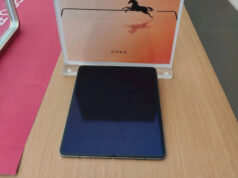


During its participation in the 2026 edition of the MWC exhibition, TCL CSOT reveals its new technologies in the world of screens, as this year it showcases Super Pixel technology along with the latest developments in OLED screens printed with Inkjet technology.
The basic idea behind Super Pixel displays is a different approach compared to common OLED displays that use Sub-Pixel Rendering.
Instead of relying heavily on neighboring sub-pixels to produce colours, TCL adds only 1.8% of additional sub-pixels, but in return achieves higher sharpness and clearer images.
In traditional SPR displays, each pixel needs to use subpixels from neighboring units to display the desired colors, because not every pixel has full red, green, and blue channels.
As a result, the display controller is forced to reprocess the incoming RGB image to fit the panel architecture. With the Super Pixel’s simplified design, the burden on the display controller is reduced, leading to a reduction in power consumption by up to 25%.

What’s more, Super Pixel displays support higher refresh rates, which can up to 40% more than conventional displays currently available.
On the other hand, TCL CSOT announces the start of construction of the 8.6 generation production line for Inkjet printed OLED displays, which is expected to be the first of its kind in the world when completed.
The company confirms that relying on printing to manufacture screens provides several advantages, the most prominent of which is the ease of adapting to different panel sizes, in addition to the simplicity of the manufacturing process compared to procedures based on vacuum discharge in traditional OLED production.
This technology also allows for an increase in the light emission area by between 50% and 60%, which enhances efficiency and reduces energy consumption. The printers are also able to produce Real Stripe RGB panels, which reflects positively on image quality and color accuracy.